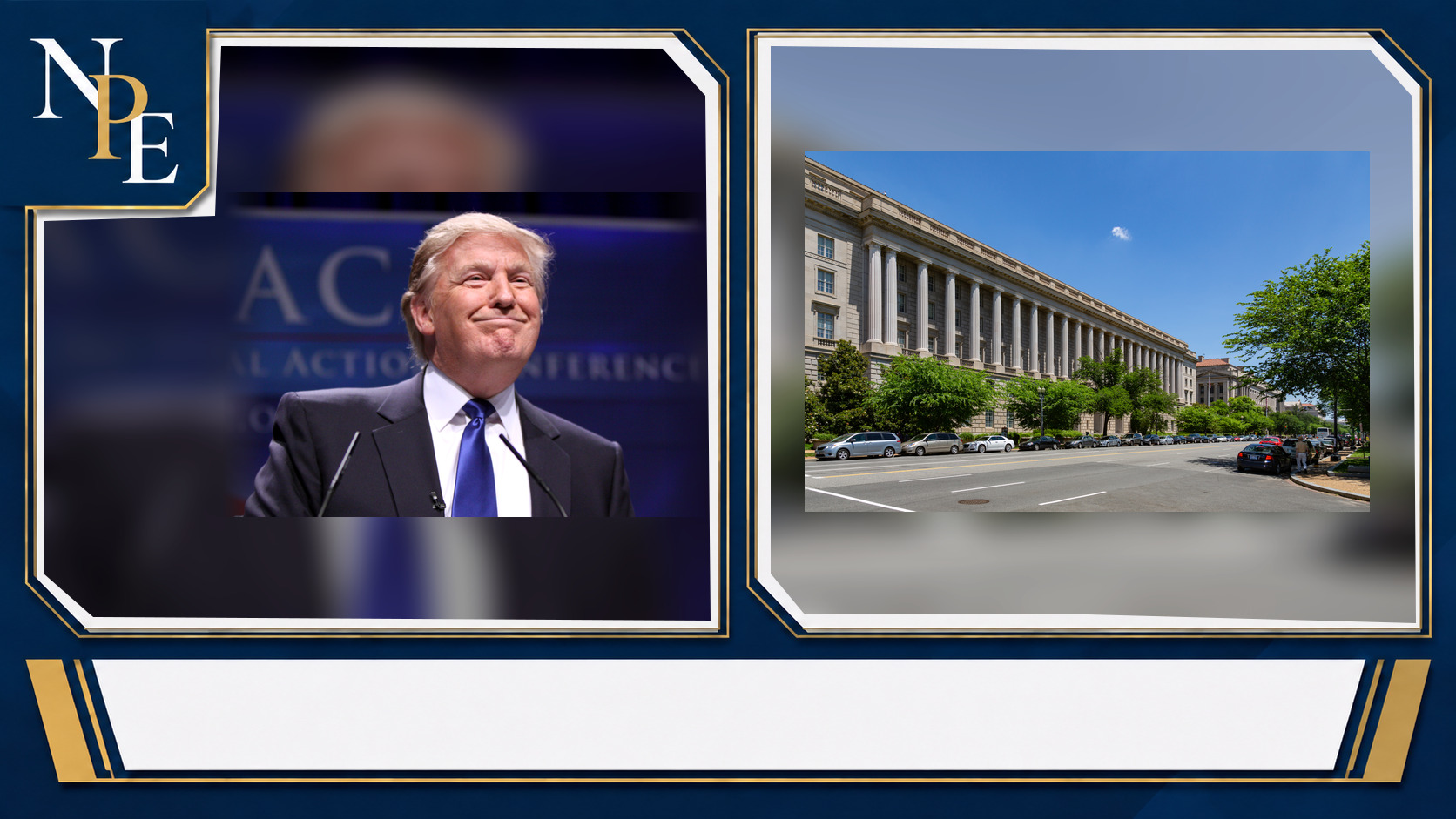
The ruling turns on a basic requirement of federal litigation: the sides must have a real dispute. It also leaves unresolved questions about a proposed settlement, audit protections and a possible disciplinary review of a lawyer.
A federal judge rebuked Donald Trump’s $10 billion lawsuit against the IRS, ruling that the case was filed for an “improper purpose.” U.S. District Judge Kathleen Williams concluded that Trump’s claim against the Internal Revenue Service could not be treated as ordinary litigation when he was president and the agencies he sued were part of the executive branch he leads.
Williams’ criticism reaches beyond the allegations involving Trump’s tax information. Her ruling focuses on whether Trump, the IRS, the Treasury Department and the U.S. Department of Justice were genuinely on opposing sides—or whether the court was being asked to give legal force to an agreement already reached within the executive branch.
The conflict at the heart of the case
Trump’s lawsuit accused the IRS and Treasury Department of failing to stop the disclosure of his tax information to news organizations between 2018 and 2020. The complaint sought $10 billion in damages.
On its face, that is the sort of claim a private plaintiff might bring against the government: an allegation that federal agencies failed to protect sensitive information. The legal posture changed after Trump returned to the White House, because the agencies named as defendants fell under the executive branch he oversees.
The Justice Department, which represents the government in court, is also part of that branch. That overlap made the case unusual and put the question of genuine legal conflict at the center of the judge’s review.
Why opposing sides matter in court
Federal courts are meant to decide real disputes. In a typical civil case, each side has an independent interest in winning, and the adversarial process tests facts, arguments and proposed remedies.
Williams examined whether that basic condition existed here. According to the Associated Press, she raised the issue early in the case and appointed attorneys to examine potential conflicts.
Her concern was not simply that Trump held two roles—as president and as a private plaintiff. It was whether the administration could meaningfully separate those roles when the president’s own executive branch was appearing as the opposing party.
The ruling does not say a president can never sue a federal agency. It does signal that a court may look closely at whether the parties have truly adverse interests and whether litigation is being used to accomplish something that could not be done as an open executive action.
Williams rejects the routine-case argument
A Trump Justice Department lawyer defended the lawsuit as a normal legal dispute, but that framing drew scrutiny in court. The lawyer was also criticized over a perceived lack of respect during the proceedings.
Williams said the record showed an effort to use the court to provide legitimacy to an agreement involving immunity and public money. Executive-branch officials, she wrote, could not simply cast themselves as opponents in order to obtain the validation of a court proceeding.
The judge said she would not accept what she called a “credulous exercise” of separating Trump’s current office from the circumstances of the case. Her point was institutional: a federal court has an obligation to ensure it is being used for the purpose contemplated by the Constitution.
Williams also referred one lawyer for possible discipline. That referral is not a final finding of professional misconduct, and the available reporting does not establish whether any discipline will ultimately be imposed.
The settlement remains partly unsettled
The lawsuit had already been voluntarily dismissed months before Williams issued her ruling. That limits the decision’s immediate practical effect, but it does not erase the judge’s findings about the way the litigation was used.
In May, the administration announced a settlement that included a proposed $1.776 billion fund for people who said they had been unfairly targeted by the criminal justice system. According to the Associated Press, that fund was later shelved after bipartisan backlash.
The administration has said it still intends to pursue another piece of the agreement: protections from tax audits for Trump and his family members. Williams did not explicitly void that audit-protection arrangement.
She did, however, say the government could not represent in official proceedings that the agreement resulted from a legitimate legal process. That distinction could matter if the agreement is later described, defended or enforced in another dispute.
A legal ruling with political stakes
The dispute arrives ahead of a Senate Judiciary Committee confirmation hearing for Acting Attorney General Todd Blanche, placing added attention on the Justice Department’s role. The case is legally sensitive because it involves the relationship between the presidency, federal agencies and the courts.
Trump’s critics may see Williams’ ruling as evidence that the administration tried to use federal litigation to insulate the president and allies from ordinary oversight. Supporters may point to the underlying allegation that Trump’s taxpayer information was improperly disclosed and argue that the judge characterized the administration’s strategy too harshly.
Both views leave important questions open. The future of the audit protections, the outcome of the lawyer’s possible disciplinary review and the prospect of related litigation remain unclear.
What Williams decided is narrower, but consequential: paperwork showing a president and his own executive branch on opposite sides does not automatically make a case a genuine adversarial dispute. In Trump’s $10 billion IRS lawsuit, the judge found the court could not accept that appearance at face value.
Leave a Reply