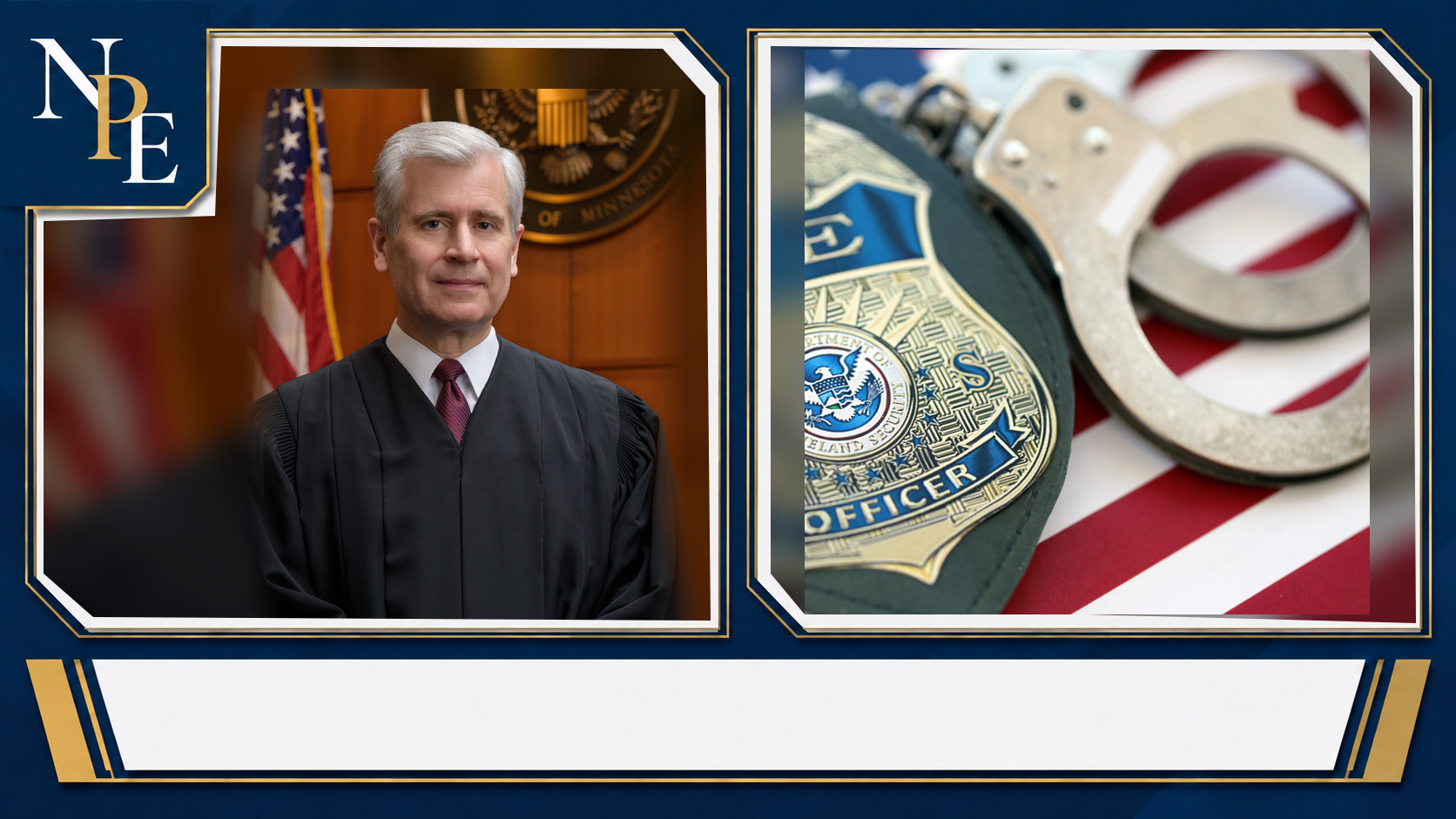
The Minnesota dispute centers on more than immigration enforcement: it tests whether ICE must halt or change conduct when federal courts issue restrictions. A judge’s 96-order tally has put judicial authority, religious liberty and agency compliance under sharper scrutiny.
A Minnesota federal judge said U.S. Immigration and Customs Enforcement defied 96 court orders across 74 immigration cases in January 2026, including orders connected to alleged churchgoer surveillance in Minnesota. Chief U.S. District Judge Patrick J. Schiltz said the allegations raise a basic question: whether ICE must follow federal court restrictions while it disputes them.
The reported surveillance of churchgoers gives the conflict a civil-liberties dimension, but the broader stakes concern judicial authority. Schiltz’s warning was directed at an agency he said cannot set aside court directives on its own.
Why the count carries weight
Schiltz said ICE had not followed 96 orders in 74 separate immigration matters since Jan. 1, according to a ruling reported by The New York Times. That figure does not establish a final criminal finding against individual ICE agents, and it does not resolve every factual disagreement in each case.
The judge also said the number could be incomplete. Judges handling heavy caseloads compiled the list quickly, he wrote, so it may identify fewer potential violations than actually occurred.
Still, the tally matters because it frames the issue as a possible pattern rather than a single dispute over one order or one enforcement action. A court order remains binding unless a court with authority stays, overturns or vacates it.
That leaves agencies with established legal options if they believe an order is mistaken or unclear: seek clarification, request a stay or appeal. The central concern raised by Schiltz is whether ICE continued conduct while restrictions remained in force.
Church surveillance raises separate concerns
The alleged surveillance of Minnesota churchgoers changes the character of the dispute. Houses of worship can be places for religious observance, pastoral support, family ties and community services, including services used by immigrant families.
Government surveillance linked to religious attendance can raise concerns about free exercise of religion, associational privacy and whether people may feel discouraged from participating in congregational life. Those concerns extend beyond disagreements over the scope of immigration enforcement.
The available reporting does not spell out the full scope of the alleged surveillance, identify which churchgoers were affected or provide the precise language of the court restrictions involved. Those missing details would be important in determining exactly what conduct was improper and what remedy, if any, could follow.
What is clearer from the judge’s position is the principle involved: enforcement activity remains subject to court-imposed limits, including when it touches sensitive places or protected forms of association.
A contempt hearing was paused
Before issuing his warning, Schiltz ordered Todd Lyons, ICE’s acting director, to appear and explain why he should not be held in contempt over the alleged noncompliance. Contempt proceedings are among the tools courts may use to enforce their directives.
Schiltz later temporarily withdrew the appearance order. The decision did not clear ICE of the allegations or end the dispute.
The judge said Lyons could be ordered back if violations continued. That move left room for ICE to demonstrate compliance while preserving the court’s ability to escalate if the reported pattern persisted.
Courts often seek a clear factual record and prompt compliance before imposing stronger sanctions. At the same time, an agency may point to operational complexity, fast-changing enforcement activity or genuine disagreement over what a particular order requires.
Enforcement power has legal limits
The case is not a ruling that ICE lacks authority to enforce immigration laws. Federal agencies have enforcement responsibilities, and administrations of both parties have defended the need to carry out immigration rules.
Schiltz’s concern is narrower: what occurs when an executive-branch agency’s enforcement priorities conflict with a specific court order. The judiciary can only make enforceable decisions if parties before it, including the federal government, comply while legal challenges proceed.
Schiltz, a conservative jurist appointed by President George W. Bush, emphasized that broader rule-of-law principle. He wrote that ICE was not “a law unto itself” and said the matter should trouble anyone concerned with the rule of law.
ICE and its supporters could argue that each immigration case has distinct facts and that the agency is working under substantial operational pressure. Civil-liberties advocates, by contrast, are likely to view the reported volume as a reason for closer court oversight.
What the Minnesota court may do
The next steps may depend on whether the court identifies more potential violations and how ICE responds. Schiltz could seek additional explanations from agency leadership, require clearer reporting, hold expedited hearings or revive contempt proceedings.
Not every alleged violation would necessarily lead to the same result. Courts generally examine the specific language of an order, what officials knew, what actions occurred and whether any failure to comply was deliberate, avoidable or promptly corrected.
Yet 96 alleged violations across 74 cases gives the matter unusual institutional significance. It suggests that the court is assessing a broader compliance problem, which could affect how closely it supervises ICE’s conduct in future Minnesota cases.
For immigrant communities, religious congregations and Minnesota residents, the practical question is whether court protections can be relied on during active litigation. The record leaves important facts and eventual remedies unresolved, but Schiltz’s warning is plain: continued noncompliance could bring ICE leadership back before the court.
Leave a Reply