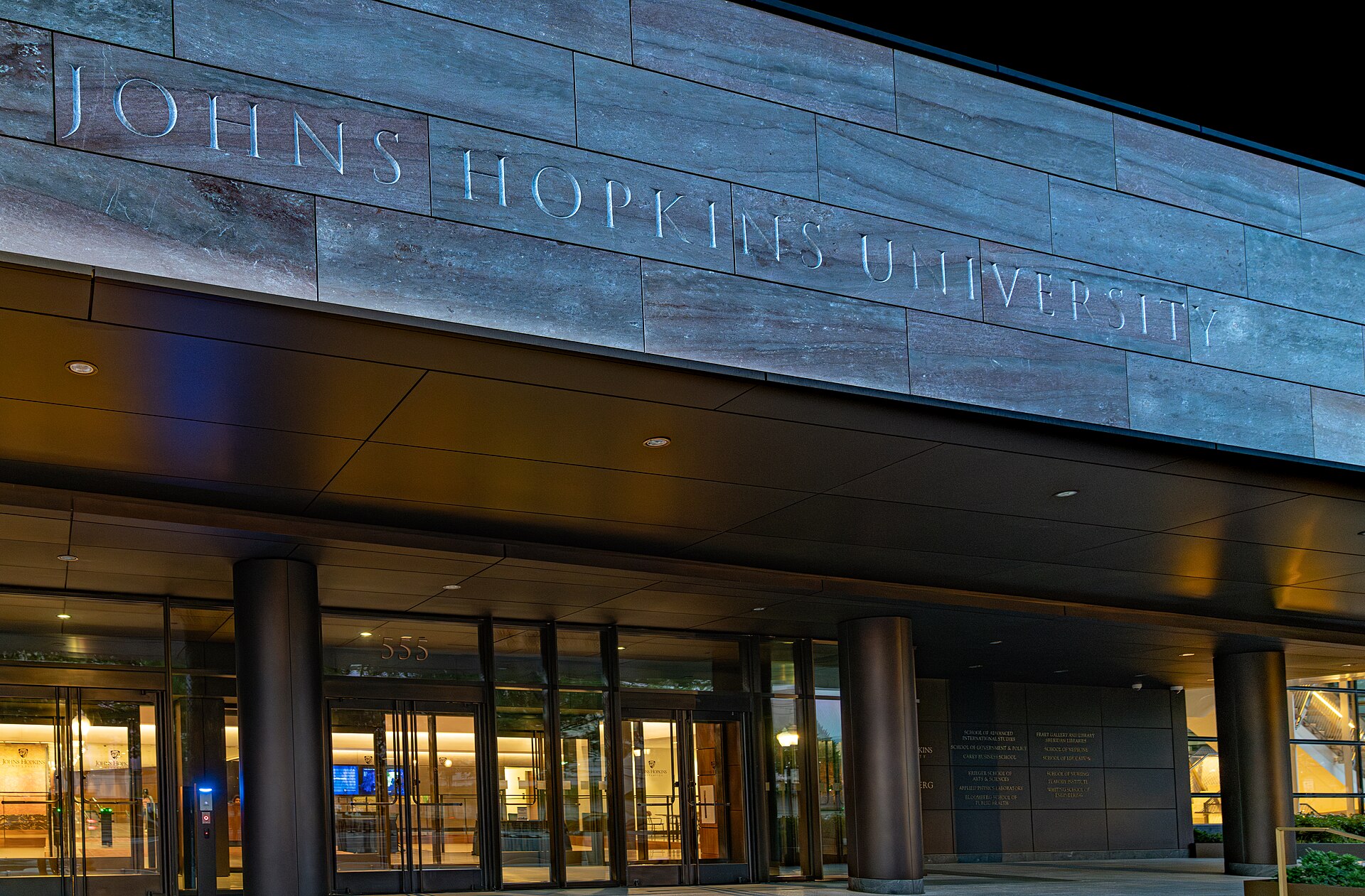
The case drew attention because the Johns Hopkins employee was stopped while boarding a domestic flight, not entering the country. It also shows how alleged visa violations are being pursued in airport settings.
Johns Hopkins health researcher Fatima Ameaka, a Cameroon-born employee of Johns Hopkins University’s Bloomberg School of Public Health in Baltimore, was detained by ICE at Baltimore-Washington International Thurgood Marshall Airport while boarding a domestic flight on Tuesday and was released Friday night, her lawyer told CBS News Baltimore on August 1, 2026.
The Department of Homeland Security said Ameaka entered the United States in 2023 on a visa that allowed her to stay until June 13, 2024, and alleged she overstayed. The Hopkins health researcher’s release comes as federal authorities increase airport immigration enforcement.
The airport stop at BWI
Ameaka was preparing to board a domestic flight for a personal trip when immigration officers detained her at BWI, according to CBS News Baltimore, which cited a Johns Hopkins spokesperson. The Washington Post also reported that she was detained as she boarded a domestic flight.
DHS told CBS News Baltimore that agents with U.S. Immigration and Customs Enforcement arrested Ameaka on July 28 at Baltimore-Washington International Thurgood Marshall Airport. The agency described the action as part of an immigration case tied to her visa status.
Her attorney, Benjamin Osorio, told CBS News that Ameaka was released from detention on Friday night. CBS reported that she has a preliminary immigration hearing scheduled for August 10 in Annandale.
The release is a meaningful development for Ameaka, but it does not mean the government has dropped the case. It means she is no longer in ICE custody while the immigration process continues.
Why DHS said ICE acted
The central claim from DHS is straightforward: the agency says Ameaka entered the United States on June 27, 2023, on a visa that permitted her to remain until June 13, 2024. DHS alleged she stayed beyond that date.
That allegation is not the same as a final ruling from an immigration judge. Visa-overstay cases can turn on documents, status changes, applications, deadlines, notices and other facts that may not be visible in the first public statement from the government.
Still, DHS framed the arrest as an enforcement action for a violation of immigration law. According to the CBS report, the agency initially said Ameaka would remain in ICE custody pending removal proceedings.
Her Friday night release changed the immediate conditions of the case, not the larger legal question. The next stage is expected to play out through immigration court rather than through airport enforcement alone.
Why Hopkins affiliation mattered
Ameaka’s role at Johns Hopkins gave the case wider attention in Baltimore and beyond. Johns Hopkins is one of the country’s best-known research institutions, and its Bloomberg School of Public Health has a global profile.
Universities depend heavily on international scholars, researchers, physicians, graduate students and technical staff. When a university employee is detained at an airport over immigration status, the story travels quickly through academic circles because it touches a familiar anxiety: whether paperwork issues can suddenly interrupt work, research and travel.
That does not erase the government’s authority to enforce immigration law. It does explain why this case became more than a routine arrest notice. For universities, the concern is not only one person’s detention, but the chilling effect such actions can have on foreign-born researchers who travel inside the United States.
Johns Hopkins has not been reported as a legal party to the immigration case. Its publicly reported role so far is confirming Ameaka’s employment and the circumstances described around her trip.
Airport enforcement is expanding
The arrest landed amid a broader push to use airports as immigration enforcement points. Reuters reported that Ameaka’s detention came as airport arrests have surged, and The Washington Post reported that the Trump administration has begun targeting alleged visa violations by foreign passengers as part of an effort to increase deportations.
Airports are unusually sensitive spaces for enforcement because they combine identity checks, travel records and federal law-enforcement presence. Even domestic travel can bring people into contact with security systems and officers who may check information beyond a boarding pass.
Supporters of stricter enforcement argue that visa deadlines matter and that overstays should have consequences. From that view, airports are logical places to find people who are traveling and whose identity can be verified.
Critics see a different risk: that highly visible airport arrests can sweep in people with pending or complicated immigration histories, disrupt families and workplaces, and make lawful travelers fear that a routine trip could become a detention event.
Release does not settle status
Ameaka’s release Friday night is the clearest new outcome, but it leaves several important questions unresolved. Public reports do not fully explain whether she disputes DHS’s timeline, whether any application or status request was pending, or what conditions were attached to her release.
Immigration proceedings often move on a slower track than the initial arrest. A preliminary hearing may address scheduling, representation, allegations and procedural steps rather than settle the entire case at once.
The case also highlights how little the public usually knows at the moment an immigration arrest becomes news. Government statements tend to emphasize the alleged violation. Lawyers and families may focus on context, equities, employment, community ties or possible errors. The full record often emerges later, if at all.
For now, the confirmed facts are narrow but significant: Fatima Ameaka, a Johns Hopkins public health researcher from Cameroon, was arrested by ICE at BWI while boarding a domestic flight, DHS alleged a visa overstay, and she was released from detention Friday night while immigration proceedings continue.
What the case signals
For Baltimore readers, the story is local: a Johns Hopkins employee detained at the region’s major airport. For national readers, it is a window into how immigration enforcement is showing up in places many travelers consider routine.
The practical takeaway is not that every domestic airport trip carries the same risk. It is that immigration status questions can surface outside border crossings, especially during periods of more aggressive enforcement.
Ameaka’s case now moves from the airport to the immigration system. The outcome will depend on documents, legal arguments and decisions not yet public. Her release answers the immediate question of custody, but not the larger one of how far airport-based immigration enforcement will reach.
Leave a Reply