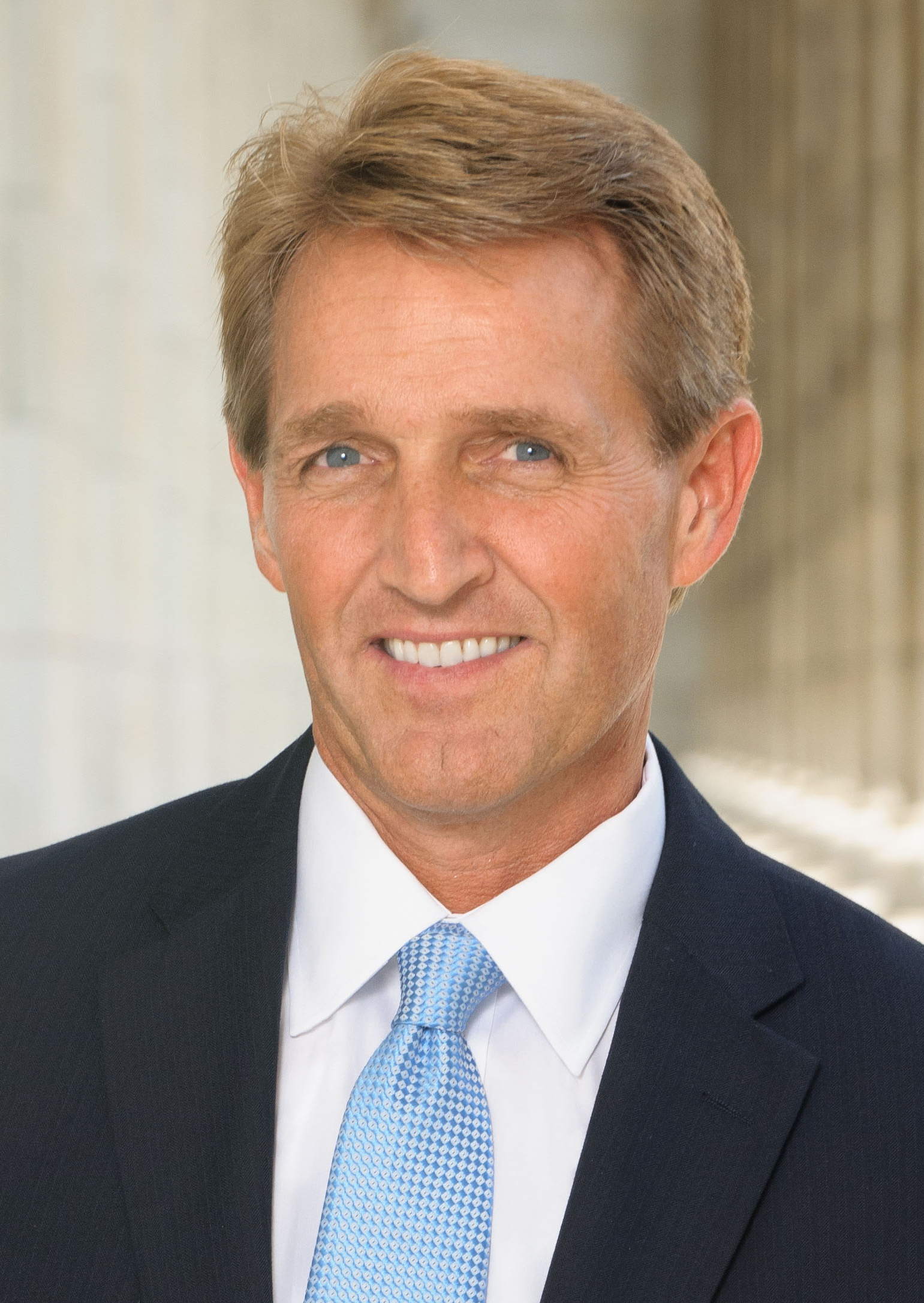
The endorsement is not about party-switching so much as permission: a prominent conservative is telling uneasy Republicans and independents that voting for Ossoff can be framed as a character vote.
Another conservative endorses Jon Ossoff in the Georgia Senate race: Jeff Flake, the former Republican senator from Arizona and Biden-era ambassador to Turkey, is backing the incumbent Democrat as Georgia Republicans contest the seat behind Trump-endorsed Rep. Mike Collins.
The race is crucial in Georgia because it is drawing national attention, testing whether Ossoff can expand support beyond Democrats, and giving conservatives uneasy with Collins a visible off-ramp. Flake told the Atlanta Journal-Constitution that “character matters,” even though he still disagrees with Ossoff on many policy questions.
Flake turns to character
Flake’s endorsement, reported by USA TODAY after his interview with the Atlanta Journal-Constitution, is notable because it does not read like an ideological conversion. He is not presenting Ossoff as a conservative. He is presenting him as a Democrat whom some conservatives can justify supporting.
That distinction matters in a state where statewide margins have been thin and where a Senate race can turn on voters who do not neatly fit into party messaging. Flake’s argument is that the office itself, and the conduct of the person holding it, should weigh more heavily than routine partisan alignment.
“I’m still a conservative Republican. But character matters,” Flake told the AJC, according to USA TODAY. He said he wanted someone in the seat who “takes the institution seriously and will protect the institution.”
Flake also drew a contrast with what he described as the risk of electing someone who would act as a “rubber stamp” for the president. That line goes directly to the central argument Democrats are making against Collins: that the Republican nominee would be more loyal to Donald Trump than to an independent Senate role.
Ossoff welcomes GOP cover
Ossoff’s campaign quickly embraced the endorsement, not as a curiosity but as evidence of a broader coalition. In a statement to USA TODAY, Ossoff thanked Flake for his “support, statesmanship, and public service,” while sharply attacking Collins as a “scandal-plagued Trump puppet and bigot.”
That language shows how Ossoff is trying to hold two messages at once. To persuadable conservatives, the campaign wants to look steady, institutional and acceptable. To Democrats, it still wants to frame Collins as a hard-right and ethically vulnerable opponent.
Flake gives Ossoff a validator with Republican credentials and a long record of conflict with Trump-era politics. He served in the Senate as a Republican, broke with his party at times, declined to seek reelection in 2018, and later served as ambassador to Turkey under President Joe Biden.
For voters who already dislike Trump, Flake’s endorsement may not change much. For Republicans and independents who dislike Democratic policy but worry about the direction of the GOP, it gives them a familiar language: not “I became a Democrat,” but “I made an exception.”
Collins faces consolidation test
Collins, a Georgia Republican congressman endorsed by Trump, is trying to make the race a conventional partisan fight. In a presidentially polarized state, that is often the simplest path: nationalize the contest, tie Ossoff to Democrats in Washington, and count on Republican voters to come home.
The complication is that Flake’s endorsement is aimed exactly at voters who might normally come home but are not fully comfortable with the Republican nominee. USA TODAY reported that Collins has faced scrutiny over a House ethics investigation into possible misuse of taxpayer funds involving staff pay. The existence of an investigation does not determine wrongdoing, but it gives opponents an opening.
Collins has also faced criticism over campaign conduct and associations, according to USA TODAY’s report. Those fights have helped Ossoff and his allies frame the race around judgment and temperament as much as policy.
That is why Flake’s comments land at a sensitive moment. If Collins can unify Republicans, conservative defections may remain symbolic. If he cannot, a handful of high-profile endorsements from the right could reinforce doubts that already exist among swing voters.
Polls show Ossoff ahead
Public polling cited by USA TODAY shows Ossoff starting from a stronger position than many incumbent Democrats would expect in a battleground state. An AARP survey put Ossoff ahead of Collins 52% to 43% among likely voters. A Fox News poll from late June showed Ossoff with 56% support.
Polls are snapshots, not outcomes. The electorate can change, turnout can shift, and Senate campaigns tend to become more nationalized as Election Day nears. Still, those numbers help explain why endorsements from conservatives are getting attention now.
They also point to one of the most important blocs in the race: older voters. USA TODAY reported that AARP data suggests voters over 50 could be central to the “swing,” including some who have voted conservative before but did not support Collins in the Republican primary.
The University of Virginia Center for Politics’ Crystal Ball has moved Georgia from “leans Democratic” to “likely Democratic,” according to the report. That rating is not a guarantee, but it reflects a view among analysts that Ossoff currently has room to maneuver.
Not the first conservative
Flake is not the only conservative voice to publicly back Ossoff. In June, Atlanta conservative talk radio host Shelley Wynter endorsed Ossoff on 95.5 WSB during an interview with the senator, according to USA TODAY.
Wynter framed the decision in job-performance terms. He said he viewed reelection as a “job interview” and had not seen anything from Ossoff that required firing him from the job. He had previously criticized Collins and said he could not support the kind of campaign tactics he attributed to him.
That kind of endorsement may matter differently from Flake’s. Flake brings national Republican credentials and an anti-Trump conservative profile. Wynter brings a local media voice in the Atlanta market, where suburban and exurban voters can shape statewide margins.
Together, the endorsements let Ossoff tell a story that is bigger than Democratic enthusiasm. He can argue that Republicans, independents and conservatives with concerns about Collins are not isolated — and that a vote for Ossoff can be framed as a vote for stability.
The risk for both sides
There is a reason cross-party endorsements get attention, but also a reason campaigns should not overread them. Most voters still cast ballots along party lines. A former senator from Arizona and an Atlanta radio host can influence the conversation, but they cannot by themselves rewrite Georgia’s partisan map.
For Ossoff, the risk is appearing too eager to court Republicans at the expense of energizing Democrats. His campaign’s statement tried to avoid that by pairing gratitude for Flake with a blistering attack on Collins.
For Collins, the risk is different. If the race becomes a referendum on Trump loyalty and personal conduct, Ossoff’s coalition strategy becomes easier. If Collins can make it a referendum on Democratic control in Washington, he may pull hesitant Republicans back into line.
What remains unclear is whether Flake’s endorsement is a leading indicator or just another elite defection from Trump’s wing of the party. In a close state, the answer may not require a mass movement. A small number of conservatives deciding that character outweighs policy could be enough to matter.
Leave a Reply