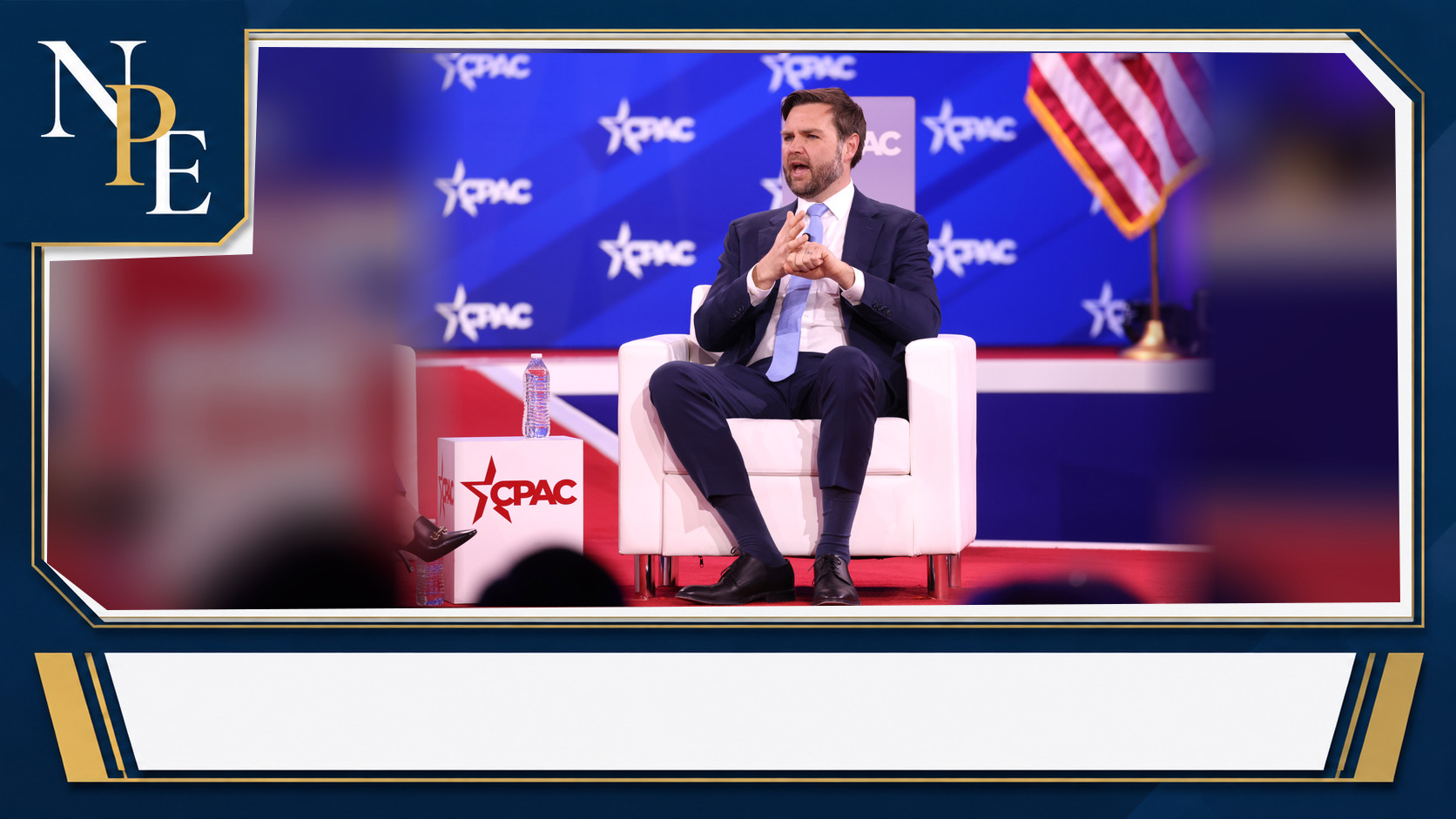
Vance’s account of a moment he viewed as spiritually meaningful brought mockery from some online critics and support from others. The debate is less about proving what happened than about how public figures use personal belief in political life.
JD Vance said a falling glass felt like a message from God during a television interview, after it came off a wall while he and a friend were talking about Christianity. Online critics mocked or criticized the claim, turning the vice president’s personal faith anecdote into a widely shared political punchline.
The story draws attention not because a glass fell, but because Vance chose to discuss what he believed the moment meant. His account has reopened a familiar argument over religious testimony, political image and whether viral reaction says much about voters at all.
The account behind the reaction
According to an account summarized by Dagens.com and attributed to the Irish Star, Vance described a conversation with a friend about Christianity when a glass fell from a wall.

Vance said skeptics could see the incident as meaningless. He said he experienced it differently: “At that moment, it felt like God was trying to send me a message,” according to the report.
That is a claim about Vance’s interpretation of an event, rather than evidence meant to require others to reach the same conclusion. Still, the image of a falling object gave the story an unusually simple detail for online users to repeat, remix and ridicule.
Why a glass became the focus
Much of the criticism cited in coverage centered on the falling glass, not on the broader discussion of Vance’s religious journey. One reaction described the episode as “not a great sign,” treating broken or falling glass as an ominous symbol.
Other critics characterized the story as overly theatrical for an elected official. Former French ambassador to the United States Gérard Araud was among the people quoted in coverage expressing disbelief about the anecdote.
The response illustrates how a short, concrete image can overwhelm its original context. A discussion of conversion or doctrine can be nuanced and lengthy; a falling glass can be reduced to a joke in seconds.
That does not establish that the ridicule reflects a broader public consensus. The reported reaction consists of individual public posts and comments, not representative polling of voters.
Faith is central to Vance’s biography
The anecdote surfaced while Vance was discussing his religious life and, according to Dagens.com, promoting Communion: Finding My Way Back to Faith, a memoir about his adult conversion to Catholicism.
His faith has long been part of his public story. Vance was raised in an evangelical environment, later identified as an atheist or skeptic, and entered the Catholic Church as an adult.
Reuters reported in 2024 that Vance had said he felt “a touch of God” before speaking at the Republican National Convention. The falling-glass account therefore fits within a public narrative he has discussed before, rather than appearing as an isolated statement about supernatural intervention.
For many religious people, attaching spiritual meaning to an ordinary event is not unusual. Religious traditions often include testimony, providence and personal experiences that believers understand as meaningful even when they cannot be verified by outsiders.
Personal testimony meets public power
The stakes change when that testimony comes from a national political figure. Politicians often speak about faith to explain values, identity and ties to a community, but personal stories can also be heard as attempts to claim special moral authority.
There is an important boundary in the available account: Vance did not say the falling glass told him to make a government decision or gave him a divine mandate to govern. Describing a personal experience is different from claiming divine approval for a policy.
Critics may nevertheless regard the anecdote as politically relevant because public officials decide which private experiences to share with a national audience. For voters who prefer a sharper separation between private belief and political identity, the story may feel unpersuasive or uncomfortable.
Supporters can reach a different conclusion. They may see the mocking response as a cynical dismissal of an openly expressed faith, and Vance’s account as an honest description of what he felt in a particular moment.
What the online response cannot show
Viral mockery can measure attention, but it cannot reliably measure opinion. There is no indication in the available reporting that the falling-glass story changed public opinion in a measurable way, and no broad representative polling on the anecdote was identified.
It is also unclear how much of the original Fox News conversation focused on this particular moment, or whether clips and reposts removed it from a longer discussion of Vance’s conversion. That uncertainty matters when political coverage is driven by one memorable quote.
People can reasonably disagree with Vance’s interpretation without treating the story as proof that he is either sincere or insincere. Personal religious testimony is not independently testable in the way a factual policy assertion can be; it is an account of what the person says he experienced.
A small story with a larger divide
The episode blends politics, religion and superstition into a compact image that is easy to turn into an internet punchline. That explains its reach, but not necessarily its political impact.
What is clearer is that Vance’s account put his religious journey back into public view. His critics found a vivid symbol for their objections, while supporters had another example of his willingness to speak candidly about faith.
The available evidence does not support a conclusion that the reaction represents all voters or that it will reshape Vance’s standing. It does show how quickly a personal statement can become public branding when it is delivered by someone close to the center of federal power.
Leave a Reply