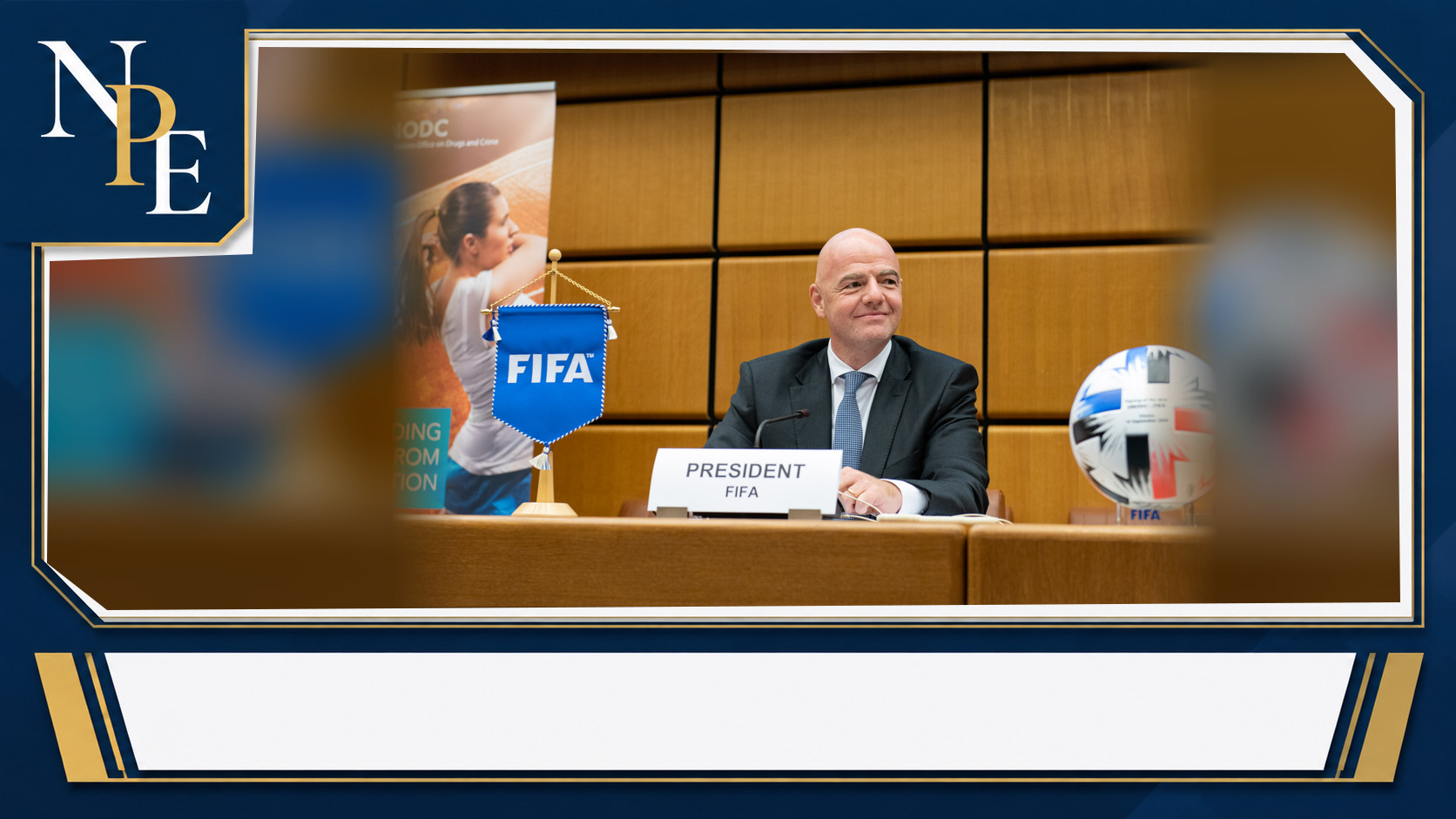
Ireland’s decision does not determine the FIFA presidency on its own, but it adds to scrutiny around the organization’s leadership before the March 2027 election. It also puts renewed focus on Infantino’s public association with Donald Trump and the governance questions facing world soccer.
The Football Association of Ireland has withdrawn its support for Gianni Infantino’s re-election as FIFA president, rescinding an endorsement it had supplied earlier this year. The FAI’s decision, announced after a board meeting, means Infantino’s campaign has lost Ireland’s backing ahead of the FIFA presidential vote described in the supplied materials as taking place in March 2027.
The move matters because it lands amid criticism of Infantino’s leadership and his association with Donald Trump. The Irish Star reported that the FAI cited concerns about governance, transparency and meaningful consultation, turning what might have been a routine letter of support into a pointed public split with FIFA’s president.
The FAI reverses its endorsement
The FAI said it had formally withdrawn its support for Infantino to be re-elected as FIFA president. According to the statement quoted by the Irish Star, the association’s board decided to rescind a letter backing him and then wrote to FIFA to explain its reasoning.
That distinction is important. The FAI has not merely declined to issue a new endorsement; it says it has actively revoked one it had already given. In a leadership election, that creates a clearer political signal than silence or a decision to wait.
The association also acknowledged FIFA’s financial support for Irish football. But it said recent events had raised “significant concerns” about governance, transparency and the lack of meaningful consultation.
The FAI framed its stance through its own recent experience. It said the governance challenges it has had to overcome give it a particular responsibility to advocate for best practice. That language puts the dispute squarely in the realm of institutional accountability, not just a disagreement over one football policy.
Why the statement carries weight
FIFA’s president is elected by member associations, so formal backing from a national body is politically useful even when it is not the same as a binding ballot. Ireland’s withdrawal does not settle the contest or establish how the FAI will ultimately vote, but it removes a visible sign of confidence in the incumbent.
It also offers a template for other associations weighing whether to turn unease into a public position. The FAI did not rely on a narrow sporting complaint. Its statement emphasized decision-making standards: transparency, consultation and governance.
Those are difficult concerns for any international sporting body to dismiss as isolated. They go to the process by which major choices are made, who is consulted, and whether member associations believe their views carry weight.
- What is confirmed by the FAI statement: it rescinded its letter of support and notified FIFA.
- What remains unclear: the specific reasoning sent privately to FIFA and whether the FAI will support another candidate.
- What the move does not do: automatically remove Infantino from office or prevent him from seeking another term.
Private-investment proposal fuels scrutiny
The Irish Star connected the FAI’s decision to broader criticism of a proposal attributed to Infantino involving the sale of portions of the FIFA World Cup to private investors through an entity called FIFA Forward Enterprise. The report said football federations and individual FIFA member associations had widely condemned and rejected the idea.
The underlying objection, as described in the report, is not simply about raising money. It is about control of the World Cup, the sport’s most valuable competition, and the extent to which commercial investors could gain a stake in its future.
Supporters of greater private investment could argue that outside capital may help fund development projects, infrastructure and growth in areas of the game that need it. Critics, however, can reasonably question what commercial obligations would come with that funding and whether federations had a meaningful role in shaping such a deal.
The FAI has not publicly detailed every factor behind its reversal in the research provided. Its statement’s focus on consultation suggests that the manner of major decisions may be as consequential as the proposals themselves.
Trump connection adds political heat
The source article characterizes Infantino as associated with Donald Trump and says Infantino’s handling of the Folarin Balogun red-card matter, followed by Trump’s involvement, prompted concern among critics. The supplied research does not include a detailed account of that incident or a response from Infantino, FIFA or Trump.
Still, the reference helps explain why this has spilled beyond internal soccer politics. FIFA presidents routinely operate alongside national leaders because World Cups involve public infrastructure, security, visas and major commercial agreements. The challenge is maintaining confidence that sporting governance is not being shaped by personal political access.
For Infantino’s opponents, his relationship with Trump can become part of a wider argument about independence and judgment. For defenders, meetings with political leaders may be viewed as a practical part of running a global sporting organization. The available material does not establish that the FAI’s decision was based solely, or even chiefly, on the Trump connection.
A wider coalition is still uncertain
The Irish Star reported that UEFA had announced a boycott of FIFA events or tournaments while Infantino remains president, and that the Asian Football Confederation and CONCACAF had joined calls for his resignation. Those claims are consequential, but the supplied research does not include the underlying statements from UEFA, the AFC, CONCACAF or FIFA.
As a result, they should be treated as reported claims rather than independently established facts in this account. What is directly clear from the FAI statement is Ireland’s own change of position.
The report also said Infantino retains support from several African nations, naming Qatar, Lebanon, Morocco, Sudan, Egypt and Mauritania. If that backing holds, it underscores the basic reality of FIFA politics: dissatisfaction in one region does not necessarily translate into a unified global challenge.
Infantino has been FIFA president since 2016. An incumbent with established relationships across the confederations can remain formidable even when prominent member associations withdraw public support.
The March 2027 test ahead
The central question now is whether Ireland’s move becomes an isolated rebuke or the beginning of a broader reassessment of Infantino’s leadership. The FAI has made its objection concrete by rescinding a prior endorsement, but it has not announced an alternative candidate in the material available.
FIFA, meanwhile, has not been quoted in the supplied research responding to the FAI’s decision. Neither has Infantino. Their response, and any further explanation of the policies that prompted concern, will matter as much as the withdrawal itself.
For fans, the issue reaches beyond election-year maneuvering. Governance choices at FIFA influence how the World Cup is sold, how funds are distributed, how disciplinary controversies are handled and how much say national associations have in the game’s direction.
Ireland’s decision will not decide the FIFA presidency by itself. It does make one point harder to ignore: a federation that once backed Infantino now says the standards of governance and consultation are serious enough to take that support away.
Leave a Reply