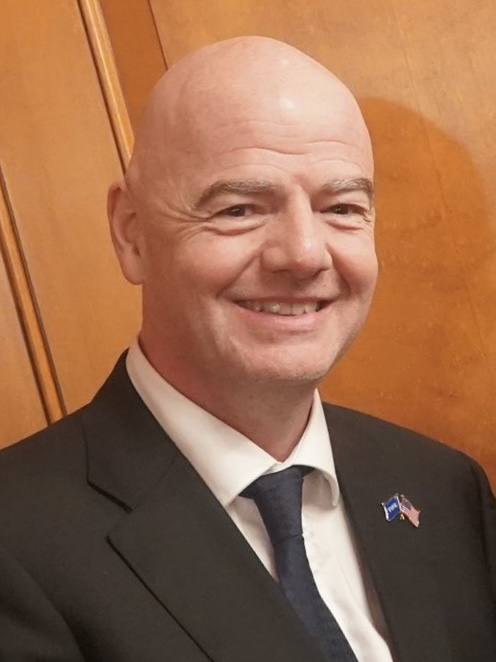
The succession talk is less about celebrity and more about vote math inside world soccer. UEFA’s revolt, FIFA’s 211 associations and a shelved $40 million-per-member plan have made the presidency conversation suddenly real.
Gianni Infantino’s future as FIFA president is uncertain after a backlash over a shelved plan tied to private investment in FIFA competitions. Here are five potential candidates to replace Gianni Infantino as FIFA president, and the candidates are ranked by realistic path to support, not just fame.
The dispute matters because Infantino’s proposal, as reported by Sports Illustrated, included offering FIFA’s 211 member associations $40 million each if they backed outside investment in the men’s and women’s World Cups and other FIFA events. UEFA threatened a World Cup boycott, said it had lost confidence in his leadership, and the idea was abandoned days later.
Why the succession talk changed
FIFA politics usually move slowly until they suddenly do not. The presidency is not decided by public popularity, television punditry or club trophies. It is decided by associations, alliances and regional blocs.
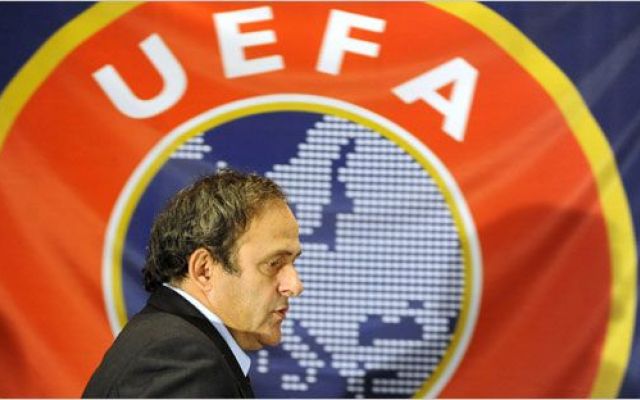
That is why the current pressure on Infantino is significant. Sports Illustrated reported that possible routes being discussed include an emergency FIFA Congress and a vote of no confidence. Such a motion would require support from 20% of FIFA’s 211 member associations, or 43 federations.
UEFA alone has 55 member associations, which gives Europe the numbers to start a challenge if it can keep its own house aligned. Starting a challenge, though, is not the same as winning one. FIFA presidents survive by building coalitions across continents.
The strongest successor would need more than a résumé. They would need credibility with confederations, comfort with FIFA machinery and enough distance from the abandoned proposal to become a clean break without frightening voters who prefer continuity.
Ranking the five contenders
- 1. Victor Montagliani. The Canadian Concacaf president looks like the most viable compromise candidate. He has been in charge of North and Central American and Caribbean soccer since 2016, sits close to FIFA’s power structure and comes from outside UEFA, which could help him avoid the charge that Europe is trying to seize the presidency. His region is also central to the 2026 World Cup, giving him practical tournament credibility at a moment when FIFA’s commercial future is under scrutiny.
- 2. Aleksander Čeferin. The UEFA president has the clearest political weapon: a 55-member confederation that can meet the threshold to push a challenge. Sports Illustrated reported that Čeferin is encouraging federations that backed Infantino to withdraw support. He would be the most direct anti-Infantino option. The obstacle is also obvious. FIFA is global, and some associations outside Europe may resist a campaign that looks like UEFA taking over.
- 3. Salman bin Ibrahim Al Khalifa. The AFC president and FIFA senior vice president has experience, seniority and a major confederation behind him. He criticized Infantino’s failed proposal as totally unacceptable in an open letter to the AFC’s 47 member associations, according to Sports Illustrated. He also has history: he ran against Infantino in the 2016 FIFA presidential election and lost. That past campaign shows ambition and networks, but it also means voters have already seen this matchup once.
- 4. Nasser Al-Khelaifi. The Paris Saint-Germain president has influence across club soccer, UEFA and FIFA. He chairs the European Football Clubs body, sits on UEFA’s executive committee and is on the FIFA Council. On paper, that makes him a serious operator. The problem is not lack of profile. It is appetite. A source close to him told BBC Sport, as cited by Sports Illustrated, that he genuinely does not want the job.
- 5. Arsène Wenger. Wenger is the best-known soccer figure on the list and now works inside FIFA as chief of global football development. His reputation as a former Arsenal manager would instantly soften FIFA’s public image. But the presidency is an electoral grind, not a technical director’s office. Wenger has influence, ideas and respect; he has far less visible experience in federation politics than the other names.
Why Montagliani gets the edge
Montagliani is not the loudest name in the succession conversation, which may be exactly the point. FIFA’s members often choose presidents who can reassure multiple blocs at once. A successful challenger would need to persuade critics of Infantino without alienating associations that benefited from his patronage or liked his expansionist agenda.
Concacaf’s position gives Montagliani a useful argument. He is not a UEFA candidate, not a club billionaire and not a celebrity outsider. He can present himself as a confederation executive who understands development money, tournament delivery and the political needs of smaller associations.
The 2026 World Cup also matters. The tournament will be staged in the United States, Canada and Mexico, inside Concacaf’s footprint. That does not automatically make Montagliani the next FIFA president, but it does place him near the biggest operational test in world soccer.
His challenge would be visibility. Fans know Wenger. Power brokers know Čeferin. Club owners know Al-Khelaifi. Montagliani would have to turn insider credibility into a public and electoral case for change.
Čeferin has leverage and risk
If this becomes a direct referendum on Infantino, Čeferin is the most consequential figure. UEFA’s threat to boycott future World Cups if the investment proposal moved ahead was a dramatic escalation, and its statement that it had lost confidence in Infantino’s leadership changed the tone of the dispute.
That gives Čeferin leverage, but it also raises the stakes. A UEFA-led challenge could be framed by rivals as Europe trying to dominate FIFA after clashing with the president. Many associations in Africa, Asia, Oceania and the Americas will want to know what a successor offers them beyond stopping one controversial plan.
Čeferin’s path would require building a broad anti-Infantino coalition without making the contest feel like UEFA versus everyone else. That is possible, especially if anger over transparency and private investment spreads. It is not automatic.
His clearest strength is that he can move votes. His clearest weakness is that everyone can see him moving them.
The outsider names have limits
Al-Khelaifi is a fascinating candidate because he sits at the intersection of club power, UEFA politics and FIFA governance. He helped lead the European club body after the failed European Super League project, giving him experience in a crisis that also revolved around money, control and the future of competitions.
Still, a FIFA presidency bid is not a side project. If he does not want the job, his influence may be more valuable as a kingmaker than as a candidate. In a contested race, support from club and UEFA circles could shape the field even if he stays out.
Sheikh Salman has the institutional credentials of a serious contender. He leads the Asian Football Confederation, holds a senior FIFA vice presidency and has already tested himself in a presidential election. His criticism of the investment plan also gives him a clear break with Infantino on the current issue.
Wenger’s case is different. He would be a public-relations reset, not a classic FIFA power candidate. His ideas on the game, including support for experimental rule changes, show imagination. But governing FIFA means counting votes from 211 associations, managing confederations and navigating commercial pressure. Admiration is not the same as an electoral machine.
What remains unclear now
The biggest unknown is whether Infantino actually faces a formal challenge. The investment proposal was scrapped, and that may reduce immediate pressure from some federations. FIFA’s internal politics often reward patience, negotiation and private concessions before public rebellion.
It is also unclear whether enough associations would support a no-confidence push if doing so threatened their relationship with FIFA leadership. The reported $40 million offer shows why money is central to this debate. Many smaller associations depend heavily on FIFA funding and may be wary of instability.
For now, the succession conversation is a warning signal. Infantino’s opponents have numbers, a grievance and potential names. They do not yet have a confirmed race, a declared challenger or proof that anger over the abandoned plan can become a majority movement.
If the pressure does harden into a contest, the winner will not simply be the most famous candidate. The next FIFA president would likely be the person who can turn frustration over the failed investment plan into a global coalition that feels safer than the status quo.
Leave a Reply