
The expats’ warnings tap into a long-running American argument over who should control the economy and how much power government should have. Their fears are real political views, but the label “socialism” covers very different systems and policies.
Expatriates criticized socialism and warned that it could control people and take away their property or earnings in America, according to a Fox News item. Their concern centers on personal freedom and property ownership: people who say they lived under socialist governments fear that a stronger state role in the economy can become a wider system of political control.
That warning matters because “socialism” is again a live word in U.S. politics, yet Americans often use it to mean very different things. The disagreement is not only over taxes or public programs; it is over whether economic security requires more government power, or whether that power eventually threatens individual choice.
Why the expats’ warning resonates
For people who left countries governed by self-described socialist or communist parties, the term can carry memories that are far more immediate than an argument over campaign slogans. They may associate it with state control of jobs, housing, business, travel, speech or political opposition.
The Fox News item’s central claim is a warning, not a forecast established as fact: these expatriates believe socialism could lead government to control people and strip away what they have earned or own. Their perspective reflects a concern that economic authority and political authority can reinforce each other when too much of both is concentrated in the state.
That view has a powerful place in American political debate. It also explains why broad claims that a program is “socialist” can generate such an intense response, even when people are discussing policies that do not involve government ownership of private property or industry.
Socialism does not have one meaning
The basic definition usually involves public, social or worker control over the means of production—the major assets and industries used to produce goods and services. But the word has described very different systems across history, from authoritarian one-party states to democratic movements advocating an expanded public role in health care, education, housing or labor protections.
Brookings, in its primer on socialism, notes that the modern U.S. debate is shaped by competing definitions. One description emphasizes government-provided health insurance, retirement support and tuition-free higher education. Another focuses on government control of key industries such as utilities, transportation and communications.
Those definitions can produce sharply different answers to the question of whether socialism means “taking everything away.” A government program funded through taxes is not the same thing as abolishing private ownership. At the same time, critics argue that even limited expansions of state power should be examined for costs, accountability and the risk of future overreach.
Property is the core dispute
The expatriates’ concern about property is not incidental. Ownership gives people control over homes, savings, businesses and the ability to make decisions without needing approval from political leaders. When a government owns or directs major parts of economic life, opponents worry that individuals become more dependent on officials and less able to act independently.
Supporters of democratic socialism and social democracy make a different argument. They generally contend that private ownership can remain in place while public policy reduces the risks that come with illness, job loss, unaffordable education or unequal bargaining power. In that view, a stronger safety net can expand practical freedom by giving people more security and more choices.
The fault line is clear: critics prioritize limits on state power and protection for private property, while supporters emphasize protection against economic insecurity and concentrated private power. Both sides use the language of freedom, but mean different kinds of freedom.
America’s debate has deep roots
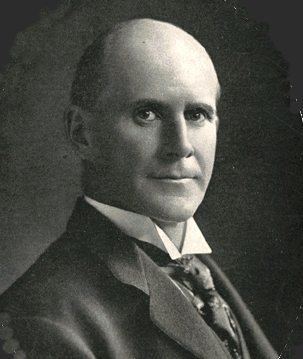
Socialism is not a new idea in the United States. Brookings notes that Socialist Party candidate Eugene V. Debs won 6% of the popular vote in the 1912 presidential election, and that socialist officeholders once served in hundreds of cities. The tradition later lost political influence amid repression during World War I and the backlash tied to the Soviet Union.
The term returned to national politics after the 2008 financial crisis, slow wage growth, rising inequality and concern about the cost of college and health care. Sen. Bernie Sanders’ presidential campaigns and the emergence of prominent politicians who call themselves democratic socialists brought the label back into everyday political vocabulary.
That history helps explain why the same word can evoke Scandinavia for one voter, Soviet-style repression for another and an argument over public services for someone else. It is a label with a long history, but no single universally accepted American meaning.
Personal experience and policy are different
Personal testimony can illuminate the human consequences of repressive governments. People who experienced censorship, shortages, political persecution or confiscation may reasonably see early warning signs where others see ordinary policy disagreements.
But lived experience does not eliminate the need to examine a specific proposal. A debate about public health insurance, for example, requires questions about funding, access, provider choice, administration and limits on government authority. Calling it socialism may describe one side’s concern, but it does not by itself settle how the policy would operate.
The same standard applies to advocates. Pointing to successful social-democratic programs abroad does not automatically answer whether a policy would work in the United States, what it would cost or what tradeoffs it would create. Details matter because political labels can obscure them.
What remains unresolved
The expats’ warning raises a question that America has never fully settled: how can a country provide economic protections without making citizens overly dependent on government? There is no simple dividing line, and reasonable people disagree about where it should be drawn.
What is clear is that socialism will remain a contested term. Critics will continue to invoke the danger of control and lost property rights, especially through the experiences of people who fled authoritarian systems. Supporters will continue to argue that democratic institutions, elections, courts and constitutional protections distinguish their agenda from authoritarian rule.
The most useful debate starts by recognizing both realities: authoritarian governments have used state economic control to entrench political power, and public programs within democratic countries are not all equivalent to that model. The real test is whether a specific policy preserves accountability, individual rights and meaningful choices.
Leave a Reply