
A term once linked to awareness of racial and social injustice has become a political vulnerability in many Democratic conversations. The shift is less about abandoning every underlying policy than about fighting over language, tone and what voters hear in a loaded label.
Democrats are reassessing and distancing themselves from “woke” rhetoric as the term has become politically undesirable within parts of the Democratic Party. What began as language associated with awareness of racial and social injustice is now widely treated as a liability in campaign messaging, particularly as voters and candidates revisit the progressive politics that peaked around 2020.
The immediate debate is not over whether Democrats still support civil rights, abortion access, LGBTQ+ protections or efforts to address inequality. It is over whether “woke” has become such an effective Republican insult that Democrats gain little by defending the label at all.
Why the label became toxic
“Woke” did not start as a partisan branding exercise. NBC News reported in 2021 that the word had a long history in Black culture and entered wider political use through activism, including the 2014 protests in Ferguson, Missouri, after the police shooting of Michael Brown.
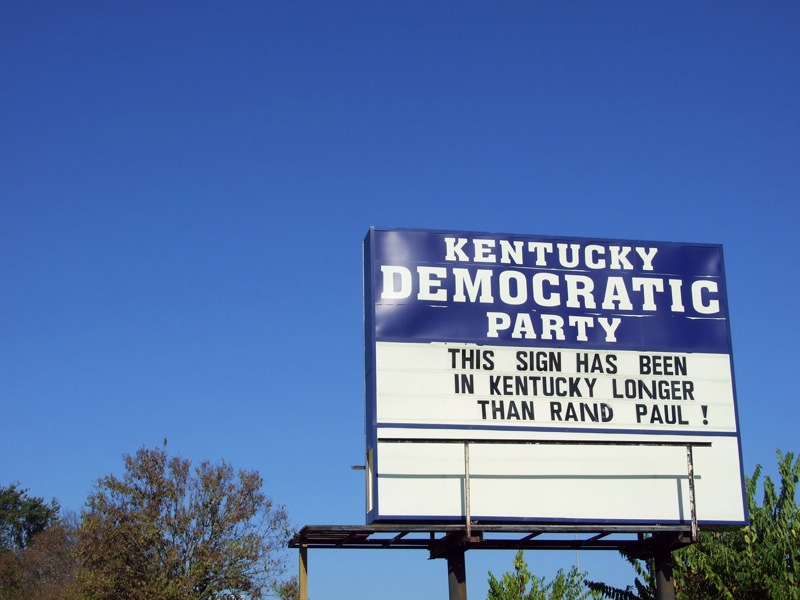
“Stay woke” was a call to remain alert to racial injustice. Over time, the term broadened into a social-justice marker. Then it was repurposed by conservatives as a catchall criticism of liberal institutions, corporate diversity initiatives, education policies and cultural change.
That shift matters because the word now often carries a meaning determined by its critics rather than the people it once described. A candidate can reject the label and still support many policies opponents portray as “woke.”
Republican politicians learned that the term can compress a complicated critique into one emotionally charged word. As NBC News noted in its 2021 reporting, conservative officials and operatives used it as shorthand for a worldview they opposed, even while offering different definitions of what it meant.
The 2020-era reckoning
The current Democratic reassessment is closely tied to the political atmosphere of 2020, when protests over policing, racial justice and the pandemic pushed progressive language and ideas rapidly into mainstream party debate.
Some positions and slogans from that period became highly visible, including calls to “defund the police,” arguments over speech and identity, and corporate or institutional initiatives framed around equity. Not every Democrat embraced those approaches, but opponents often treated them as representative of the entire party.
NBC News reported on Aug. 16, 2026, that Democrats were increasingly referring to that period as “Woke 1” while debating how to define it and distance themselves from parts of its rhetoric. The report described an argument on the left over whether the political and cultural impulses of the era went too far.
That framing can sound dismissive to activists who see the period as a necessary response to real injustice. But it also reflects a practical concern among Democratic candidates: old social-media posts, past statements and previously fashionable language can reappear in competitive races with little room for explanation.
Policy and language are different
The most important distinction in this debate is between changing language and changing policy. A Democrat may argue for anti-discrimination enforcement, police accountability or more inclusive schools while declining to call any of it “woke.”
For party strategists, that is not necessarily an ideological retreat. It can be an attempt to use more concrete language: safe neighborhoods, fair treatment, equal opportunity, affordable health care and accountable government.
Critics of that strategy see a risk. They argue that avoiding a word because opponents weaponized it can allow those opponents to set the boundaries of acceptable debate. They also warn that vague, poll-tested language may fail to communicate clearly with core Democratic constituencies.
Supporters counter that campaigns cannot ignore the baggage attached to a phrase. If voters hear “woke” and think of elite institutions, social-media pile-ons or cultural scolding rather than fairness, they say, defending the word becomes an avoidable distraction.
Republicans still have an advantage
Republicans do not need Democrats to identify as “woke” for anti-woke messaging to continue. The label remains useful precisely because it is flexible. It can be attached to a school policy, a company advertisement, a diversity program or a Democratic official’s statement.
Its vagueness is part of its political power. A broad accusation can unite voters who disagree on specifics but share a feeling that cultural institutions have changed too quickly or are speaking down to them.
That creates a difficult messaging problem for Democrats. Ignoring the attack can leave its meaning uncontested. Arguing over the definition can keep the attack alive. Fully accepting the label can make it easier for opponents to tie local candidates to national culture-war disputes.
The party’s emerging response appears to be less about winning the word back than making it less central. Candidates can try to redirect attention toward costs, housing, wages, health care, public safety and the practical effects of federal or state policy.
Voters may hear different things
There is no single electorate reaction to “woke.” For some voters, it remains connected to empathy, civil-rights awareness and a willingness to confront discrimination. For others, it signals performative politics or a style of liberalism they distrust.
That split explains why Democrats face competing incentives. The party must avoid treating culturally progressive voters as a problem while also recognizing that contested language can carry very different meanings in a college town, a suburban swing district and a working-class community.
It is also why the discussion should not be reduced to a simple claim that voters have rejected every progressive idea. Public attitudes toward individual issues are often more nuanced than attitudes toward a political label. A slogan can be unpopular even when particular policies associated with it draw support.
The more durable question is whether Democrats can describe their values in language that feels direct rather than defensive. That challenge extends beyond one word.
What the shift could mean
For now, “woke” appears to be moving from an occasional cultural descriptor to a cautionary political term within Democratic circles. The party is confronting how quickly a word can travel from activist language to a national attack line.
That does not settle the underlying arguments over race, gender, policing, education or the role of institutions. Those disputes remain active, and Democratic officials will still have to make specific policy choices rather than merely adopt different vocabulary.
What remains unclear is whether distancing from the label will meaningfully change how voters view Democrats, or whether Republicans will simply apply it to the same policies under a different name. The answer may depend less on the word itself than on whether campaigns can connect their positions to everyday concerns without abandoning the constituencies and principles that shaped the debate in the first place.
Leave a Reply