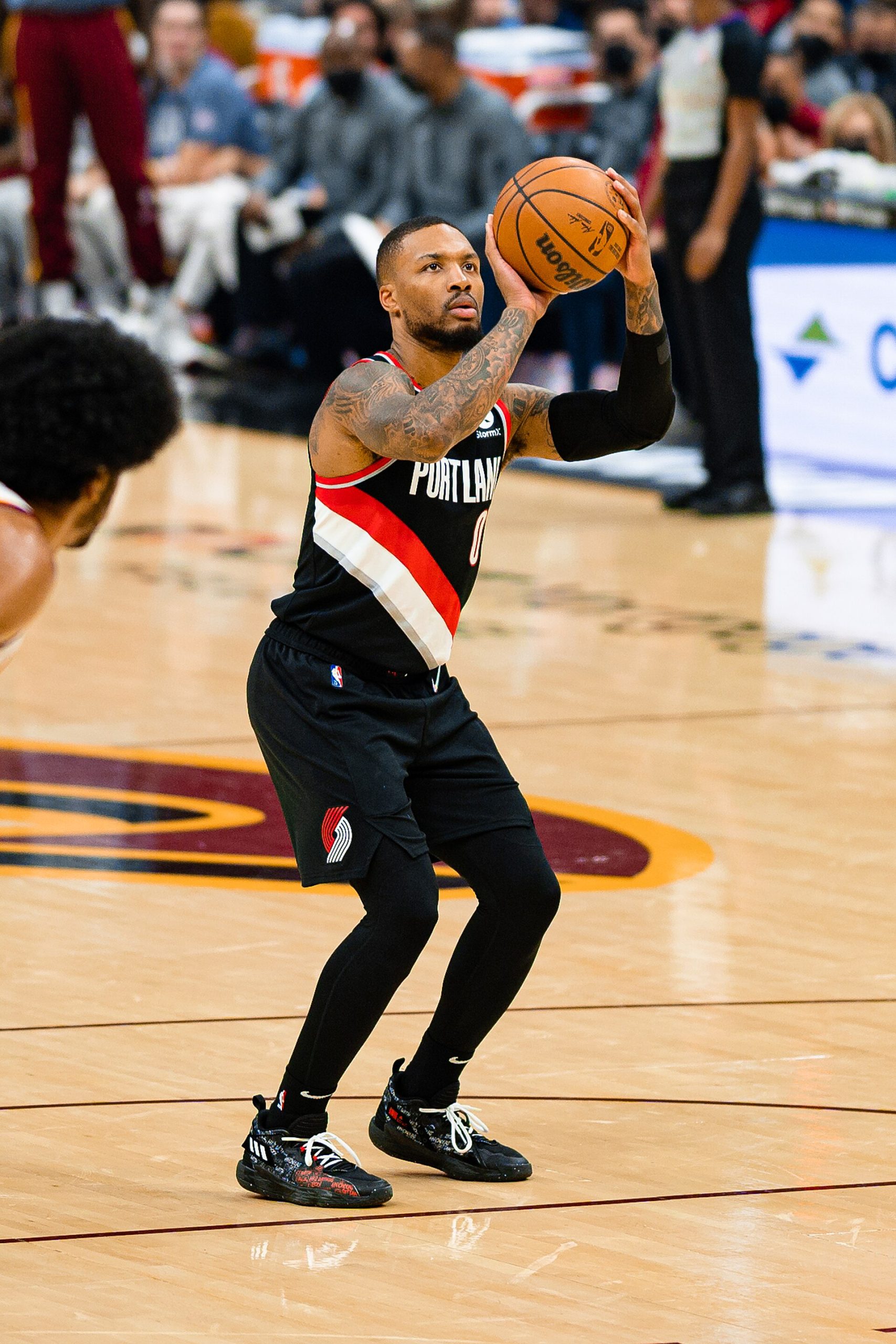
The clause gives Lillard unusual control in a league built on roster movement. It also shows how rare true player trade vetoes have become, even for the biggest stars.
Damian Lillard is the only NBA player with a formal no-trade clause for the 2026/27 league year, according to HoopsHype’s July 30, 2026 item citing Hoops Rumors. Lillard negotiated the clause into his contract with the Trail Blazers last summer, giving him a rare veto over any trade.
The distinction matters because LeBron James and Bradley Beal had no-trade clauses in recent years, but their protections are gone: Beal gave his up in a Suns buyout during the 2025 offseason, and James’ Lakers contract expired this summer.
Lillard has the league’s lone veto
A no-trade clause is exactly what it sounds like at the highest level: a team cannot trade the player unless the player agrees. In Lillard’s case, that makes him the NBA’s only player entering the 2026/27 league year with that formal power written into his contract.

That is a striking status for a league where trades are central to team-building and where even franchise icons can be moved if contracts, timelines and front-office priorities line up. Lillard’s clause does not mean a trade is coming. It means any trade involving him would require his approval.
HoopsHype’s report, citing Hoops Rumors, says Lillard negotiated the clause into his deal with the Trail Blazers last summer. That detail is the key: this is not a handshake understanding, a public preference or a star’s informal influence. It is contract language that gives him a formal say.
Why no-trade clauses are so rare
NBA fans often talk about superstars having leverage, but a formal no-trade clause is a different level of control. Most stars can influence destinations through contract length, public messaging, agent pressure or the threat that they will not re-sign elsewhere. Lillard’s clause is cleaner and stronger: he can simply say no.
That kind of clause is rare because it changes the balance between player and team. Teams value optionality. A no-trade clause narrows the market, complicates roster planning and can reduce leverage in negotiations with other clubs.
For a player, though, the appeal is obvious. Careers can be rerouted overnight in the NBA. A no-trade clause gives a veteran star protection against being moved somewhere he does not want to go, especially late in a career or after committing to a franchise.
The result is a clause that is both simple and difficult to get. It is not just about being famous enough. It requires the right contractual situation, the right negotiating leverage and a team willing to surrender a valuable tool.
LeBron and Beal lost theirs
Lillard’s status stands out more because two recent examples have dropped off the list. Bradley Beal had a no-trade clause in his contract, but HoopsHype’s report says he gave it up when he agreed to a buyout with the Suns during the 2025 offseason.
That fits the logic of a buyout. A player may gain freedom from one contract situation, but the terms of the exit can also mean surrendering protections attached to the old deal. Beal’s veto power did not follow him once that arrangement changed.
James’ situation is different. His no-trade clause no longer applies because his contract with the Lakers expired this summer, according to the report. Once that deal ended, the protection tied to it ended with it.
The LeBron footnote is especially revealing. The report says James would have been eligible for a no-trade clause had he rejoined the Cavaliers or Heat in free agency, but because he had not previously played for Philadelphia, he could not add one to his new contract with the Sixers. Even for LeBron, the rulebook and contract history matter.
Player power, with limits
The modern NBA is often described as a player-empowerment league, and there is truth in that. Stars can shape markets. Agents can steer conversations. Preferred destinations can become public before teams want them to be.
But Lillard being the only formal no-trade-clause holder shows the limits of that label. Influence is common. A binding veto is not.
That difference matters during trade season. A star without a no-trade clause may still have soft power, especially if acquiring teams worry about fit, attitude or future commitment. But the team holding the contract retains the final legal ability to make a deal.
With Lillard, the Trail Blazers do not have that same unilateral path. If a scenario ever developed where Portland wanted to move him, the franchise would need to find not only a trade partner, but a destination and deal Lillard would accept.
What it means for Portland
For the Trail Blazers, the clause is both a commitment and a constraint. It signals that Lillard had enough leverage to secure control over his future when the deal was negotiated. It also means the front office must account for his preferences in any major roster decision involving him.
That does not automatically create conflict. A no-trade clause can be a stabilizer if both sides remain aligned. It can reassure a player that he will not be moved without consent, and it can reinforce the public message that the team values him as more than a movable asset.
The tension appears only if priorities change. Teams pivot. Players reassess timelines. Competitive windows open and close. In that kind of environment, a no-trade clause turns a potential front-office decision into a shared decision.
That is why Lillard’s clause is more than a contract trivia item. It affects leverage before any trade call is made. Other teams know he must approve. Portland knows he must approve. Lillard knows he has the last word.
The next clause may take time
The obvious question around the league is who might be next. The answer is not clear from the current contract landscape. HoopsHype’s snapshot for the 2026/27 league year has Lillard alone, and the recent cases of James and Beal show how quickly the list can shrink.
Future free-agent decisions could change that. A qualifying veteran in the right situation could negotiate similar protection if a team is willing to offer it. But teams have strong reasons to resist, especially in an NBA shaped by apron restrictions, fast roster turnover and constant pressure to preserve trade flexibility.
There is also a difference between what stars want and what teams will put in writing. Many players can secure promises, preferences or communication from front offices. Far fewer can secure a legal veto over trades.
For now, that leaves Lillard in a category of one. In a league full of movement, speculation and leverage games, his contract contains the rarest kind of player control: not just a voice in the process, but the power to stop the process altogether.
Leave a Reply