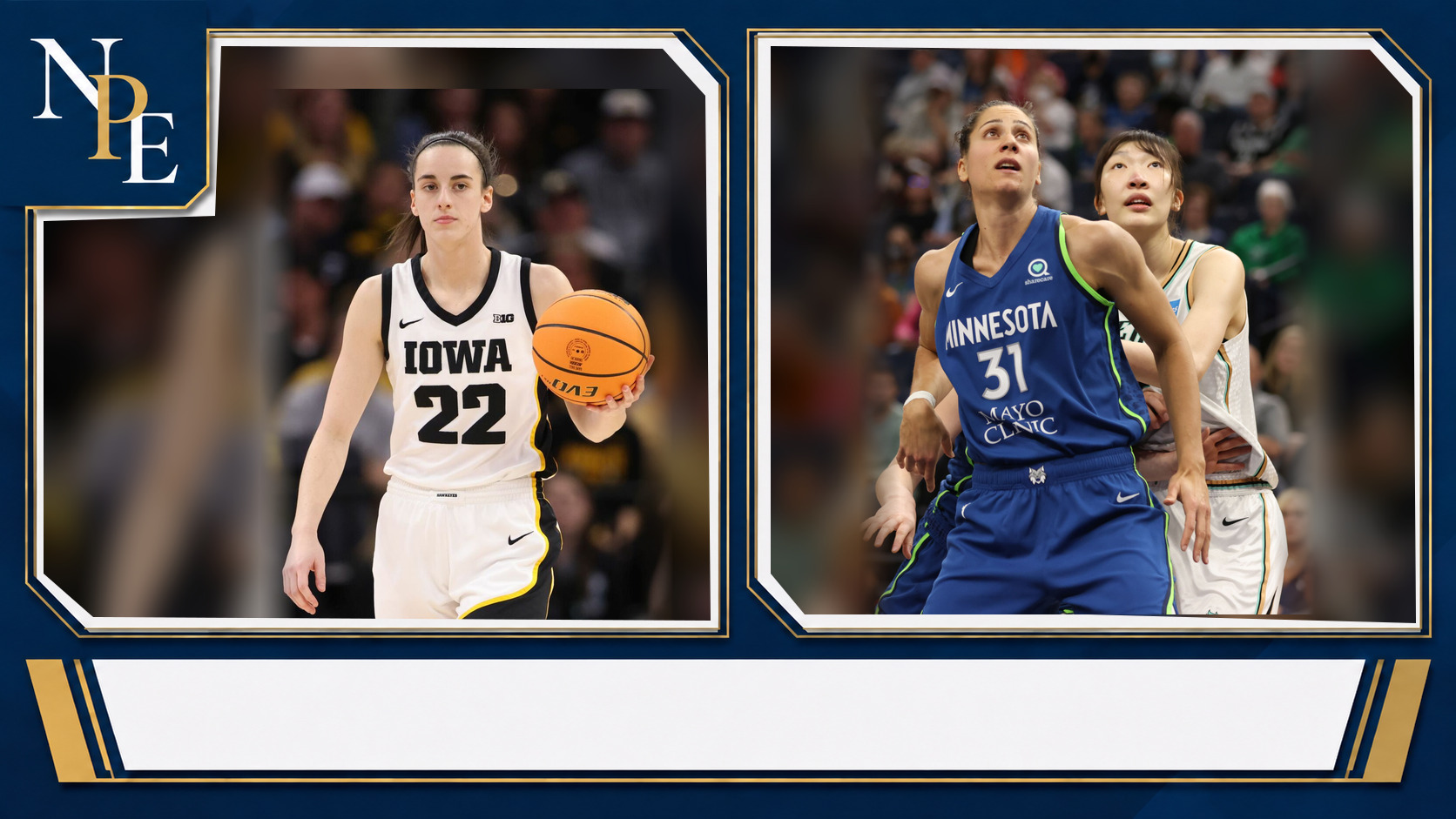
The replay is more than a viral highlight: it shows how timing, separation and a high release can overcome a dramatic height mismatch. It also came during another landmark all-around game for Clark.
Caitlin Clark made a 3-pointer over 6-foot-11 Han Xu, and the Indiana Fever’s slow-motion replay shows why the play became a focal point of their 106-92 win over the New York Liberty on Tuesday night. Clark’s step-back shot helped Indiana take a 32-25 second-quarter lead against Xu, while Clark finished with 22 points and 10 assists.
The height contrast makes the clip instantly striking, but the replay’s real value is in the details: Clark creates space, gets the ball up quickly and sends it on an unusually high arc before Xu can alter the attempt.
A shot built on separation
According to Athlon Sports, the make came with 7:43 remaining in the second quarter. Clark used a step-back move to pull away from Xu before rising for the three.
That small pocket of space mattered. A 6-foot-11 center does not need to be directly in front of a shooter to affect a shot; length can erase poor timing from several feet away. Clark’s retreat created enough room for her to begin her shooting motion on her own terms.
The slow-motion angle makes the sequence easier to read than a live possession. Clark’s move is not merely a dramatic retreat from a towering defender. It is a calculated reset that changes the defender’s distance, balance and ability to contest without fouling.
Why Xu’s height changes everything
Han Xu’s listed 6-foot-11 frame is central to the appeal of the replay. Clark, listed at 6-foot-0 by Athlon Sports, gave up 11 inches in height on the possession.
Still, the play should not be reduced to a novelty matchup between a guard and a much taller center. Xu stepped up to challenge the shot, which is the response a defense generally wants against a dangerous perimeter scorer. The difficult part is forcing Clark into a rushed, low-percentage look rather than allowing her to dictate the moment.
Clark’s step-back did the opposite. It placed Xu in a difficult middle ground: close enough to contest, but not close enough to smother the release. The shot required a clean look at the rim, a quick release and confidence that the ball’s trajectory would clear the outstretched arms in front of her.
The arc tells the story
Fans often notice a deep three for its distance. This clip is notable for its vertical dimension. The Fever’s replay emphasizes how high the ball travels after leaving Clark’s hands, a reminder that shooting over length is as much about arc as it is about range.
A high-arcing shot is not an automatic answer to a tall defender. It also has to be accurately aligned and released with enough touch. A shooter who leans too far back or releases late can turn a difficult contest into an off-balance miss.
Clark managed the competing demands on this possession: she created room, stayed composed through the contest and delivered a shot that fell cleanly. The result was two kinds of pressure on the Liberty defense—guard her closely enough to limit the three, but avoid overcommitting and opening other lanes.
A highlight within a complete game
The three was one memorable play in a broader performance. Athlon Sports reported that Clark finished 4-for-8 from three-point range and committed four turnovers while producing 22 points and 10 assists.
Those 10 assists matter when viewing the clip in context. Clark’s threat as a passer means defenders cannot simply sell out to stop her shot. When a big defender moves high to contest, teammates can become available behind or beside that coverage.
Athlon Sports said the double-double was Clark’s ninth 20-point, 10-assist game of the season, extending her own single-season league record. That distinction gives the shot a larger place in the night: it was a standout image from a game defined by Clark’s scoring and playmaking together.
Why the Fever shared it again
The Fever posted the slow-motion version on social media after the game with the caption, “and with that, goodnight,” according to Athlon Sports. Teams routinely circulate highlights, but replaying this particular make serves a clear purpose: it turns a brief possession into a showcase of a player’s skill set.
In real time, viewers may register a made three and the obvious size mismatch. At slower speed, the shot becomes a study in sequencing—the retreat, the rise, the contest and the ball’s path. That is why the clip has drawn attention beyond the box score.
There is also a reasonable counterpoint. One spectacular make does not settle the larger tactical question of how a defense should handle Clark. The Liberty can live with a difficult, contested shot more comfortably than repeated open looks or a stream of advantages created for teammates.
But difficult shots made by elite scorers have a cumulative effect. They can make a defense reconsider its preferred coverage, stretch the floor and give an offense confidence that no matchup is quite as safe as it appears on paper.
The takeaway from one possession
Clark’s three over Xu was compelling because it brought together the elements that make perimeter basketball difficult to defend: deep shooting range, precise footwork, a fast release and a defender with enough size to make every error costly.
The 106-92 result will matter most to Indiana. Yet the slow-motion replay preserves a smaller truth from the game: against a 6-foot-11 contest, Clark did not need to overpower the matchup. She needed a fraction of space, the right timing and the confidence to let the shot fly.
Leave a Reply