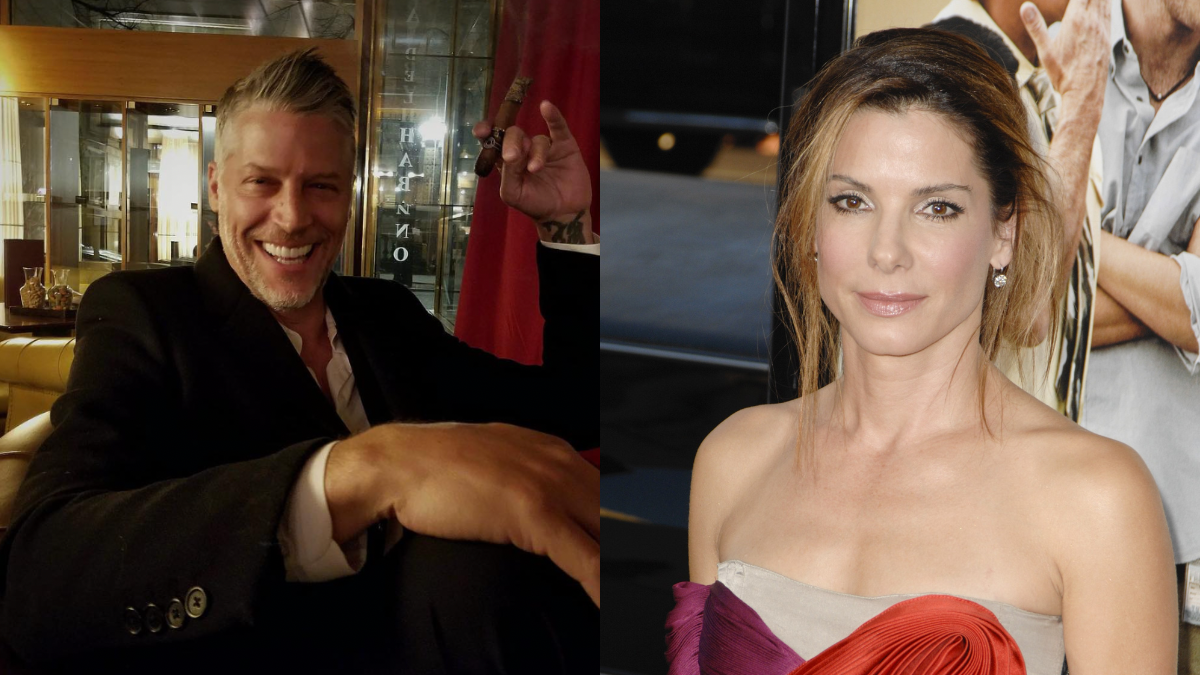
The death of Sandra Bullock’s longtime partner drew attention not through a wave of celebrity tributes, but through the family’s emphasis on privacy, caregiving and a life kept largely offstage.
Bryan Randall, Sandra Bullock’s partner, died at 57 on Aug. 5, 2023, after privately battling ALS for three years. The death was a personal loss for Bullock, whose relationship with Randall had remained largely outside the celebrity spotlight.
Randall’s family disclosed his illness only after his death, and the quiet response that followed reflected the privacy he had requested. What became public instead was a portrait of care from Bullock, relatives, doctors and nurses during a devastating illness.
His family disclosed the diagnosis
Randall’s family announced his death in a statement shared with USA Today on Aug. 6, 2023. They said he had “passed away peacefully” after a three-year battle with amyotrophic lateral sclerosis, commonly known as ALS.
The family said Randall had made an early decision to keep his condition private. “Bryan chose early to keep his journey with ALS private and those of us who cared for him did our best to honor his request,” the statement said.
That choice explains why little was publicly known about his health before he died. It also set a clear boundary around the details that remain undisclosed, including much of the couple’s final years together.
ALS changed daily life
ALS is a progressive neurological disease that affects the nerve cells controlling voluntary muscle movement. It can affect a person’s ability to move, speak and breathe, and there is no cure.
In the family’s account, the practical demands of long-term illness were not minimized. Randall’s relatives thanked the doctors and nurses who helped care for him, describing nurses as “our roommates” and noting the sacrifices they made away from their own families.
Those remarks put caregiving at the center of the story. They also offer a different frame from the usual celebrity-loss coverage: the public record was shaped less by appearances and more by the people who provided day-to-day support at home.
Bullock’s sister described her care
The clearest public account of Bullock’s role came from her sister, Gesine Bullock-Prado. In a tribute reported by the BBC, Bullock-Prado called ALS “a cruel disease” and said there was comfort in knowing Randall had “the best of caretakers” in Bullock and the nurses who helped care for him at home.
Bullock herself did not release an extensive public statement following Randall’s death. That absence left some details unknown, but it was consistent with the approach the couple had taken throughout their relationship.
The available statements do not suggest Bullock’s involvement was merely ceremonial. Her sister’s tribute specifically located Bullock within the close caregiving network around Randall during his final years.
A partnership kept largely private
Bullock met Randall in 2015, when the former model and photographer was hired to photograph her son Louis’ birthday party. They built their relationship away from the usual cycle of red-carpet announcements and public declarations, although Randall did occasionally attend events with Bullock.
In a 2021 appearance on Red Table Talk, Bullock gave one of the rare public glimpses into how she viewed their partnership. She said she did not need “a paper” to be a devoted partner and mother, and she did not need to be told “to weather a storm with a good man.”
She also said Randall was the example she wanted for her children. After his death, those remarks carried added weight because they described commitment without turning the relationship into a public performance.
Why the public response stayed restrained
Randall’s connection to one of Hollywood’s best-known actors could have produced a long stream of public statements, memorial events and celebrity social-media posts. Instead, the tributes and condolences that emerged were relatively limited and centered mainly on people close to Randall and Bullock.
That restraint can be read in two ways. Some may see the lack of a larger public display as surprising for a loss involving a major film star; the family’s statement provides a stronger explanation, however: Randall had asked for privacy throughout his illness.
Public grief is often treated as an expectation for celebrities. Yet the family’s response suggested that honoring Randall’s wishes mattered more than meeting the familiar demands of a celebrity-news cycle. Quiet did not necessarily mean a lack of affection or support.
A later tribute held its own meaning
Months after Randall’s death, Bullock-Prado posted a video of a frozen river on what would have been his birthday. Her caption read, “Happy birthday, Bry. Sandy brought you to the river, just as she promised.”
USA Today reported that the post appeared to show Bullock honoring a promise connected to Randall’s ashes. The family did not provide extensive details, leaving the gesture deliberately limited in the same way the illness had been.
That small public acknowledgment captured the broader story of Randall’s death: a family mourning a partner, father figure, sibling and loved one while protecting the parts of the loss that belonged only to them. The confirmed facts are clear—Randall died at 57 after three years with ALS, and Bullock helped care for him at home—while the rest remains theirs to share or keep private.
Leave a Reply