The often-cited estimate about Trump campaign rallies is a population-level model, not a count of individual supporters. Separating those claims matters when pandemic-era events and January 6 are folded into the same political argument.
Donald Trump and his campaign rallies were the subject of a 2020 study that estimated the events were linked to more than 700 COVID-19 deaths. The study does not establish that thousands of Trump supporters died, and it did not identify a verified list of people whose deaths were caused by attending a rally.
That difference is the heart of a political claim that can sound more settled than the evidence allows. The analysis estimated a broader public-health effect from rallies held during the pandemic; it was not a count of dead supporters, voters or rally attendees.
The estimate behind the 700 figure
Reporting by Politico on the 2020 study said researchers estimated Trump campaign rallies held from June through September may have generated roughly 30,000 additional coronavirus infections and more than 700 deaths.
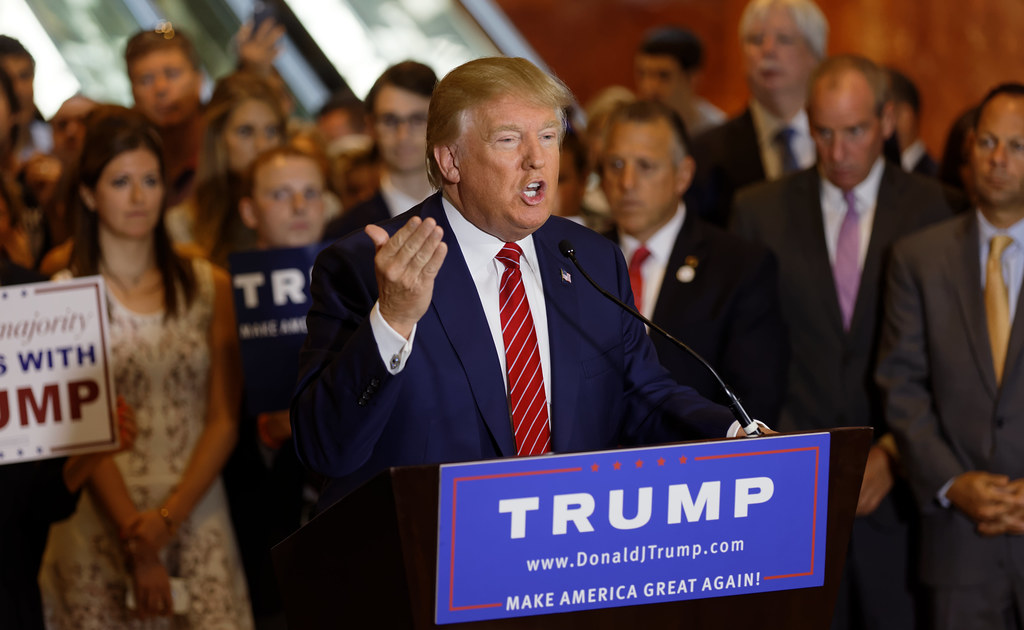
The timing matters. The rallies took place while COVID-19 was spreading widely and before vaccines were available. Large crowds raised questions about whether campaign events could intensify transmission in their host communities.
Researchers did not produce a roster of attendees who later became ill or died. Instead, they used a statistical approach to compare COVID-19 outcomes in counties that hosted rallies with a modeled alternative in which those rallies had not taken place.
A model is not an obituary list
The study’s conclusion was about likely population-level effects. It attempted to estimate how an event may have changed infections and deaths across a community, rather than tracing each infection from one person to another.
That means the estimate cannot show the precise chain of transmission for every death. It also cannot establish that the people included in the more-than-700 estimate were Trump supporters, or that every one of them was physically present at a campaign rally.
Those limits do not erase the finding. They define it. The careful description is that the analysis estimated rallies were associated with more than 700 COVID-19 deaths—not that it proved Donald Trump personally caused 700 identified deaths or documented thousands of supporter deaths.
Why the findings drew pushback
Trump’s White House rejected the study at the time, calling it flawed and saying it was intended to shame Trump supporters. The Trump campaign said rallygoers had access to temperature checks, masks and hand sanitizer and were instructed to wear masks.
Critics argued that such measures had limited value when events involved large crowds and inconsistent mask use. They also said campaigns had a responsibility to avoid gatherings that could add to infection risks in communities already confronting outbreaks.
The competing arguments point to a broader tension in evaluating real-world public-health research. A model has uncertainty and methodological limits, but that does not automatically make its estimate meaningless. Nor does an estimate justify turning a complex calculation into a categorical claim about the deaths of a defined political group.
Why “thousands” goes too far
There is no official national registry that tracks deaths by political affiliation or records whether someone was a Trump voter, donor, activist, rally attendee or January 6 participant. Those labels describe different groups and cannot simply be treated as interchangeable.
For a claim that thousands of Trump supporters died to be verified, it would need clear definitions, identifiable data and a method capable of separating correlation from causation. The available record does not provide that.
It is possible to recognize evidence of harm associated with particular events or decisions without assigning an unsupported collective total to “supporters.” The rhetoric may be forceful, but it can obscure the distinction between scientific estimates, documented deaths, legal findings and assumptions about political identity.
January 6 is a separate record
The January 6, 2021, attack on the U.S. Capitol is sometimes folded into the same argument about Trump and human costs. Its facts are serious, but they should not be combined with the COVID-19 model as though they create one verified tally.
A Congressional Research Service report said the unrest resulted in at least five deaths, dozens of injuries and damage to federal property. More than 140 law enforcement officers were injured during the attack.
The deaths associated with January 6 did not all occur in the same way. Ashli Babbitt, 35, was shot by a U.S. Capitol Police officer while trying to enter the Speaker’s Lobby. The Justice Department later said it would not pursue criminal charges against the officer after reviewing video, witness statements, physical evidence and autopsy findings.
Other deaths connected to that day involved medical emergencies or later deaths of officers who responded. Those distinctions affect what can fairly be attributed to individual acts, participants or leadership decisions.
The narrower conclusion still matters
The evidence does support substantial scrutiny of pandemic-era campaign planning, leadership choices and the aftermath of false election claims. Critics say leaders should be judged partly by foreseeable harms when their events or messages can shape public risk. Defenders argue that people retain responsibility for their own decisions and that safeguards at political events also need to be considered.
What remains clear is narrower than the viral claim but still significant: a 2020 analysis estimated Trump rallies may have contributed to about 30,000 additional COVID-19 infections and more than 700 deaths. Separately, the January 6 attack left at least five people dead, dozens injured and more than 140 officers injured.
Neither record establishes that thousands of Trump supporters were identified as dead. Keeping the numbers in their proper context does not minimize the documented harms; it prevents an unverified total from replacing the evidence.
Leave a Reply