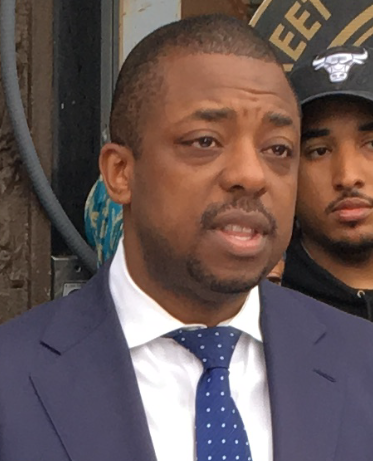
The case put a spotlight on how discretionary state grants, campaign fundraising and political vetting can collide. Benjamin has fought the charges, and the legal path has been shaped by what prosecutors must prove in a corruption case.
A lieutenant governor was accused in a sweeping bribery scheme: New York Lt. Gov. Brian Benjamin was charged with bribery and related offenses in Manhattan after federal authorities said he steered a $50,000 state grant to a nonprofit tied to a real estate developer in exchange for campaign contributions.
Benjamin was arrested after surrendering to the FBI in Manhattan on Tuesday, resigned after corruption charges, and faced five criminal counts. The article explains the bribery allegations and related corruption charges, including how a case first announced by federal prosecutors later reached a key Friday ruling on March 8, 2024.
The alleged grant-for-donations trade
The federal case centers on what prosecutors described as a corrupt exchange while Benjamin was a New York state senator, before he became lieutenant governor. The U.S. Attorney’s Office for the Southern District of New York said Benjamin used official authority to direct state money to a nonprofit controlled by a real estate developer identified in court papers as a co-conspirator.
In return, prosecutors alleged, that developer made or arranged campaign contributions for Benjamin. The alleged benefit was not a cash envelope or a personal gift, but political support: money for campaigns that helped Benjamin’s ambitions inside New York politics.
That distinction matters. Modern public corruption cases often turn on whether prosecutors can show an explicit agreement linking an official act to a thing of value. A grant may be lawful. A campaign contribution may be lawful. The government’s theory was that the alleged bargain connecting them crossed the line.
Why the $50,000 grant mattered
According to the Justice Department, the alleged scheme began around 2019 and continued into 2021. Prosecutors said Benjamin sought help gathering campaign donations, then later directed a $50,000 state-funded grant to a nonprofit organization controlled by the developer.
The grant was for educational purposes, according to the federal allegations. Prosecutors said Benjamin had other organizations in his district that had been considered for funding, but he chose the nonprofit tied to the developer after discussing campaign fundraising.
Federal authorities also alleged a cover-up. The indictment accused Benjamin and others of hiding the source of certain contributions by using donor forms that falsely listed other people as the contributors. Prosecutors also said Benjamin made false statements on a vetting questionnaire when he was seeking to become lieutenant governor.
Those allegations produced five criminal counts: bribery, honest services wire fraud, conspiracy to commit those offenses, and two falsification-related counts tied to records and statements.
What federal officials said
When the charges were announced, U.S. Attorney Damian Williams framed the case as an abuse-of-power allegation. His office said Benjamin effectively used state funds to support his own political campaigns by trading an official grant for campaign contributions.
The FBI’s New York office said the alleged conduct undermined procedures meant to keep political fundraising fair. The New York City Department of Investigation described the case as a public trust issue, saying the alleged allocation of grant money served Benjamin’s political interests rather than constituents.
Those statements are allegations, not findings of guilt. Benjamin has fought the case in court, and the most important legal debate has focused on whether the indictment adequately alleged the type of direct quid pro quo required in federal corruption prosecutions involving campaign contributions.
Benjamin’s defense and the legal fight
Benjamin’s side has argued that the government’s theory did not meet the legal standard for bribery in the campaign finance context. That argument gained traction when a federal district judge dismissed several of the core bribery and fraud charges, finding that the indictment did not sufficiently allege an explicit agreement.
That ruling did not erase the entire case. The falsification-related counts remained, and prosecutors appealed the dismissal of the bribery, honest services fraud and conspiracy counts.
The defense view reflects a broader concern in corruption law: elected officials routinely support local grants and raise campaign money. If prosecutors draw the line too aggressively, defenders argue, ordinary politics could be criminalized. Prosecutors respond that the law targets corrupt bargains, not routine political activity.
That tension is why the Benjamin case became more than a single politician’s legal problem. It became another test of how clearly prosecutors must plead and prove an exchange when campaign donations are involved.
The March 2024 turn
On Friday, March 8, 2024, the U.S. Court of Appeals for the Second Circuit revived key charges against Benjamin. The appeals court concluded that prosecutors had adequately alleged the required quid pro quo at the indictment stage, sending the dismissed bribery-related counts back into the case.
The ruling did not decide whether Benjamin committed the crimes charged. It addressed whether the government’s allegations were legally sufficient to proceed. That is a crucial difference: an indictment can survive even though prosecutors still must prove the case beyond a reasonable doubt at trial.
For readers trying to understand the stakes, the appellate decision meant the central corruption theory was not dead. The case could again include the allegation that Benjamin used public power to obtain campaign support, rather than being limited to alleged false records or statements.
The political fallout in New York
The charges created immediate political damage. Benjamin resigned as lieutenant governor after the corruption charges, leaving New York’s executive branch with a high-profile vacancy and giving opponents a ready-made example of Albany’s recurring ethics troubles.
Benjamin had been elevated during a turbulent period in state politics, after Kathy Hochul became governor following Andrew Cuomo’s resignation. His own resignation quickly complicated the image of a reset in state government.
For New Yorkers, the case also raised a practical question about vetting. Prosecutors alleged that Benjamin made false statements during the lieutenant governor selection process, which put attention not just on the alleged grant scheme but on how political leaders screen running mates and appointees.
The broader issue is not partisan. Discretionary grants, donor networks and local nonprofits are common features of state politics. The Benjamin case showed how quickly those routine tools can become legally explosive when prosecutors allege they were linked by a corrupt agreement.
What remains unresolved
The public record described here establishes the accusation, the five-count federal indictment, Benjamin’s resignation, and the appellate revival of key charges. It does not establish guilt, and the burden remains on prosecutors to prove any surviving charges in court.
Several questions remain central: whether the government can prove an explicit bargain, how jurors would interpret the timing of the grant and donations, and whether alleged false donor records or vetting answers show consciousness of wrongdoing.
The clean takeaway is that the Brian Benjamin case is not simply about a $50,000 grant. It is about the boundary between political fundraising and criminal bribery, and about how much evidence federal prosecutors need when the alleged payoff is campaign support rather than personal enrichment.
Leave a Reply