
The dispute now centers on money, museum independence and competing views of how the National Museum of American History should present the American story.
A historian’s broad criticism of the Smithsonian has landed inside a larger political fight over federal funding and control of the nation’s history museums. The available source material says the historian visited the Smithsonian for the first time in more than a decade and described it as a “completely different place,” criticizing what they viewed as a shift toward activism.
That complaint is not presented with the historian’s name or a detailed account of specific exhibits, programs or observations. It does, however, echo arguments made in a 162-page White House Domestic Policy Council report accusing the Smithsonian’s National Museum of American History of moving away from historical education and toward political advocacy.
The fight now centers on money and authority
The White House report was released around the July 4, 2026, celebration of America’s 250th anniversary. It focused heavily on the National Museum of American History and described the museum’s presentation as “extreme political activism.”
The report is part of a broader Trump administration effort to promote what President Donald Trump has called “patriotic” history. In March 2025, Trump issued an executive order titled Restoring Truth and Sanity to American History, which criticized what it called a revisionist movement that casts the country’s founding principles and historical milestones negatively.
The order directed Vice President JD Vance to work with Congress on changes at the Smithsonian. The White House report later cited Trump’s directive to prohibit spending on exhibits or programs that, in the administration’s view, degrade shared American values, divide people by race or promote ideas inconsistent with federal law and policy.
The administration proposed reducing the Smithsonian’s fiscal 2026 budget by about 12%, according to The New York Times, though Congress maintained its federal funding. The report did not specify an exact remedy, but it said the president had a duty to seek reforms.
What the White House report alleges
The White House report argued that the museum had shifted from straightforward scholarship toward an effort to divide Americans and diminish the country’s heritage. It criticized both the framing of existing displays and what it said was missing from the museum’s treatment of the founding era.
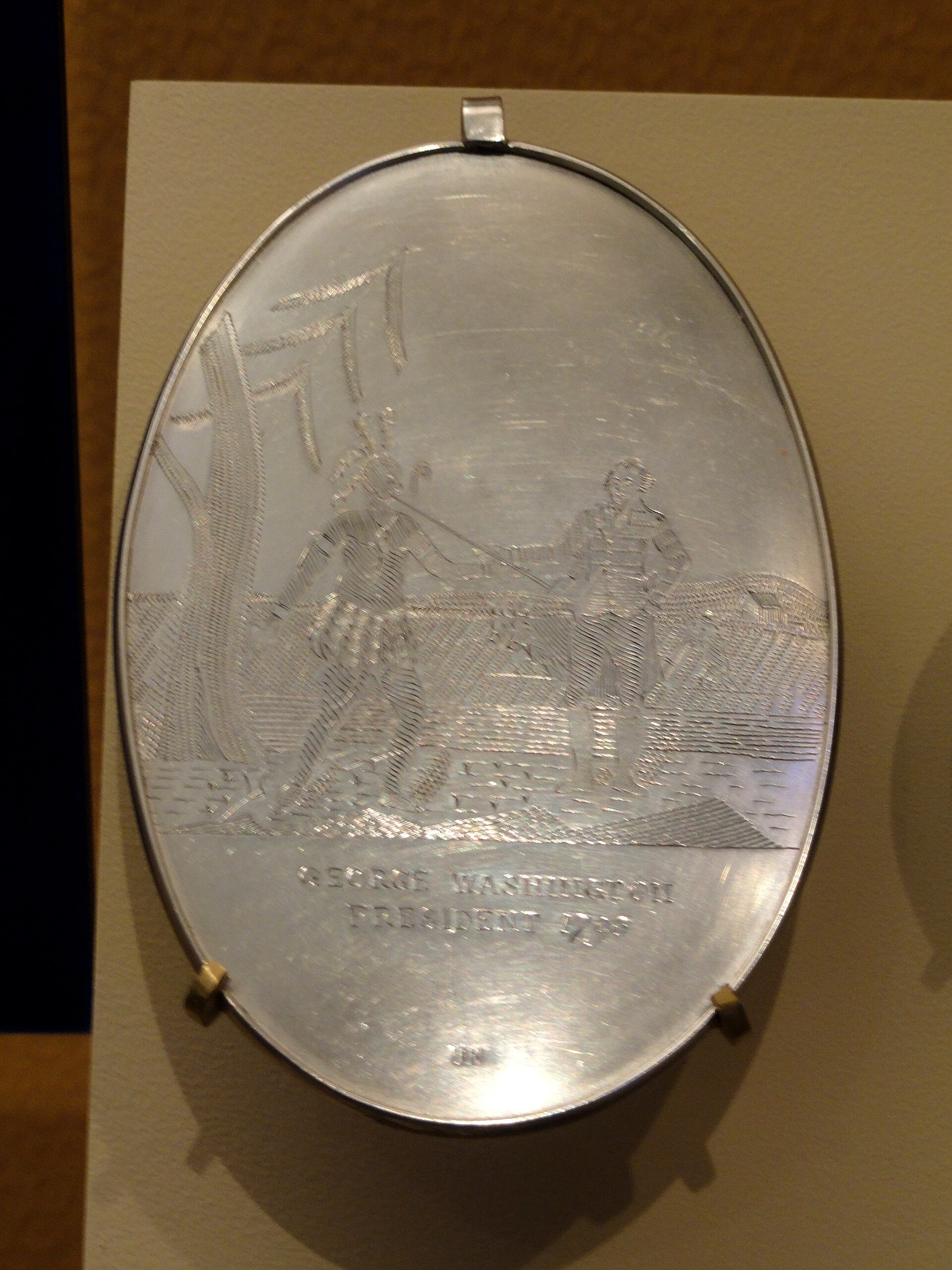
According to the report, visitors would find no major exhibit dedicated to the nation’s founding era, George Washington, Thomas Jefferson, the Continental Congress, the Pilgrims, the Puritans or major events of the American Revolution.
The report also argued that some founders are presented chiefly through their connections to slavery. One cited example was an 1840 statue of Washington that includes a depiction of Hercules, an enslaved man associated with the Washington household. The report objected to accompanying language it said did not adequately affirm American courage.
Its broader complaint was not simply about one label or one statue. The administration argued that the museum treats traditional patriotic narratives with suspicion while focusing disproportionately on the country’s failures and conflicts.
How the Smithsonian has responded
The Smithsonian has pushed back against the premise that it is a partisan institution. Julissa Marenco, a Smithsonian spokeswoman, told The New York Times that the organization has served the public through “nonpartisan and independent scholarship” for more than 180 years and remains committed to that role.
According to the Times, the Smithsonian oversees 21 museums and the National Zoo. The Times also reported that 62% of the Smithsonian’s annual $1 billion budget comes from federal sources, including congressional appropriations.
There have also been disputes over leadership and records. Trump said he was dismissing Kim Sajet, then director of the National Portrait Gallery, describing her as partisan and supportive of diversity, equity and inclusion initiatives. The Smithsonian publicly maintained that it controlled personnel decisions; Sajet later resigned, saying the move served the institution’s best interests.
Officials also sought Smithsonian records, with possible budget cuts raised as leverage. Smithsonian Secretary Lonnie G. Bunch III defended the institution’s independence while saying that materials had been provided in an effort to be transparent and open.
Where the historian’s complaint fits
The historian’s “completely different place” description is a personal assessment, not an institutional finding. As general museum context, a decade can bring gallery changes, updated labels, rotating collections and new public conversations about what curators choose to emphasize.
That is why the missing detail matters. Without the historian’s name or a specific account of the visit in the available material, readers cannot evaluate the comparison between the Smithsonian of more than a decade ago and the Smithsonian today.
Still, the charge of an “activism shift” has become powerful in the current debate because it points to a central disagreement: whether a museum is taking a political position when it includes painful, contested or previously neglected parts of national history.
Critics of the Smithsonian’s direction argue that an emphasis on racism, slavery, immigration, gender and other social issues can crowd out a shared account of the country’s achievements. Supporters of a more expansive approach contend that a national museum cannot offer serious history by treating those subjects as side notes.
The unresolved question for visitors
Every museum makes choices about space, objects, chronology and context. The sharper disagreement here is whether the Smithsonian’s effort to broaden the story should be understood as corrective scholarship or ideological advocacy.
Critics are pressing museums to explain curatorial choices clearly and to distinguish evidence from interpretation. Museums can lose trust when labels sound certain about questions historians still debate, or when they offer moral conclusions without enough context.
At the same time, calls for “patriotic” history carry their own risk. A museum that avoids slavery, discrimination, forced removal, labor conflict or other difficult subjects in order to preserve an uplifting narrative would also be making a political choice.
What remains unclear is whether the historian’s visit points to a specific curatorial decision that can be examined, or simply reflects a broader objection to how American institutions now discuss the past. The Smithsonian debate is no longer only about exhibits. It is also about who has authority to define a national story, and how much room that story has for triumph, contradiction and criticism.
Leave a Reply