The fight is not just about one rent freeze. It is about whether New York’s housing crisis is driven more by tenant protections, building barriers or years of lost supply.
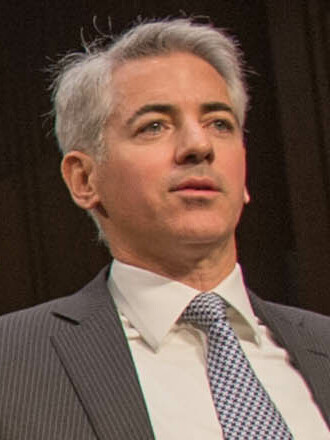
Bill Ackman criticizes Zohran Mamdani’s housing policy in New York City, saying Mamdani’s bad left-wing housing policy and rent-freeze agenda are worsening New York City’s affordability crisis. In a Fortune interview published Aug. 5, 2026, the Pershing Square CEO argued City Hall, not capitalism, is making housing harder to build and more expensive to rent.
The clash over Mamdani’s left-wing housing approach matters now because New York’s rent freeze affects nearly one million rent-stabilized apartments, while market-rate tenants, landlords and developers are fighting over who pays for a city that remains painfully short on affordable homes.
A billionaire’s blunt diagnosis
Ackman framed New York’s housing problem as a policy failure rather than a market failure. Speaking with Fortune Editor-in-Chief Alyson Shontell for the Fortune 500 Titans and Disruptors of Industry podcast series, he argued that years of left-leaning City Hall decisions have discouraged building and distorted rents.
His sharpest criticism was aimed at Mamdani, the self-described democratic socialist mayor who campaigned on freezing rents. Ackman’s language was not subtle: Fortune’s headline quoted him saying, “Socialism is a disaster,” and his broader point was that rent controls may sound protective but can backfire if they shrink supply or investment.
Ackman told Fortune that the cost of housing is high because “left-wing mayors have made it very difficult for developers to build here,” and that Mamdani, “by freezing rents,” would make the problem worse. That is the core argument animating the latest round of New York’s affordability fight: whether the city can protect tenants without discouraging the housing it needs.
The rent freeze at issue
The immediate policy fight traces back to June, when New York City’s Rent Guidelines Board voted 7-1 to freeze rents on one- and two-year leases for nearly one million rent-stabilized apartments, according to Fortune. The outlet reported that it was the first such freeze on two-year leases in the city’s history.
Mamdani called the vote “a historic victory for New York City tenants.” For renters facing renewal notices, food inflation, commuting costs and stagnant wages, a freeze can feel less like ideology and more like oxygen. Rent-stabilized households often include older New Yorkers, working families and people with limited ability to absorb sudden increases.
But Ackman’s critique is that freezing one part of the market does not make the city cheaper overall. He argues it pushes pressure elsewhere, especially onto market-rate renters and building owners trying to cover debt, maintenance and insurance costs.
A market split in two
Ackman’s central claim is that rent stabilization has effectively divided many buildings into two markets: regulated apartments with limited increases, and unregulated units exposed to market prices. In his telling, landlords then raise rents on market-rate tenants to make up for revenue they cannot collect from stabilized units.
That argument resonates with many real estate owners, who say regulated rents can fall out of sync with repair costs, interest rates and taxes. They also argue that limits on rent increases after renovations make it harder to justify fixing vacant or deteriorated apartments.
Ackman pointed to about 60,000 apartments he said are being kept off the market because renovation costs cannot be recovered under current rent rules. Fortune noted that, as of April 2026, the state reported more than 57,000 vacant rent-stabilized apartments.
That number is politically potent because it sits at the center of two very different stories. Critics of regulation see it as evidence that the rules are freezing homes out of use. Tenant advocates counter that landlords, speculative behavior and deregulation pressures are major parts of the vacancy and affordability problem.
Tenant advocates see another culprit
The case against Ackman’s view is not that New York has enough housing. Few serious participants in the debate argue that. The dispute is over what caused the shortage and which policies make it worse.
Tenant groups and some housing researchers argue that deregulation has done lasting damage to affordability. Fortune reported that advocates point to more than 300,000 units deregulated between 1994 and 2019, a shift they say removed a large stock of relatively affordable apartments from the regulated system.
They also dispute the idea that a rent freeze would destabilize the city’s rental finance system at large. A Moody’s analysis cited by tenant advocates found that a five-year rent freeze would put about 6% of multifamily loans citywide at risk of default by 2030, according to Fortune.
That still leaves a policy dilemma. A risk that looks manageable across the whole city may be severe for individual buildings, especially older properties with high repair needs. On the other hand, allowing broad rent increases during an affordability crisis can quickly turn a household budget problem into displacement.
The build-more argument returns
Ackman also used the housing debate to make a broader case about regulation and infrastructure. He criticized New York’s energy policy, citing nuclear shutdowns, delays around pipelines and the state’s fracking ban as reasons costs are high. His larger message was that policy choices, not just markets, shape the cost of living.
Fortune noted that Ackman appeared to be referring to the Constitution Pipeline, which filed for approval in 2012, was denied a key New York water-quality permit in 2016, saw that denial upheld in 2017 and had its application withdrawn in November 2025. The project was never built after roughly 13 years in regulatory limbo.
On housing, Ackman contrasted New York with places that have made building easier. He cited Austin as an example of a city where rents have fallen after years of added supply. That supply-side argument has gained traction well beyond Wall Street: more housing economists and urban policy researchers now argue that restrictive zoning and slow permitting help keep high-demand cities expensive.
Still, “build more” is not a complete answer by itself. New York’s poorest renters may not benefit quickly from new market-rate towers. The real policy question is how to pair construction, preservation, subsidies and tenant protections without choking off one goal to serve another.
What New York has not solved
The Ackman-Mamdani clash is loud because it compresses New York’s housing argument into two competing instincts. One says tenants need immediate protection from rent hikes in a city where wages often cannot keep up. The other says price caps and regulatory barriers can worsen scarcity, leaving everyone fighting over too few homes.
Both sides can point to real pressure. Renters are squeezed now. Landlords face real operating costs now. Developers say New York is too slow and expensive to build in. Advocates warn that loosening protections could accelerate displacement before new supply arrives.
What remains unclear is whether Mamdani’s rent freeze will be paired with enough policy changes to bring vacant stabilized apartments back online, speed new housing construction and preserve existing affordable units. A freeze can buy time for tenants. It cannot, by itself, create apartments.
Ackman’s attack may be ideologically charged, but the underlying issue is practical: New York needs more homes, lower barriers to safe renovation and a way to keep current residents from being priced out while that supply is built. Until those pieces move together, the city’s affordability crisis will keep turning every rent vote into a proxy war over what kind of city New York wants to be.
Leave a Reply