
The attack is not just about one politician. It is a warning about how much political theater FIFA is willing to absorb as the 2026 World Cup approaches.
Donald Trump is being sharply criticized by a Spanish outlet, the newspaper AS, over football and FIFA, with the attack saying: "He ruins football and has crossed all moral limits." According to Goal’s translated account, AS argues that Trump’s influence on football and FIFA has crossed moral or ethical limits.
The immediate trigger, AS said, was the Balogun affair: Trump was reported to have admitted calling FIFA president Gianni Infantino before the player’s suspension was lifted. For the Spanish paper, that episode folded into a larger complaint about the 2026 World Cup, Spain’s place in international football politics and FIFA’s willingness to blur sport and power.
AS targets Trump’s FIFA reach
The core of the Spanish attack is not that politics has suddenly entered football. AS makes the opposite point: FIFA has long operated in political territory because the World Cup is too large, too lucrative and too symbolic to sit outside global power.
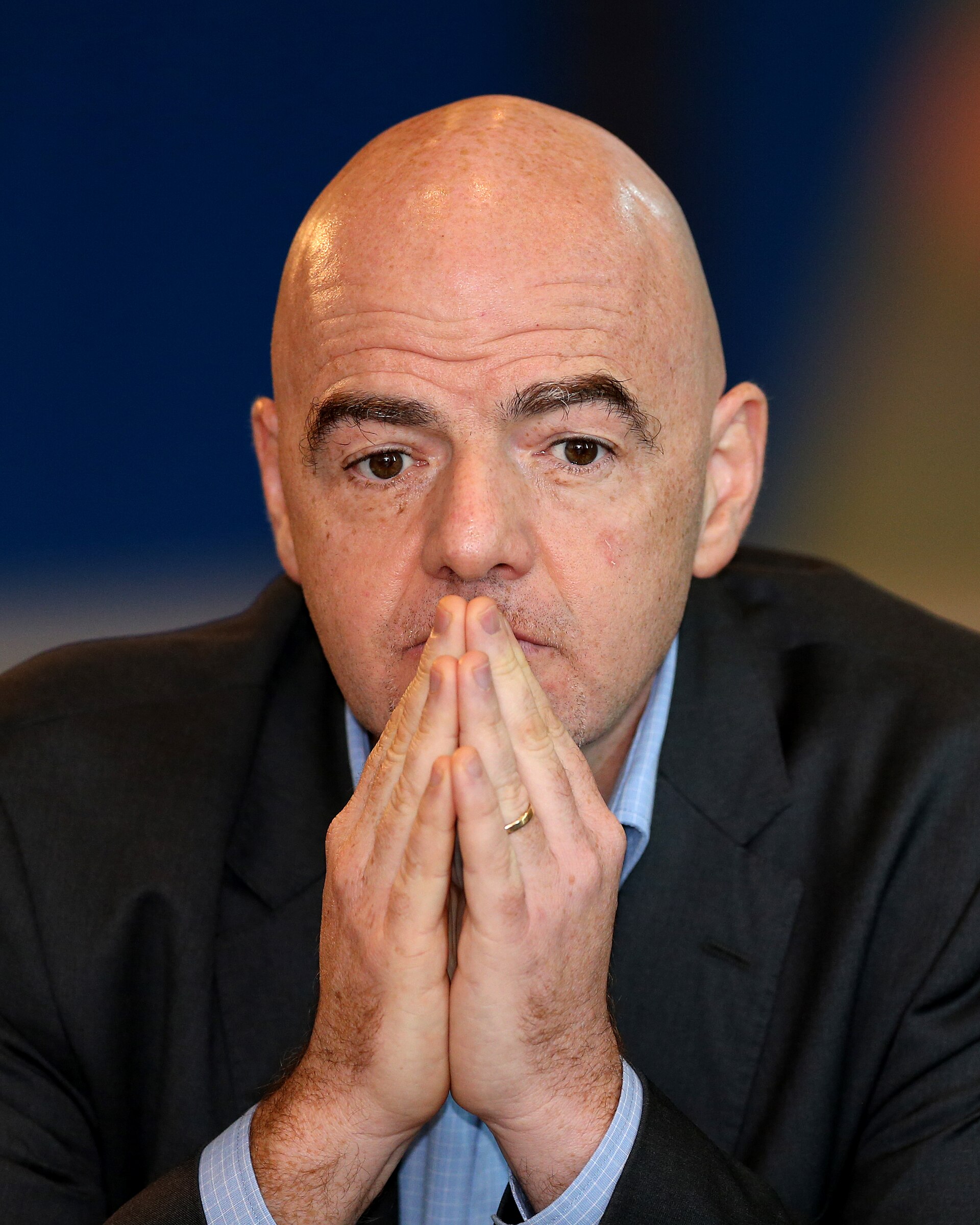
What AS says has changed is the degree of Trump’s involvement. The paper, as translated by Goal, accused the American president of gaining influence over FIFA decisions "to the point of crossing the minimum ethical boundaries."
That is the line that gives the criticism its force. In AS’s framing, Trump is not merely a host-country leader promoting an event on U.S. soil. He is presented as a political figure pulling FIFA into a staged orbit around himself, with Infantino increasingly accommodating that dynamic.
The article’s sharpest claim is also its simplest: between Trump and football, AS says the world chose football.
The Balogun case sharpened it
AS described the Balogun affair as the breaking point. The details provided in Goal’s translated account are limited, but the allegation is striking: Trump admitted making a call to Infantino before a suspension involving Balogun was lifted.
That does not, on its own, establish why the decision changed or who inside FIFA made the final call. It does explain why the Spanish paper treated the episode as more than a routine disciplinary controversy.
For critics, the issue is process. Football discipline is supposed to be handled by rules, panels and transparent procedures, not by conversations between political leaders and the head of the sport’s world governing body.
The absence of fuller detail matters. Goal’s translated account does not include a response from Trump, FIFA or Infantino to the AS criticism. That leaves the allegation sitting as an editorial attack, not an adjudicated finding.
Infantino’s political balancing act
AS also placed Trump in a longer story about Gianni Infantino’s FIFA presidency. The paper argued that Infantino has always understood the political dimension of his office, citing FIFA’s dealings around major tournaments and world leaders.
The examples listed by AS are familiar markers of modern football power: Russia and the 2018 World Cup, Qatar and the 2022 tournament, Saudi Arabia and the 2034 event, and Morocco’s role alongside Spain and Portugal in the 2030 World Cup.
That context cuts both ways. Supporters of FIFA’s approach would argue that a global tournament requires diplomacy, government cooperation, security coordination, visas, infrastructure and commercial partnerships. No World Cup host is politically neutral in practice.
AS’s objection is that Trump, in its view, has pushed the relationship past normal host-nation coordination. The paper accused him of treating the 2026 World Cup as part of his own political theater, while Infantino retreated rather than drew a line.
Why the White House optics matter
One of AS’s central complaints is visual. The Spanish paper accused Trump of turning the Oval Office and the White House into a television stage for FIFA and the World Cup.
That criticism may sound symbolic, but symbolism is the business FIFA is in. World Cups are built out of ceremonies, podiums, flags, anthems, broadcast images and carefully managed prestige. Who appears in the frame, and who is made to look central, matters.
AS pointed to repeated appearances involving Infantino and the World Cup in Trump’s political setting. It also cited Cristiano Ronaldo’s visit to the United States, saying doubts over the player’s entry because of previous legal issues appeared to vanish in that moment.
The implication is not just that powerful people received access. It is that football’s governing body appeared willing to let a political leader shape the sport’s biggest platform around his own image.
A prize, a podium and revenue claims
The Spanish criticism also cited several other flashpoints. AS said Infantino brought Trump onto the podium at a Club World Cup ceremony, giving him prominence alongside Chelsea players in a moment that should have centered on the team.
AS also criticized Infantino awarding Trump the FIFA Peace Prize during the World Cup draw in Washington. In the paper’s view, that moment embarrassed football because it tied FIFA’s ceremonial authority directly to a polarizing political figure.
The paper then raised two more complaints: water breaks it described as advertising breaks, and a halftime show that lasted nearly half an hour during the final. Those details feed the same argument, that football’s rhythm and rituals are being bent toward spectacle and commercial packaging.
The most serious claim in the translated account is AS’s reference to a proposal to sell 20% of World Cup revenues to funds linked to Trump. The account does not provide enough detail to independently evaluate that claim, so it should be read as part of AS’s broader critique unless and until more documentation emerges.
Spain’s stake is bigger than outrage
Spain is not a neutral observer in this debate. It is part of the 2030 World Cup hosting plan with Portugal and Morocco, which means Spanish football media have a direct interest in how FIFA handles political power, host influence and tournament governance.
That helps explain the intensity of the AS column. The concern is not only what happens around the 2026 World Cup in the United States, Mexico and Canada. It is what precedent FIFA sets for every host cycle that follows.
If a host-country leader can be made central to ceremonies, disciplinary narratives, prizes and revenue discussions, critics will ask where FIFA’s independence begins. If FIFA pushes back too hard against governments, practical tournament planning can become harder.
That is the tension underneath the attack. Football needs states to stage its biggest events, but it also sells itself as something bigger than any one government. AS is arguing that, with Trump, FIFA has let that balance tip too far.
What remains unresolved
The AS broadside is powerful because it connects scattered optics into one accusation: Trump is harming football by drawing FIFA into his orbit. But several key questions remain open.
The translated account does not show FIFA’s explanation for the Balogun suspension issue, the Peace Prize decision, the Club World Cup podium moment or the alleged revenue proposal. It also does not include Trump’s response.
That means the fairest reading is this: AS has delivered a sweeping political and ethical indictment, not a completed factual record. Its importance lies in showing how deeply some in Spanish football media distrust the Trump-Infantino relationship as the 2026 World Cup approaches.
The takeaway for football fans is bigger than one newspaper column. The argument now surrounding FIFA is about whether the sport’s global stage can survive its growing dependence on presidents, monarchs, money and spectacle without losing the neutrality it still claims to protect.
Leave a Reply