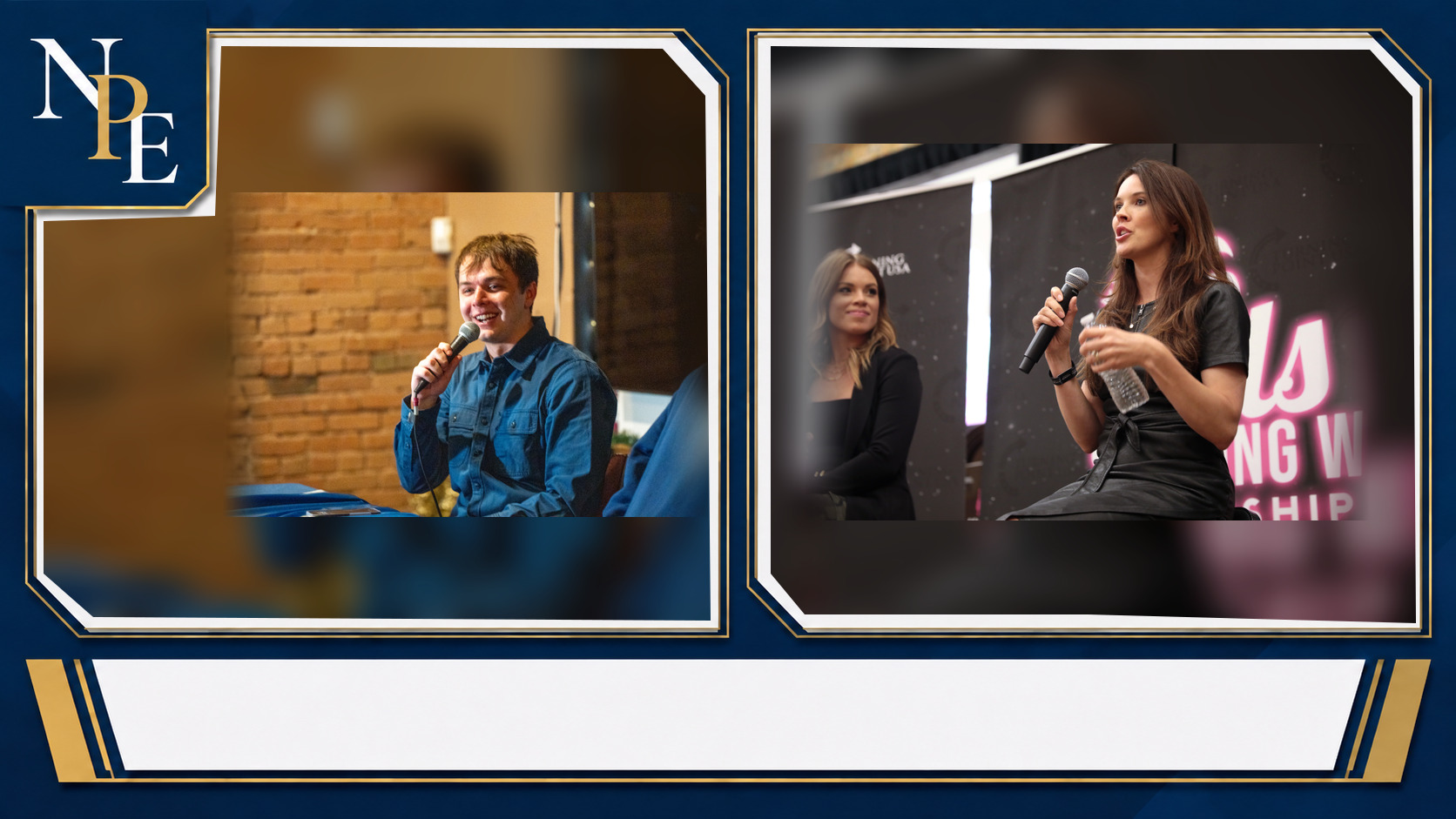
The argument over Natalie Harp is really a fight over what professional success, independence and loyalty should mean in discussions of feminism. Adam Mockler and Amy Robbins offered sharply different answers after a CNN panel debate.
Adam Mockler rebutted Amy Robbins’ argument that Natalie Harp is a feminist “poster child,” after the Alexo Athletica CEO made the case during a CNN discussion. Robbins presented Harp, a White House aide devoted to and working closely with President Donald Trump, as an example of modern feminism. Mockler, a left-leaning YouTuber and MeidasTouch personality, rejected that characterization and argued that Harp’s loyalty to Trump undermines the idea that she represents female empowerment.
Mockler said feminism is not “giving away your entire life” to write repeated, fawning apologies or messages praising a powerful man. He was referring to letters Harp allegedly sent to Trump in 2023, which he described as evidence of a troubling dynamic rather than professional independence. The exchange turned Harp’s role into a broader dispute over whether devotion and service to Trump can be presented as a model of modern feminism.
Two definitions of empowerment collide
Robbins’ argument centered on Harp’s rise to a prominent White House role. On CNN’s NewsNight, the Alexo Athletica CEO described Harp as hardworking and resourceful, saying her sacrifices had helped her reach one of the highest positions in the country.
In Robbins’ account, Harp’s apparent willingness to work relentlessly is evidence of ambition and achievement. She characterized Harp as someone who had climbed the corporate ladder through dedication, even at considerable personal cost.
Mockler’s response challenged the premise, not simply the details. He argued that feminism should not mean surrendering one’s entire life to a job or to a powerful male boss. His criticism focused on autonomy: professional achievement, he suggested, is not automatically empowering if it appears bound up with self-erasure or an unhealthy personal dynamic.
Why Natalie Harp is under scrutiny
Harp, 35, is one of President Donald Trump’s closest aides and has drawn renewed attention because of reporting and on-air commentary about the intensity of her work for him. New York Times White House correspondent Maggie Haberman told CNN that Harp works constantly for Trump and does little outside of work, describing her as a kind of “comfort blanket” for the president.
That characterization is opinion and reporting context, not an official job description. Still, it provided the fuel for the CNN exchange: Robbins took the same portrayal of total professional dedication as evidence of achievement, while Phillips and Mockler saw warning signs.
Harp has also been the subject of reports about letters she allegedly sent Trump in 2023. Mockler referred to those reports in his comments, saying the material made him sad. The underlying authenticity and full context of the alleged letters were not established by the CNN panel discussion itself.
The CNN panel’s sharpest divide
Robbins argued amid cross-talk that Harp had sacrificed herself, including sleep and food, to reach an elite position. Her point was that ambition often requires difficult tradeoffs, and that a woman’s success should not be discounted merely because it does not fit a conventional career narrative.
CNN host Abby Phillips took the opposite view. She said that not sleeping or eating, combined with writing what she described as unhealthy-sounding notes to a boss and having little apparent life outside work, sounded like a situation requiring intervention rather than celebration.
That exchange shows why the label “feminist poster child” landed so heavily. It was not a minor disagreement over Harp’s résumé. It was a disagreement over whether exhausting devotion to a powerful institution can be separated from questions of personal well-being and independence.
Mockler presses the independence question
Mockler did not dispute that Harp holds an influential job. His objection was to treating proximity to power as proof of liberation. In his framing, someone can be highly placed and still be in a relationship with work or authority that should not be held up as a model.
He pressed Robbins to acknowledge that the overall situation was strange. Robbins did so, conceding that it was “odd,” even as she maintained her broader admiration for Harp’s work ethic and advancement.
That partial agreement matters because it narrowed the gap without resolving it. Robbins appeared willing to recognize unusual circumstances while still seeing Harp’s career trajectory as a success story. Mockler viewed the same circumstances as disqualifying evidence against calling her an example of feminism.
Success is not a settled feminist metric
There is a longstanding tension within debates about feminism and work. One view emphasizes a woman’s right to choose demanding paths, compete for influence and define success for herself. From that perspective, judging Harp’s choices too harshly can look paternalistic, especially if male aides are celebrated for similar levels of loyalty and endurance.
The competing view argues that choice alone does not settle the question. Critics ask whether a workplace culture rewards unhealthy self-sacrifice, whether employees can maintain meaningful boundaries, and whether access to a powerful man is being confused with power in one’s own right.
Neither framework requires a judgment about Harp’s private motivations. The available discussion offers competing interpretations of public reports and televised commentary, rather than a complete account from Harp herself. Her own response to the CNN debate was not included in the material underlying the exchange.
What the argument leaves unresolved
The Robbins-Mockler clash is unlikely to settle how Harp should be viewed. It does, however, clarify the underlying question: Is professional ascent enough to make someone a symbol of empowerment, or must that ascent also involve visible independence, sustainable boundaries and agency beyond the job?
For Robbins, Harp’s prominence and perseverance are central facts. For Mockler, the alleged depth of Harp’s personal and professional devotion to Trump is the central concern. Their disagreement reflects a broader political and cultural fight over whether feminism is best measured by access to power, freedom from dependency, or some harder-to-balance combination of both.
Leave a Reply