The emails added fresh detail to a dispute that was already reshaping Donald Trump’s first impeachment trial. The central question was whether senators would hear directly from officials who knew why military assistance to Ukraine was paused.
Newly released White House emails prompted Democrats to demand witnesses at Donald Trump’s Senate impeachment trial after the messages raised new questions about the freeze on military aid to Ukraine. Democrats sought testimony from White House officials with direct knowledge of the aid hold, arguing the emails intensified the dispute over what evidence the Senate should hear.
The episode was part of Trump’s first impeachment, not a new impeachment effort. The Senate later declined to call additional witnesses and acquitted Trump on both articles of impeachment on Feb. 5, 2020, but the email fight captured a fundamental disagreement over how the trial should examine contested facts.
A document with larger consequences
The emails were released by the Trump administration to the Center for Public Integrity in December 2019. They concerned the suspension of U.S. security assistance to Ukraine, a country facing Russia-backed forces in its east.
One message, sent July 25 by Michael Duffey, a senior Office of Management and Budget official, instructed Pentagon officials to remain quiet about the pause in aid. Duffey cited the “sensitive nature of the request,” according to reporting by The New York Times.
That language did not itself resolve why the assistance had been delayed. It did, however, give Democrats documentary material to support their argument that people involved in the decision should answer questions under oath.
The timing became the central issue
Duffey’s instruction was sent roughly 90 minutes after Trump spoke by telephone with Ukrainian President Volodymyr Zelensky. During that call, Trump asked Zelensky to “do us a favor, though” and pursue investigations involving former Vice President Joe Biden and his son, Hunter Biden.
Democrats said the proximity of the call and the internal instruction warranted a fuller examination of the aid hold. Their position was not that the email, standing alone, established every element of their case. It was that the sequence of events made firsthand testimony more important.
The Trump administration and its allies rejected the suggested connection. Rachel Semmel, a spokeswoman for the budget office, called it “reckless” to link the aid freeze to the phone call and pointed to an earlier July meeting at which the suspension had been announced.
Those competing accounts underscored the limits of a single document. An email can establish that an instruction was sent; testimony can probe who made the decision, when it was made and what explanation best fits the broader record.
The House had already impeached Trump
By the time the messages were released, the House had impeached Trump on Dec. 18, 2019. The charges were abuse of power and obstruction of Congress.
That timing matters because the dispute was not about whether the House should begin an impeachment inquiry. The question had shifted to the Senate trial: whether it should move toward a verdict based largely on the House record or add witnesses and documents to that record.
The aid was ultimately released in September 2019, after lawmakers began raising concerns and after a whistleblower complaint brought scrutiny to Trump’s Ukraine dealings. For Democrats, the emails added context to an already disputed timeline surrounding the withheld assistance.
Republicans, led by then-Senate Majority Leader Mitch McConnell, favored a narrower process. They argued that the House had already had the opportunity to build its case and that the Senate should not remake the House investigation.
Why Democrats focused on witnesses
Senate Democratic leader Chuck Schumer sought testimony from four administration officials, including Duffey. Democrats believed White House and budget officials could address who directed the hold on Ukraine aid and why it was imposed.
Several potential witnesses had either not testified in the House inquiry or had been prevented from doing so after the administration raised broad objections to congressional subpoenas. That left the Senate confronting an evidentiary gap rather than simply a partisan messaging fight.
Schumer framed the issue as a test of whether the proceeding could function as a genuine trial. “What is a trial with no witnesses and no documents?” he said at the time. “It’s a sham trial.”
The disagreement also raised a broader institutional question: Should a presidential impeachment trial depend chiefly on the investigative record produced by the House, or should senators compel executive-branch testimony when relevant records emerge later?
The Senate chose a narrower record
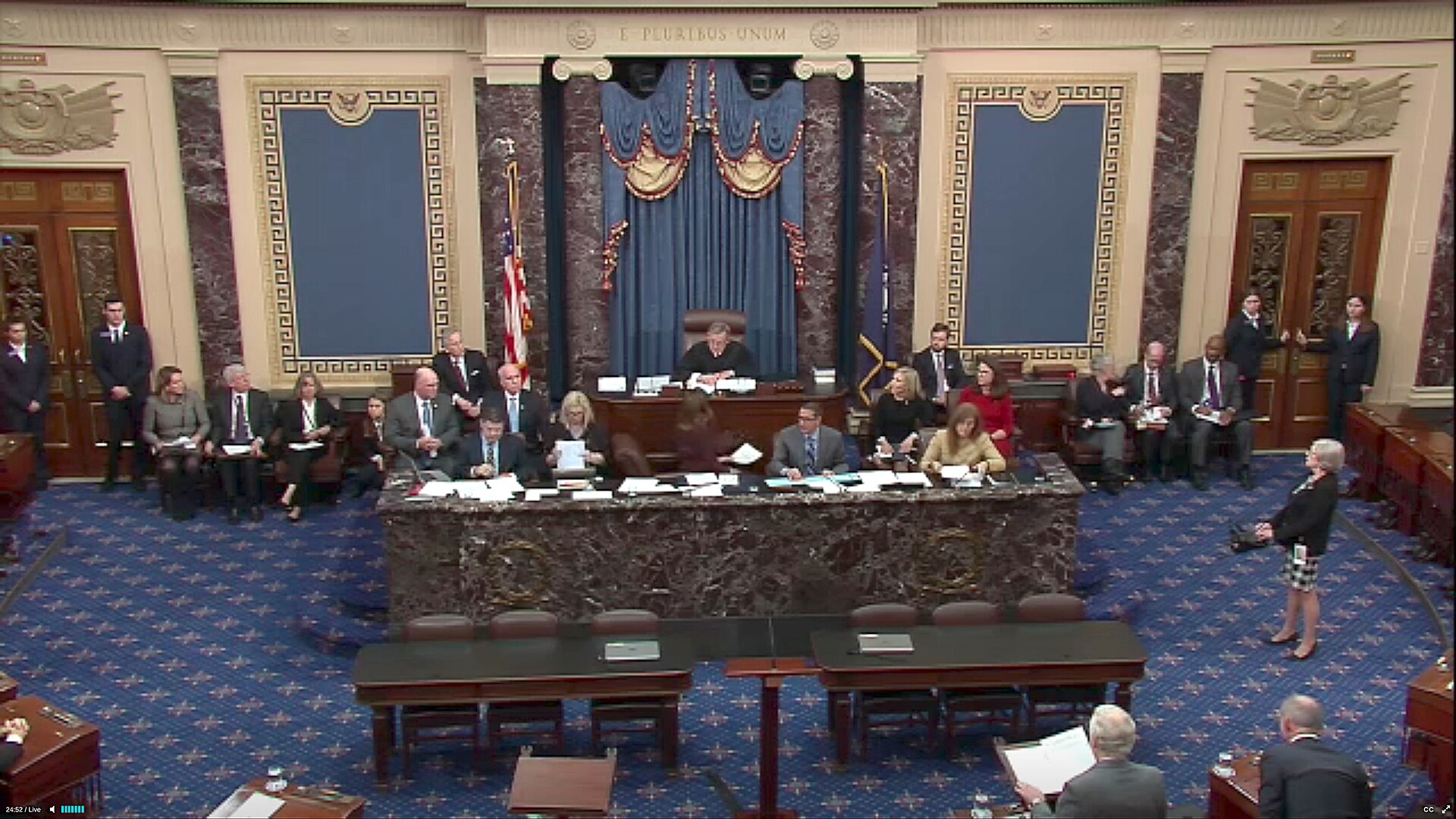
The Senate opened Trump’s impeachment trial in January 2020. After weeks of proceedings, senators voted against calling additional witnesses, leaving the Democrats’ request unmet.
Trump was acquitted on both articles on Feb. 5, 2020. The result showed that evidence can sharpen a political and constitutional dispute without changing the votes needed for conviction.
Viewed in that context, the White House emails mattered less as a standalone revelation than as leverage in a fight over transparency. Democrats saw them as grounds to hear from officials with direct knowledge; the administration said they did not establish the link Democrats alleged.
What remained unresolved by the emails alone was the full explanation for the aid hold. The Senate’s witness decision meant that the competing accounts did not receive the fuller public examination Democrats had sought before the chamber reached its verdict.
Leave a Reply