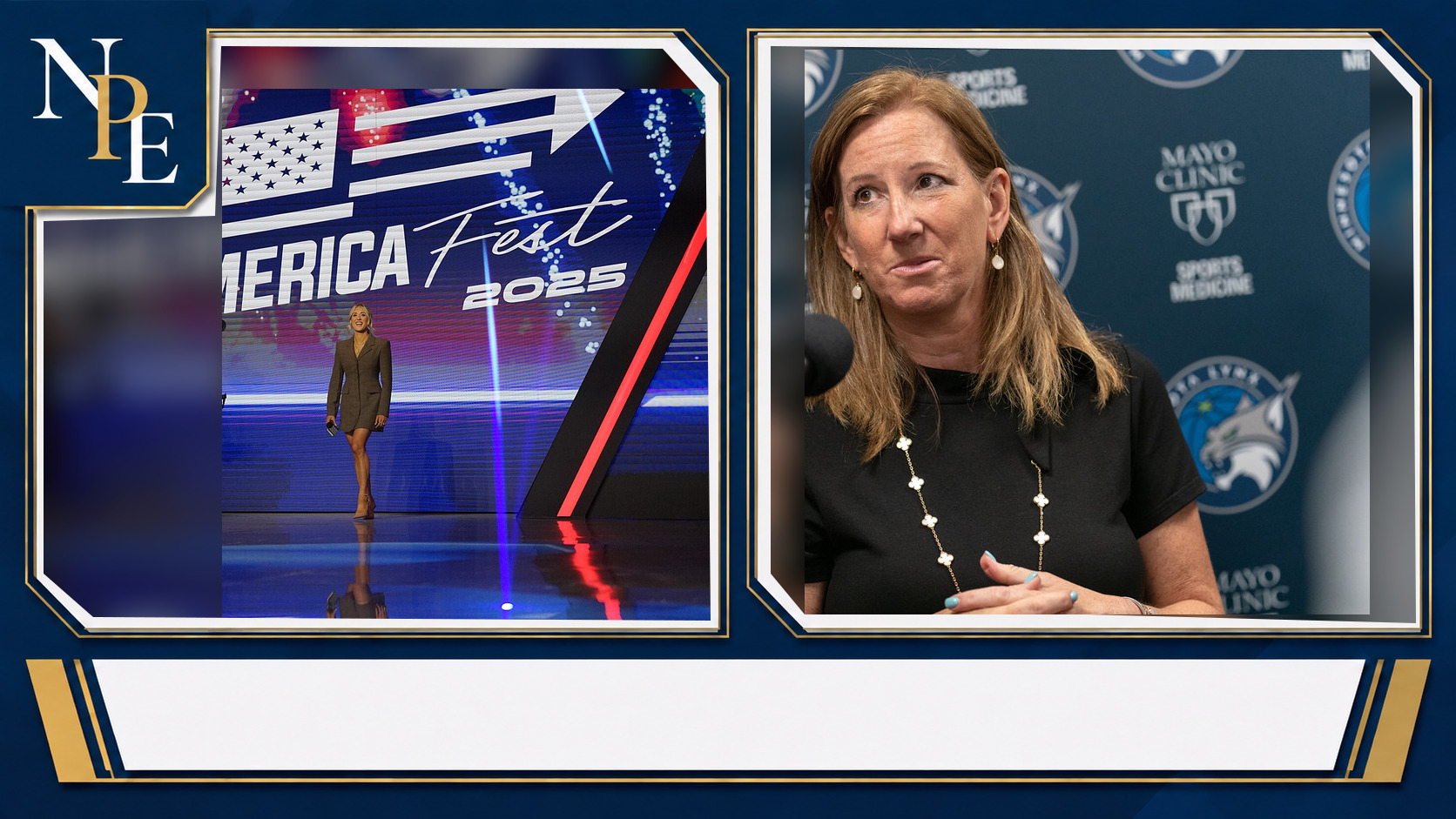
Gaines’s provocative message is the loudest part of the story, but the consequential issue is the WNBA’s still-unfinished approach to participation rules. No final policy change has been publicly announced.
Riley Gaines directed the remark “milk her bull” at WNBA commissioner Cathy Engelbert while criticizing the league’s handling of transgender athlete eligibility. The WNBA is reviewing or weighing its policy on transgender participation, but no final policy change has been publicly announced.
The phrase has put Engelbert under fresh scrutiny, yet the larger story is not a settled rule or a specific player transaction. It is an unresolved debate over who should be eligible to compete in women’s professional basketball, and how the league should explain any eventual decision.
A viral remark meets an unfinished review
Gaines, a former NCAA swimmer, has become a prominent advocate for limiting women’s sports categories based on sex assigned at birth. Her latest message to Engelbert used deliberately blunt language to challenge the WNBA commissioner over transgender participation.
That language has helped drive attention, but it does not answer the practical questions facing the league. The available reporting does not establish when or where Gaines made the remark, whether it came as part of a longer statement, or whether Engelbert responded directly.
It also does not identify a particular transgender athlete whose status prompted the exchange. That distinction matters because a high-profile public clash can create the impression that a league decision has already been made when the underlying policy work is still in progress.
What the WNBA has said so far
Reporting by Just Women’s Sports said Engelbert told teams that the WNBA would continue considering transgender eligibility and had assigned a task force to examine the issue.
A task force indicates the league is treating eligibility as an active policy matter rather than presenting a finished rule. It may allow a league to seek input involving medical issues, legal considerations, players and competitive concerns before setting a standard.
Still, a task force is not itself a policy change. The material available does not identify its members, a schedule for recommendations, proposed eligibility rules, enforcement procedures, or a public vote by team owners.
Those gaps leave the central question open: Will the WNBA retain, clarify or revise its approach? For now, public reporting supports only that the issue remains under review.
Why Gaines keeps pressing leagues
Gaines’s advocacy gained national attention after she competed against Lia Thomas at the 2022 NCAA swimming championships. Since then, she has repeatedly criticized the NCAA, schools, governing bodies and professional leagues that she believes have failed to draw sufficiently clear eligibility boundaries.
Her stated position is that women’s categories should be reserved for athletes she describes as biological women. Gaines has argued that the issue reaches beyond medals and records, citing privacy, safety and fair competition in sex-separated athletic settings.
In earlier congressional testimony covered by WTOV and The National Desk, Gaines said female athletes had been put “on the back burner” when sports organizations confronted difficult eligibility decisions.
Supporters of her position argue that physiological differences after male puberty are central to fairness, especially at elite levels. They see sex-based categories as necessary to protect competitive opportunities created for women and girls.
Inclusion advocates frame the risk differently
Advocates for transgender athletes contend that broad exclusions can stigmatize a small group of people and deny them meaningful access to sports. They generally argue that eligibility standards should be evidence-based, tailored to the sport and attentive to the practical effects on transgender athletes.
That argument does not dismiss concerns about competition. Instead, it rejects the idea that one universal rule can account for every sport, level of play or athlete circumstance.
Supporters of inclusion have urged sports organizations to weigh the demands of a particular sport, medical standards and the real-world consequences of restrictions. Their view is that policy should not be dictated solely by political rhetoric or a single highly publicized dispute.
The conflict is especially difficult because both sides invoke women’s opportunity. Gaines and her supporters focus on preserving a female competitive category, while critics of categorical bans focus on preventing transgender women from exclusion and maintaining their ability to participate in athletic communities.
The policy details carry the real stakes
Gaines’s wording is more likely to travel online than a technical memo about eligibility. But the WNBA’s eventual challenge will be building a policy that players, teams and fans can understand, whatever conclusion it reaches.
Any approach would need to address more than eligibility alone. It could require clear treatment of privacy, medical information, implementation, enforcement and appeals, along with an explanation of the league’s competitive rationale.
The communication problem is substantial. Critics may interpret silence as indecision, while affected players and teams could be left with new uncertainty if the league moves too quickly without explaining how its standards would work.
The attention on Engelbert shows how a procedural review can become a larger test of league leadership. Yet the available information does not show a final rule, an imminent change or a public response from Engelbert to Gaines’s specific comment.
What remains unknown
The clearest facts are limited: Gaines publicly aimed the “milk her bull” remark at Engelbert, and reporting indicates the WNBA has continued evaluating transgender eligibility through a task force.
What remains unclear is whether the league will announce a revised standard, when it might act, what evidence and consultation will shape its decision, and whether Engelbert will address Gaines’s remark publicly.
Until those questions are answered, the episode is best understood as a sharp intervention in an ongoing sports-policy dispute, not evidence that the WNBA has reached a final conclusion. The headline-grabbing phrase may dominate the immediate conversation, but the lasting issue is how the league will define eligibility in women’s professional basketball.
Leave a Reply