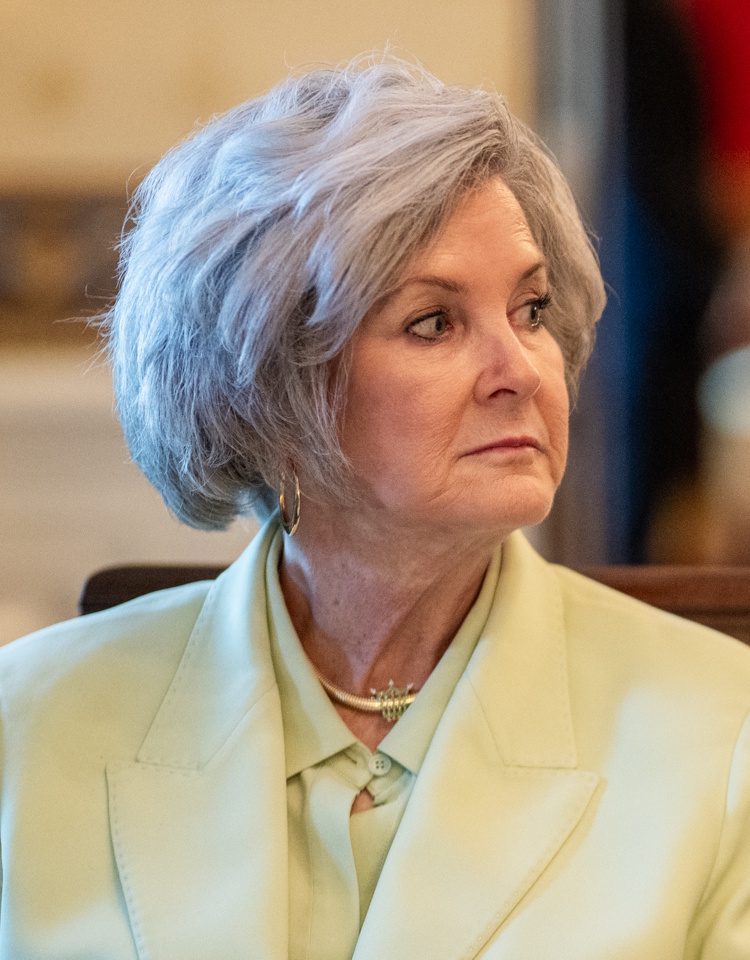
Donald Trump and the White House are standing by Susie Wiles after a disputed Vanity Fair profile stirred anger among Trump allies. The episode shows why private assessments from a chief of staff can become a public test of unity.
Susie Wiles pushed back against a Vanity Fair profile after remarks attributed to her about Donald Trump, JD Vance and Elon Musk triggered backlash inside MAGA circles. Trump’s White House chief of staff said the magazine stripped away “significant context,” while Trump publicly defended her, turning a magazine profile into a revealing dispute over unity in Trump-aligned political circles.
The immediate question is not simply whether the reported comments were fair. It is whether a powerful aide can continue to serve as a trusted gatekeeper when her reported private assessments have given competing MAGA factions fresh material for a public fight.
Trump chose to back Wiles
Trump did not publicly break with Wiles after the profile appeared. In an interview with the New York Post, he called her “fantastic” and said she had been “deceived” by the writer, according to the BBC.
That support is central to understanding the fallout. A chief of staff depends on presidential confidence to manage staff, enforce decisions and mediate among powerful allies. Had Trump instead criticized Wiles, the episode could have quickly become a personnel crisis.
Press secretary Karoline Leavitt also defended Wiles, telling the BBC that Wiles helped Trump deliver what Leavitt described as the most successful first 11 months in office of any president in American history. Leavitt said the administration was “united fully behind her.”
The White House’s position was later made even clearer: Leavitt accused Vanity Fair of “bias of omission,” saying it excluded other interviews with White House staff and took Wiles’ words “wildly out of context.”
Wiles disputes the profile’s framing
Wiles responded in a post on X, accusing Vanity Fair of overlooking “significant context” and constructing what she called an “overwhelmingly chaotic and negative narrative” about Trump and his team.
The underlying profile was built from nearly a dozen interviews with Wiles, according to BBC News. Vanity Fair’s full editorial reasoning is not available in the supplied reporting, so the competing claims about context and presentation remain unresolved.
That uncertainty leaves two arguments operating at once. The White House says the profile distorted Wiles’ remarks; the account reported by the BBC portrays a senior official speaking candidly about the personalities and pressures around the president.
Both possibilities matter because profiles can compress nuance, but reported comments from someone in Wiles’ position can also illuminate real strains. The dispute has become consequential precisely because she is not an outside commentator with little role in governing.
The Trump and Vance remarks
According to the BBC’s account of the Vanity Fair profile, Wiles described Trump as having an “alcoholic’s personality.” She connected that observation to growing up with an alcoholic father and said that “big personalities” were familiar to her.
Wiles also reportedly said Trump operates with the belief that “there’s nothing he can’t do.” On his approach to adversaries, she said she did not think he wakes up focused on retribution, but added, “when there’s an opportunity, he will go for it.”
Those remarks touch a persistent divide around Trump. Critics have long argued he seeks to wield power against rivals, while supporters often see his legal and political fights as a response to unfair treatment. A comment from his chief of staff carries particular weight because it can be read as an assessment from inside the operation.
Wiles was also quoted calling Vance a “conspiracy theorist” for a decade. Vance, now vice president and an important figure in the movement’s future, said he had not read the article, according to the BBC. He joked that he believes only conspiracy theories that are “true,” citing reporting about former President Joe Biden’s health.
Musk exposed another fault line
The reported comments about Elon Musk added a separate layer of tension. Musk had led cost-cutting work through the Department of Government Efficiency, or Doge, before leaving government in May, according to the BBC. He later had a public falling-out with Trump on social media.
In Vanity Fair’s account, Wiles called Musk an “odd, odd duck” and referred to him as an “avowed Ketamine” user who slept in a sleeping bag in the Executive Office Building. Those claims put attention on both Musk’s personal conduct and his influence over government operations.
Wiles also reportedly said she was initially “aghast” at the prospect of gutting the U.S. Agency for International Development. At the same time, she acknowledged the rationale behind Musk’s disruptive approach, saying that if someone is too incremental, “you just won’t get your rocket to the moon.”
That contrast captures a larger argument within Trump’s coalition. Some allies regard rapid disruption of institutions as the point; others worry that moving too quickly can create results even supporters find difficult to defend.
Why Wiles’ role raises the stakes
Wiles is one of Trump’s most powerful advisers and the first woman to hold the White House chief of staff job. Her responsibilities place her at the intersection of campaign veterans, institutional Republicans, populist hard-liners, online influencers, technology figures and potential future leaders of the movement.
That makes her a gatekeeper, not merely a participant in the argument. Reported observations about Trump, Vance and Musk can be interpreted as signals about who has influence, which relationships are difficult and where the administration’s internal pressure points may lie.
For Trump allies, the danger is broader than an uncomfortable headline. The profile can supply critics with language for describing dysfunction while giving rival groups within MAGA a reason to challenge one another’s standing.
For Wiles, even public support from Trump does not erase the institutional challenge. A chief of staff needs the president’s trust, the confidence of staff and enough authority with outside power players to keep decisions moving.
Key questions remain unsettled
Musk had not commented on the Vanity Fair piece at the time of the BBC report. It also remains unclear how much of the backlash came from senior administration figures, online MAGA voices or outside allies seeking to shape the narrative.
The White House has drawn a firm line: Wiles was treated unfairly, context was absent and the administration supports her. The reported Vanity Fair account offers a different picture, of an influential aide navigating difficult relationships inside a second Trump White House.
The episode does not establish that MAGA is in a full-scale “civil war,” a phrase that can overstate internal differences. It does show the cost of public candor in a movement where loyalty and message discipline are central political assets.
Trump’s backing may contain the immediate personnel threat. But the dispute has left a larger question hanging over his coalition: whether its most powerful figures are genuinely aligned, or simply keeping their disagreements out of view until they can no longer be contained.
Leave a Reply