
The estimate puts a concrete price on an unusually long military presence in the nation’s capital. It also sharpens debate over whether the deployment’s public-safety role justifies its growing federal cost.
The National Guard presence in Washington, D.C., is projected to cost an additional $1.4 billion if roughly 2,500 troops remain deployed from October 2026 through January 2029, the end of Donald Trump’s second term. The estimate, cited by Sen. Elizabeth Warren’s office, turns a highly visible deployment into a major long-range federal spending question.
The projected cost matters now because the Guard has become a routine part of life in the capital after Trump first deployed troops in August 2025. Supporters can point to a security mission and emergency assistance; critics argue the city needs clearer evidence that a costly, extended military presence is delivering results.
The estimate behind the $1.4 billion
The $1.4 billion figure is a projection from Warren’s office made during the confirmation process for Jules Hurst III, Trump’s nominee for Pentagon comptroller. It is not a completed appropriation or a final audited bill.
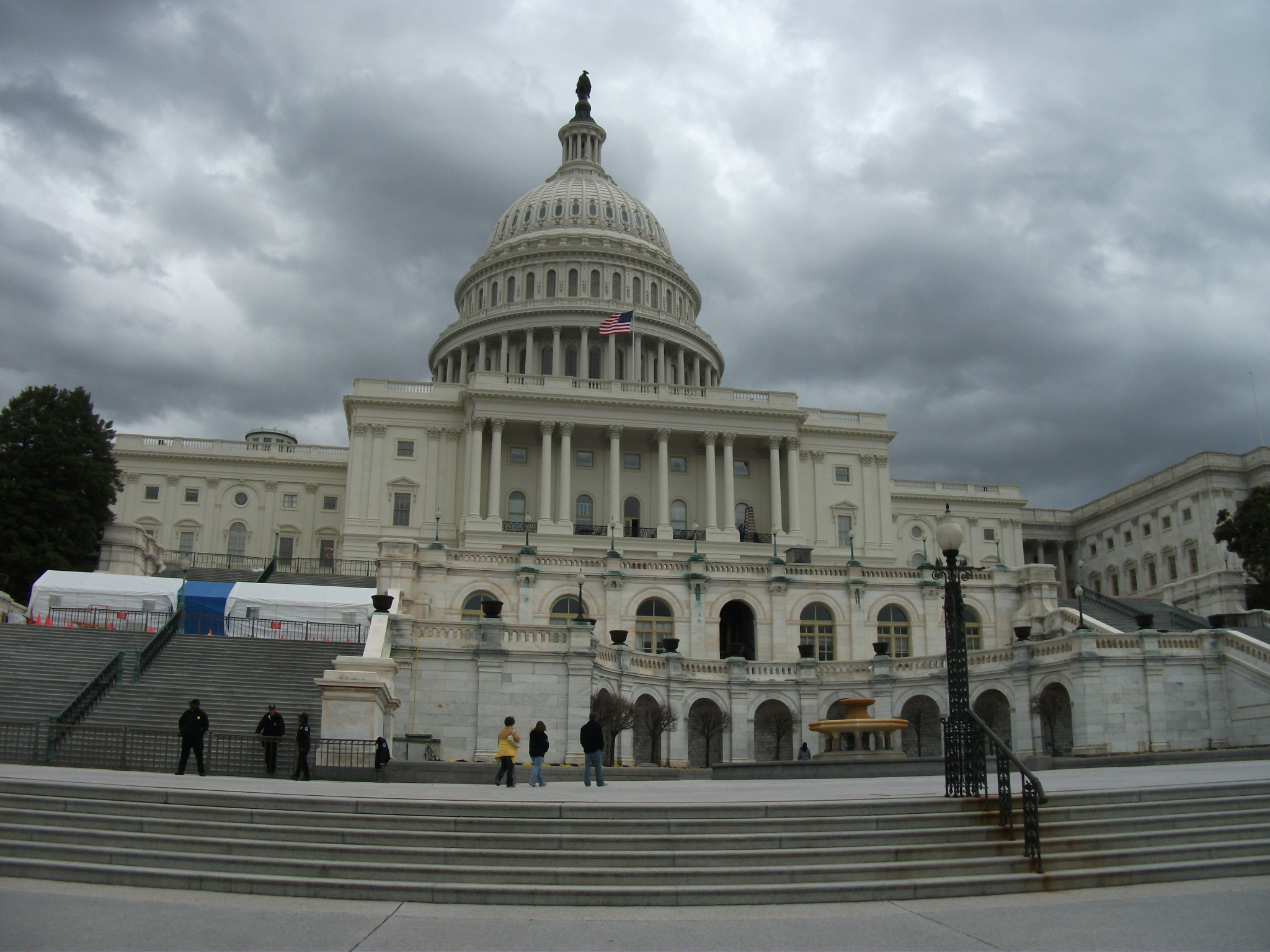
Its underlying assumption is a sustained force of about 2,500 Guard members in the District from October 2026 through January 2029. That timeline would carry the mission through the remainder of Trump’s second presidential term.
That distinction is important. A projection depends on troop levels, the length of the assignment and the cost of pay, housing, transportation, equipment, logistics and support. Any of those variables could change before January 2029.
Still, the estimate gives the public a useful scale for the debate: this is no longer a short deployment measured only in weeks or months. It is being assessed as a multiyear commitment with a price tag in the billions.
Earlier costs already were substantial
The Congressional Budget Office estimated in January 2026 that the federal government had spent $223 million on the D.C. Guard deployment through 2025. The new $1.4 billion projection refers to additional costs over the later period described by Warren’s office.
Those figures should not be casually added together as though they were drawn from the same estimate. They come from different points in time and are based on different reporting. But together they show how the financial consequences expand when a deployment persists.
For taxpayers and lawmakers, the central issue is not simply whether the Guard has a role in Washington. It is whether the mission has defined goals, regular public accounting and a clear endpoint—or whether it becomes a standing expense without those guardrails.
Crime data complicates the argument
The public-safety case is not captured by one number. District police data cited in the reporting showed violent crime up 3%, while property crimes including burglary and car theft were down by a combined 23%.
Homicides also continued to decline, but that drop began in 2023, before the August 2025 deployment. That chronology makes it difficult to assign the improvement to the Guard alone.
Supporters of the deployment may argue that a visible presence can deter some offenses, help residents feel safer and allow police or other agencies to concentrate resources elsewhere. Critics respond that trends can reflect many factors, including policing strategies, economic conditions, prosecution, seasonal patterns and longer-term declines already underway.
The available numbers therefore support caution rather than a simple victory claim. Lower property crime may be meaningful, but it does not by itself establish that an extended Guard deployment caused the change or that it is the most cost-effective response.
Troops have served beyond patrols
The mission has involved more than armed patrols near federal spaces and across city neighborhoods. The Washington Post reported that Brig. Gen. Leland Blanchard II said Guard members had responded to about 800 medical emergencies and administered roughly 325 doses of Narcan.
Those reported actions point to one argument for maintaining personnel on the ground: troops can provide immediate help in medical or overdose emergencies. They also show the unusual breadth of expectations placed on a force that is neither the District’s regular police department nor its principal public-health provider.
The deployment has carried risks as well. The Justice Department charged Rahmanullah Lakanwal in connection with the fatal shooting of Army Spc. Sarah Beckstrom and the wounding of Air Force Staff Sgt. Andrew Wolfe near the White House in late November 2025. A criminal charge is an allegation, and the case remains subject to the court process.
That episode underscores that a prolonged presence has human costs beyond the budget ledger, including the exposure faced by service members assigned to a high-profile domestic mission.
Washington residents see the tradeoffs
For many Washington residents, the deployment is not an abstract line item. Guard members are seen at Metro stations, in neighborhoods and around federally owned parks, making the federal decision part of ordinary daily routines.
Some residents have objected to the sustained presence, according to the reporting, including through signs calling for Guard members to leave the city. Others may see patrols and emergency responses as reassurance at a time when concerns about crime and disorder remain politically potent.
The tension is intensified by Washington’s unique status. The federal government has an outsized role in the city, while local residents live with the operational effects of decisions made in Congress and the executive branch. That makes transparency about costs, scope and results especially consequential.
What needs to be answered next
The immediate question is whether the projected force level of 2,500 members will actually be maintained through January 2029. The reported estimate is built on that assumption, not a guarantee that every operational detail will remain unchanged.
Lawmakers reviewing Pentagon spending will also need more detail about what the mission is meant to accomplish, how performance will be measured and what conditions would justify scaling it back or ending it. Crime totals, emergency responses and visibility are relevant, but they answer different questions.
Warren called the deployment a political stunt and criticized its cost. The administration’s position on the specific $1.4 billion estimate was not detailed in the reporting. A fuller public accounting from the Pentagon and the D.C. National Guard would help establish which costs are projected, which are committed and what taxpayers are receiving for them.
Until then, the $1.4 billion figure is best understood as a warning about the potential cost of treating a National Guard deployment in Washington as a fixture through the end of Trump’s term—not as the final bill.
Leave a Reply