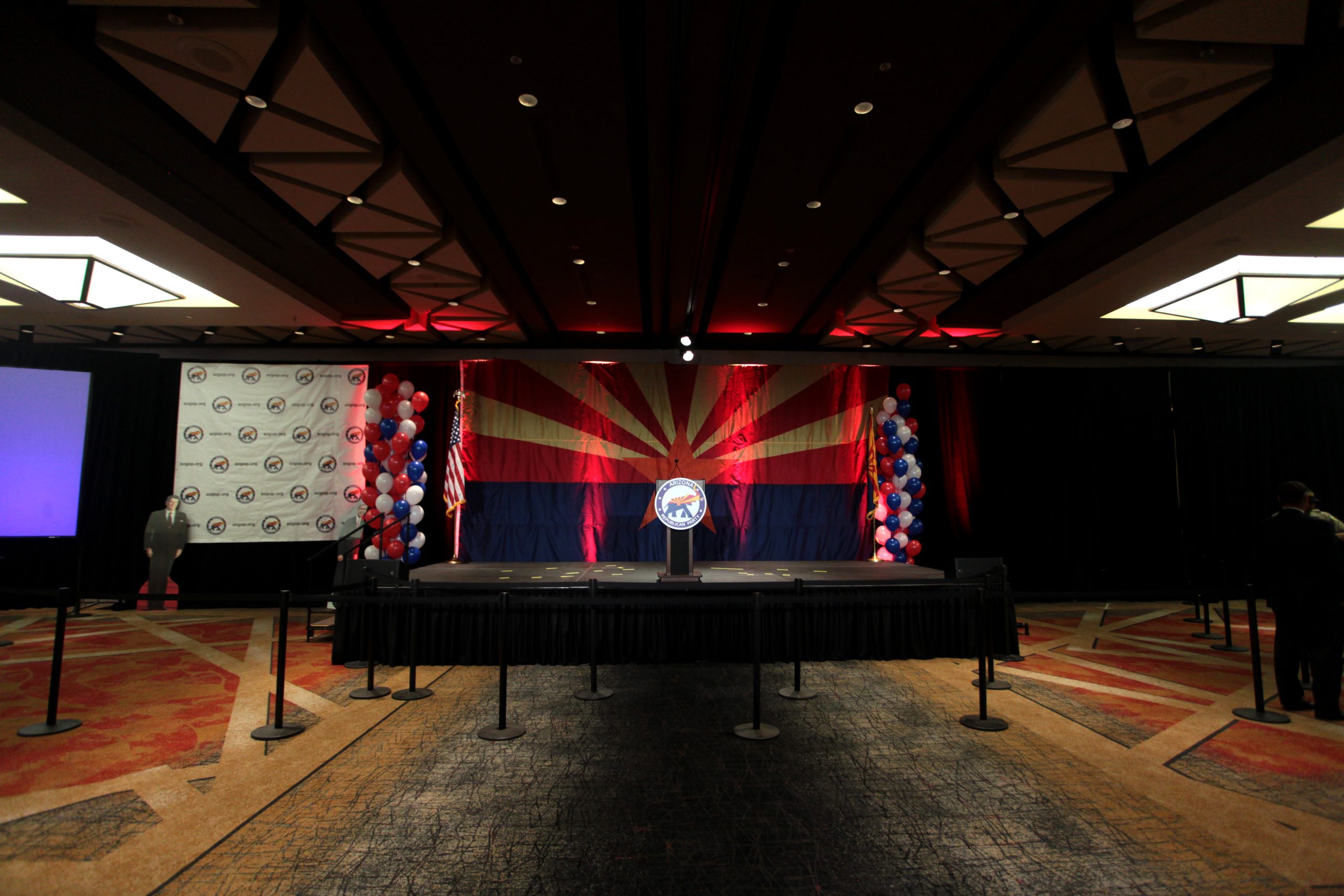
The GOP’s turmoil is not just a Washington drama. State parties, legislatures and local organizations are showing how internal revolts can turn political power into paralysis.
The Republican Party is falling apart because of its own bad choices. That is the blunt argument behind commentary asking whether the Republican Party only—or the Party only just—realized how deeply the modern GOP has been damaged by rebellions and infighting. Across the United States, local Republican party organizations have been consumed by internal conflicts and power struggles as the 2024 cycle accelerated.
In Columbus, Ohio, Ohio Republicans split into rival camps over leadership last year; after party leaders censured members who backed speaker Jason Stephens, AP reported the Legislature passed only 10 bills this year. That matters because the fights are no longer confined to campaign season. They are shaping whether Republicans can govern when they win.
Ohio showed the cost
The Ohio case is a clean example because Republicans were not weak there. They had strengthened their statehouse majority and held power across state government. On paper, that should have made governing easier.
Instead, the fight over who should lead the Ohio House opened a split between younger, more confrontational conservatives and more traditional Republicans. Democrats crossed party lines to help end the speaker standoff, a move that gave Jason Stephens the gavel but deepened the anger inside the GOP caucus.
AP reported that party leaders later censured Republicans who had backed Stephens. The result was not a dramatic legislative surge from a party in command. It was a chamber bogged down by mistrust, lawsuits and factional punishment.
Republican state Rep. Sara Carruthers described the conduct of colleagues still opposing Stephens as “childish,” according to AP. Her frustration captured the central problem: a party can win elections and still lose the ability to act like a majority.
The revolt became routine
Reuters reported in 2023 that, as the 2024 presidential race began to take shape, local Republican party organizations in many parts of the United States were consumed by rebellions and infighting. That phrase is important because it pushes the story beyond one state or one bad week in Congress.
The modern GOP has built a political culture in which challenging party leadership can be a brand, a fundraising pitch and a path to attention. That does not mean every challenger is unserious or every establishment figure is wise. It means the incentives often reward disruption before they reward results.
The pattern has shown up at multiple levels. AP pointed to conflict from Columbus to Phoenix to Congress, including Arizona races in which insurgent Republicans won nominations before Democrats swept four statewide contests. In Michigan, AP reported on a county party meeting that became so bitter one chair told police he had been kicked by a rival.
Those episodes can look absurd in isolation. Together, they suggest a party struggling to decide whether winning control is the goal or whether purging internal enemies is the higher priority.
Congress made it national
The most visible version of the same problem came when a small group of conservative U.S. House members joined Democrats to remove Speaker Kevin McCarthy. The speaker’s chair is not a symbolic office. It is second in the constitutional line of succession to the presidency after the vice president.
McCarthy’s ouster turned a long-running internal argument into a governing crisis. It left the House without a speaker at a moment when major international and domestic issues demanded congressional action.
AP noted that McCarthy was the fifth Republican speaker during the 19 years the GOP had controlled the House since 1995, and the first speaker ever removed by vote. By contrast, Democrats had one speaker, Nancy Pelosi, during the eight years they controlled the House in that period.
That comparison is not a claim that Democrats are free of internal fights. They are not. It is a measure of how often Republican power has been interrupted by Republican revolt.
Why chaos keeps winning
The simplest explanation is that the party keeps elevating people who benefit from conflict. But that can be too easy. The deeper issue is that many Republican voters and activists view compromise as surrender, not strategy.
AP cited polling showing Republican voters are more opposed to compromise than Democratic voters. That creates a built-in problem for leaders: the moment they make a deal, they risk looking weak to the most intense part of their own coalition.
The conservative media ecosystem can sharpen that pressure. McCarthy, after his removal, blamed “a few individuals that love a camera more than they love the American public,” according to AP. His complaint was self-serving, but it also pointed to a real incentive: outrage travels faster than committee work.
For ambitious politicians, the lesson is obvious. A televised fight with your own leadership may do more for your profile than a quiet legislative win. Over time, that changes who runs, who wins and who stays relevant.
Insurgents have their argument
The anti-establishment wing does not see itself as wrecking the party. Its case is that Republican leaders have too often promised conservative change, then protected the status quo once in power.
Jenny Beth Martin of Tea Party Patriots Action told AP that shifting how Washington operates requires pushing against people on your own side who support the status quo before confronting the other side. That view has defined conservative activism since the Tea Party era and, in some ways, since Newt Gingrich’s rise in the 1990s.
There is a fair point buried inside the rebellion. Parties can become stale. Leadership can become insulated. Primary challenges can expose real voter anger that party officials would rather ignore.
The problem comes when correction becomes permanent combat. A party cannot run forever as an opposition movement to itself. At some point, voters judge not only whether politicians are angry, but whether they can deliver anything after the anger wins.
The unanswered GOP question
The Republican Party’s dysfunction is broad and ongoing because it is tied to recruitment, media incentives, primary rules, donor behavior and voter expectations. That makes it harder to fix than a single leadership race.
If the party nominates candidates who are skilled at attacking fellow Republicans but weak at coalition-building, the governing problem will repeat. If local organizations reward purity tests over competence, state parties will keep splitting into rival camps. If congressional rebels can gain fame by creating shutdown-style crises, leaders will keep governing under threat.
None of this guarantees Republican decline. The party remains electorally powerful, especially in many states, and Democratic divisions can be serious too. But the Ohio example shows why raw power is not the same as functional power.
The clean takeaway is this: the modern GOP’s biggest threat may not be that it suddenly hired the wrong people. It is that, for years, it has trained ambitious Republicans to treat internal warfare as proof of authenticity. When that habit follows the party into government, the result is predictable: more rebellions, more censures, more speaker fights and fewer bills passed.
Leave a Reply