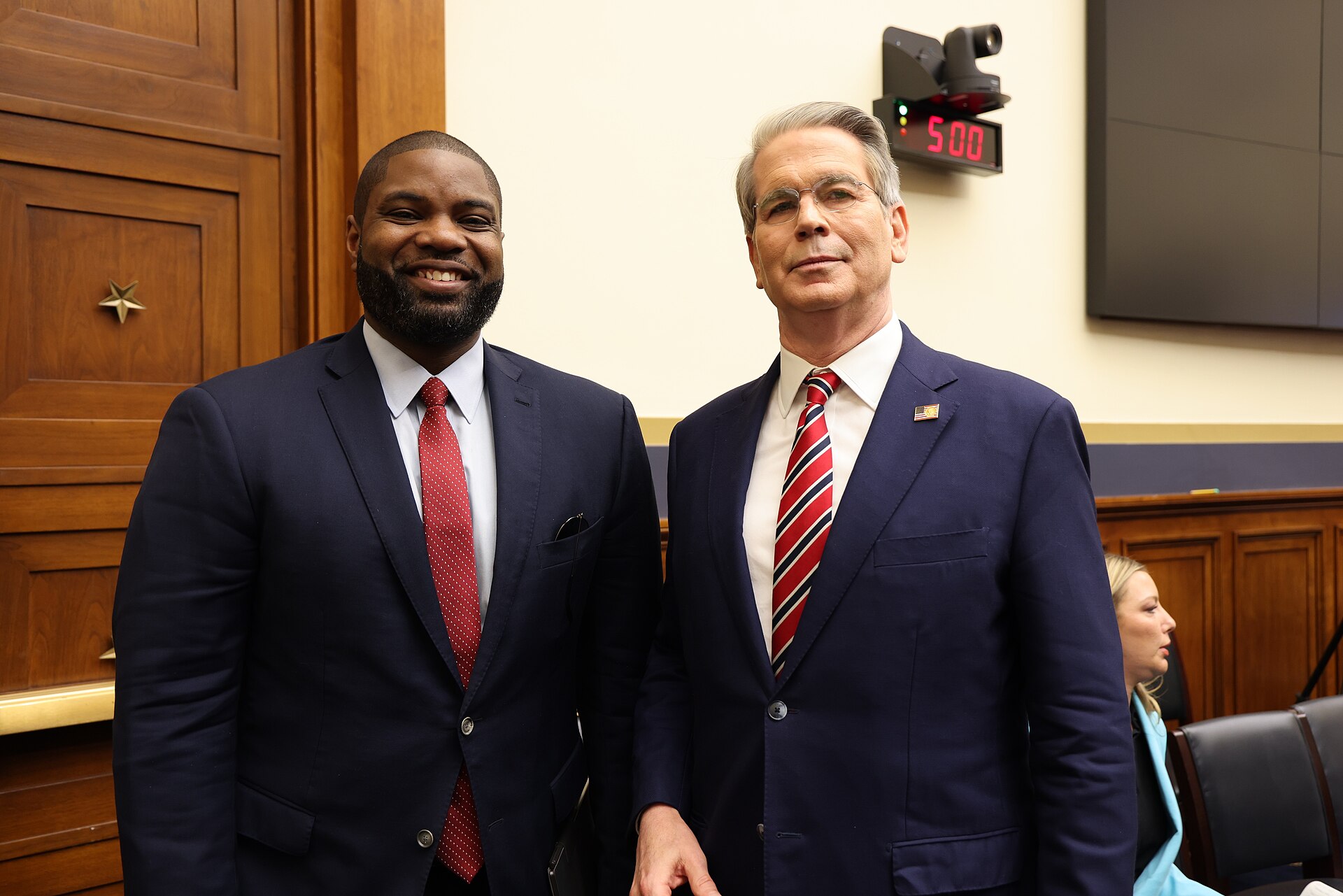
The clash is less about one awkward interview than a bigger political problem: economic statistics can look strong while voters still feel squeezed. Bessent’s tariff defense also puts the administration’s long-term industrial strategy up against short-term household pain.
Scott Bessent was confronted about Donald Trump’s claim that the economy is doing extremely well — an “A+++” economy — while many Americans are struggling despite the upbeat economic message. In the exchange highlighted by Moneywise, the Treasury Secretary appeared shaken, or at least on the defensive, as he responded to questions about the economy and Trump’s tariffs.
The viral friction matters because it captures the central tension of Trump’s economic pitch: the White House wants credit for strength, but voters are still measuring the economy at the grocery aisle, in rent checks, through credit-card balances and in the price of imported goods.
Bessent meets the affordability test
The political problem for Bessent is not hard to understand. An administration can point to growth, market confidence or investment pledges, but households tend to judge the economy by whether their paychecks stretch farther than they did last month.
That is why the confrontation landed. The question was not just whether Trump can call the economy “A+++.” It was whether Bessent could make that claim sound credible to people who do not feel like they are living in a top-rated economy.
According to the framing of the exchange, Bessent did not concede the premise that tariffs are effectively taxes on Americans. Instead, he defended the administration’s broader economic argument: that tariffs and a tougher trade posture are tools for rebuilding domestic production and protecting national strength.
That answer may satisfy Trump allies who see tariffs as leverage. It is less likely to satisfy families who hear “tariff” and think of higher prices on appliances, cars, clothes, electronics or business inputs that eventually get passed down the chain.
Trump’s grade meets voter doubt
Trump’s “A+++” label is classic political branding: simple, memorable and absolute. It leaves little room for the more complicated reality that an economy can look strong on paper while still feeling punishing to millions of people.
Reuters reported earlier this year that most Americans saw a struggling economy, even as Trump argued the country was in a boom. The partisan split was sharp: in a Reuters/Ipsos survey, 56% of Republicans said the economy was booming, while 43% disagreed.
That number is telling because it shows doubt even inside Trump’s own coalition. If nearly half of Republicans in that survey were not fully buying the boom message, the challenge with independents and Democrats is even steeper.
The gap is not new. Presidents often get blamed for prices they do not fully control and denied credit for improvements that take time to show up in household budgets. But Trump has made economic dominance a core promise, which raises the cost of any visible mismatch between the message and daily life.
The tariff answer is the fault line
Tariffs are where the administration’s argument becomes most politically exposed. Supporters describe them as a way to force fairer trade, punish foreign competitors, bring factories back and reduce dependence on countries such as China.
Critics counter that tariffs are paid by importers and often passed along to consumers or businesses. In everyday language, that is why opponents call them a tax, even when the legal mechanism is not the same as an income-tax increase.
Bessent’s refusal to accept that framing is not surprising. If the Treasury Secretary says tariffs are taxes on Americans, he hands critics a clean attack line. If he rejects it too aggressively, he risks sounding detached from people who are already bracing for higher costs.
The unresolved question is how much of the tariff burden will be absorbed by foreign producers, corporate margins or American consumers. That answer can vary by product, industry and supply chain. Politically, though, nuance rarely travels as fast as a higher receipt.
Bessent’s bigger economic philosophy
Bessent has laid out a broader case for Trump’s economic approach in formal settings. In May 2026 remarks before the Reagan National Economic Forum, published by the U.S. Treasury Department, he argued that “economic security is national security” and said the country had become too comfortable with fragile supply chains and offshored production.
That speech helps explain his posture in the confrontation. Bessent’s argument is not just that the economy is good today. It is that previous policy choices left the United States dependent on rivals and vulnerable in critical sectors, from minerals to medicines to manufacturing capacity.
He criticized the old faith in cheap overseas goods, saying America had focused too much on consumption and not enough on production. In that worldview, tariffs are not simply price-raising tools. They are part of a larger attempt to change incentives across the economy.
The weakness in that argument is timing. A factory strategy can take years to prove itself. Household budgets reset every month. Voters may be willing to hear about resilience, but they still want to know who pays during the transition.
Why the moment traveled
The phrase “Bessent clearly shaken” is doing a lot of work. It turns a policy dispute into a character test: did the Treasury Secretary have a persuasive answer, or did the question expose a weak spot in the administration’s story?
Viewers often read body language through their politics. Trump critics may see defensiveness. Supporters may see a cabinet official refusing to accept a hostile premise. The substance matters, but the clip-friendly impression matters too.
That is especially true on the economy, where voters do not need a white paper to form an opinion. They have bills, balances and prices. If an official’s answer feels too polished or dismissive, it can reinforce the belief that Washington is grading a different economy than the one households live in.
For Bessent, the challenge is to defend Trump’s economic record without sounding as if public anxiety is imaginary. For Trump, the risk is that “A+++” becomes a boast opponents can use whenever prices, tariffs or debt pressures dominate the conversation.
What households can actually do
The “painproof your nest egg” framing attached to the trend speaks to a real concern, even if no investment move can make a household immune to policy shocks. Tariffs, inflation worries and election-year uncertainty can all rattle markets and budgets.
For ordinary savers, the practical response is less dramatic than the political argument. Financial planners often stress basics: keep an emergency cushion if possible, avoid concentrating all risk in one bet, review debt costs, and make sure short-term cash needs are not exposed to market swings.
- Budget pressure: Watch categories most exposed to price changes, including imported goods and big-ticket purchases.
- Debt pressure: High-rate credit-card balances can do more damage to a household than a bad market week.
- Portfolio pressure: Diversification cannot eliminate losses, but it can reduce dependence on one sector or political outcome.
- Cash pressure: Money needed soon generally should not be treated like long-term investment capital.
The bigger takeaway is political as much as financial. Bessent’s tense defense shows that the administration’s economic message is entering a harder phase. Saying the economy deserves an “A+++” is easy. Convincing Americans who feel squeezed that the grade applies to them is the test that matters.
Leave a Reply