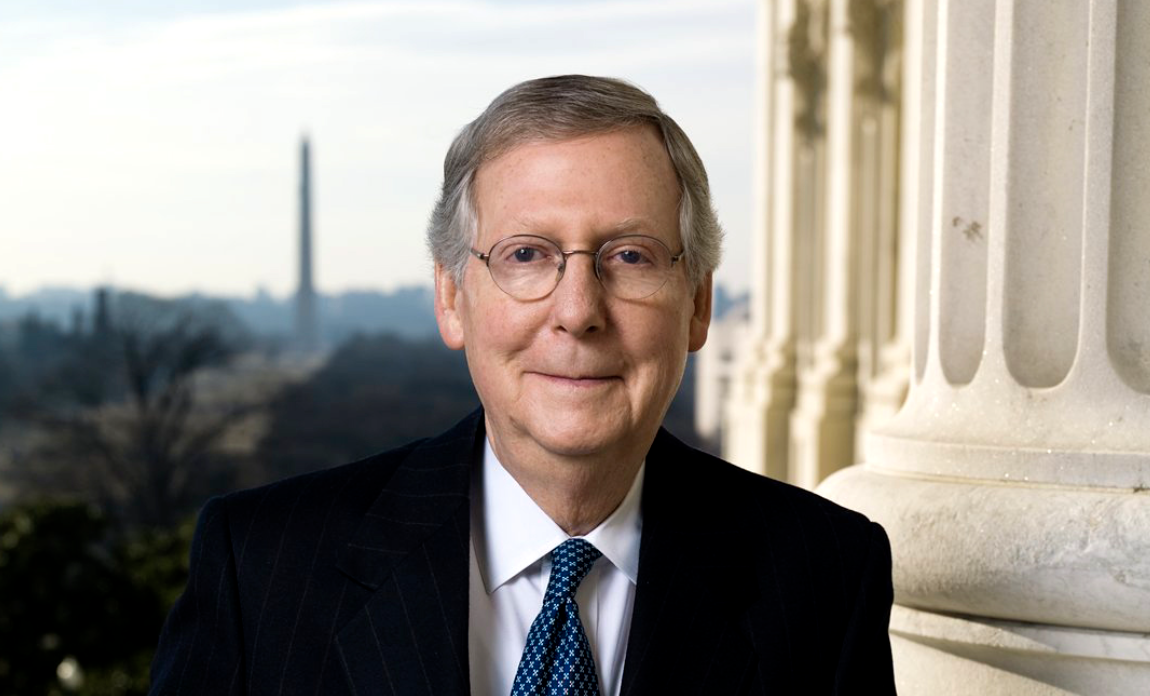
McConnell remains in office, but his absence has pushed a technical election-timing question into the political spotlight. The issue is whether Kentucky’s newer vacancy law and older constitutional timing rule fit neatly together.
Mitch McConnell and the Monday deadline for a Kentucky special election are linked because the August 3 deadline matters in Kentucky. Kentucky’s Senate vacancy rules could shape the timing of a special election that would replace Mitch McConnell if his seat opened before his term ends, with November 3 sitting exactly three months later.
The 84-year-old Kentucky Republican has been absent from Congress after a reported fall at his Washington, D.C., home. His office says he is working remotely, but the timing question has become urgent because Kentucky recently changed how U.S. Senate vacancies are filled.
The calendar is the pressure point
August 3 is not important because it automatically removes McConnell or triggers an election. It matters because of how Kentucky’s election calendar may interact with state vacancy rules if a Senate seat becomes vacant.
Under Section 152 of Kentucky’s Constitution, a special election is required when there are more than three months between a vacancy and an election. If a vacancy occurs less than three months before an election, the timing can be delayed.
Because the next election is set for November 3, Monday, August 3, is the three-month point. That is why lawyers, consultants and political observers have treated it as a potentially meaningful line.
The key word is potentially. The state’s newer U.S. Senate vacancy law has not been fully tested in court, so the date may be a legal marker rather than a clean cutoff.
Kentucky changed the vacancy rules
The broader fight exists because Kentucky no longer handles U.S. Senate vacancies the way many states do.
Under HB 622, passed by state lawmakers in 2024, the governor may not appoint an interim U.S. senator. Instead, the vacancy is supposed to be filled through a special election.
That change matters in this case because Kentucky’s governor is Democrat Andy Beshear, while McConnell is a Republican from a state that leans heavily Republican in federal races. If McConnell left office early, the replacement would come from voters rather than from Beshear’s appointment power.
The law was designed to move the decision away from the governor and toward an election. But when a vacancy, an already scheduled election and notice deadlines all collide, the machinery gets complicated.
The notice rules add another date
August 3 is not the only timing issue in the discussion.
According to the bill’s text, the governor must send a proclamation or writ of election to each county sheriff at least 56 days before the election. Sheriffs then must give notice at least 49 days before Election Day.
That is why September 8 has also been discussed as a key date if November 3 were used as the election date. The notice requirements create a second calendar pressure point beyond the three-month rule.
The U.S. Constitution adds one more layer. The 17th Amendment says that when Senate vacancies occur, a state’s executive authority shall issue writs of election to fill them, while allowing state legislatures to decide whether governors can make temporary appointments. Kentucky is one of the states where governors are not allowed to make such an appointment, according to the National Conference of State Legislatures.
Beshear has urged caution
Beshear has addressed the August 3 theory publicly, but he has not presented it as a guaranteed opening for Democrats.
In an interview with Bloomberg, he said, “There’s an argument out there that that’s a date where I could not later call a special election.” That phrasing leaves room for dispute over how the rules would be interpreted.
Beshear also pushed back on the idea that Democrats should see a possible vacancy as an obvious political opportunity. He noted that Kentucky has not elected a Democratic senator for decades.
That matters because some of the online debate has treated the vacancy rules as a partisan chessboard. A McConnell vacancy would have consequences in a closely divided Senate, but Kentucky’s federal electorate remains difficult terrain for Democrats.
The politics still favor Republicans
Election analysts cited in the reporting have treated a Kentucky special election as likely favorable to Republicans. Donald Trump carried the state by more than 30 points in 2024, and the Cook Political Report has rated the regular Senate race as safe for Republicans.
Republican Rep. Andy Barr and Democrat Charles Booker are already running for the seat McConnell is expected to leave at the end of his term.
That does not make the vacancy question irrelevant. Republicans hold a narrow Senate majority, and every vote can affect the party’s agenda. Even a temporary vacancy from a reliably Republican state would attract national attention.
It also explains why the legal mechanics matter. The fight would not only be about which party is favored; it would be about who has the power to set the process and how quickly voters would be asked to choose a successor.
McConnell remains in office
The most important limit on the entire discussion is simple: McConnell has not announced any plan to resign before his term ends. No vacancy currently exists.
Newsweek reported that McConnell has not been seen publicly for weeks after suffering a fall at his Washington, D.C., home that left him briefly unconscious. His office says he continues to work remotely with staff, and his team has released photos of him at a hospital.
For critics, the limited public information has raised transparency and representation concerns. For allies, the office’s statement that he is working remotely may be sufficient unless McConnell or his team says otherwise.
The attention is sharper because McConnell is not a minor figure in Washington. He has served Kentucky in the Senate for about 40 years and remains tied to Republican strategy even as he prepares to retire.
What Monday can and cannot settle
Monday could shape any Kentucky special election, but it will not settle every question on its own.
The unresolved issues include:
- whether McConnell returns to public Senate work or remains absent;
- whether a vacancy occurs before the end of his term;
- whether Section 152’s three-month rule applies cleanly to a U.S. Senate vacancy under HB 622;
- whether courts would be asked to resolve conflicts in the vacancy framework;
- how quickly Beshear would be required, or allowed, to call a special election.
That is the practical significance of August 3. It exposes how much of Kentucky’s replacement process remains unsettled after lawmakers removed the governor’s appointment power.
For now, McConnell remains Kentucky’s senator, the regular Senate race continues, and Monday is best understood as a pressure date rather than a final answer. If the seat ever opens early, the legal fight over timing could become nearly as important as the campaign itself.
Leave a Reply