
The latest exchange shows how quickly the U.S.-Iran confrontation is spilling across borders. Jordan is now trying to defend its own airspace while Washington and Tehran trade claims of retaliation.
Jordan intercepted Iranian missiles aimed at the kingdom as the U.S. launched heavy strikes on Iran, according to accounts from Jordan’s armed forces and U.S. Central Command cited by the BBC. The episode puts Jordan, Iran and the United States at the center of the wider exchange between the United States and Iran in the Middle East.
The immediate trigger, U.S. officials said, was an attempted Iranian ballistic missile attack on American forces, including bases in Jordan. Iran’s Revolutionary Guard Corps framed its own attacks as retaliation for American aggression.
Jordan becomes a front line
Jordan’s armed forces said air defense systems shot down five Iranian missiles targeting the kingdom’s territory on Thursday, according to the BBC report. That detail matters because Jordan is not simply watching the U.S.-Iran conflict from the sidelines; it is now actively defending its skies.
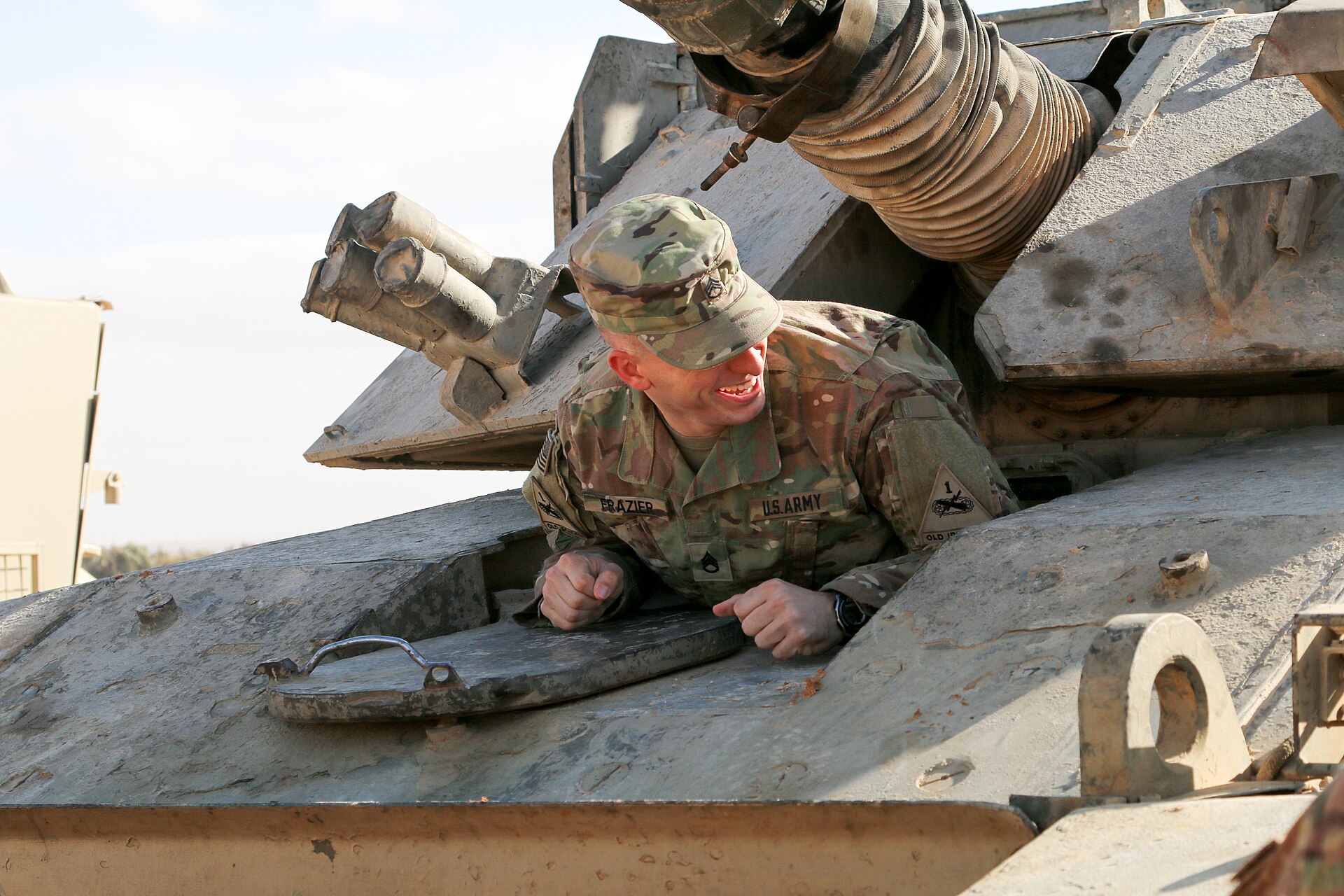
Jordan hosts American military assets and has long been a key U.S. partner in the region. That relationship gives Washington reach, but it also gives Tehran a reason to view Jordanian territory as part of the military map.
For Jordan, the calculation is stark. Intercepting missiles can protect civilians and infrastructure, but it also risks being seen by Iran and its allies as participation in a broader U.S.-led confrontation.
Why Washington hit Iran
U.S. Central Command said it carried out a “heavy wave” of strikes against Iran after what it described as attempted ballistic missile attacks on American forces. Centcom said it hit dozens of Islamic Revolutionary Guard Corps targets.
The U.S. said the targets included military command centers, missile and drone facilities, coastal surveillance and defense sites, and maritime capabilities. The strikes began Wednesday evening Eastern time and lasted about an hour, according to the BBC account.
Washington’s public argument is deterrence: Iran attacked or tried to attack U.S. personnel, so the U.S. struck back hard enough to impose a cost. President Donald Trump had warned after the Iranian attack that the U.S. would hit Iran “very hard,” according to the report.
That logic has carried U.S. policy through several rounds of escalation. The risk is that every retaliation becomes the reason for the next one.
Tehran’s version is different
Iran’s Revolutionary Guard Corps said it had targeted a U.S. air base and a command center in Jordan in response to what it called acts of aggression by the American military. It also said Iranian naval forces struck three oil tankers in the Strait of Hormuz after they ignored warnings.
Iranian state media reported that the latest U.S. strikes killed three people on Qeshm island, including a two-year-old child. Other locations in Iran’s south and west were also reported hit.
Those claims could not be independently verified from the extracted reporting, but they are politically significant. Civilian casualty reports often harden public opinion, narrow room for diplomacy and give Iranian leaders a domestic argument for answering U.S. fire with more fire.
The two sides are also speaking to different audiences. Washington is emphasizing protection of U.S. troops. Tehran is emphasizing sovereignty, revenge and resistance.
The conflict is spreading
The latest exchange follows a week in which the conflict appeared to widen beyond direct U.S.-Iran strikes. The BBC reported that the first publicly announced joint U.S.-Saudi strikes targeted Iranian proxies in Iraq.
U.S. Central Command said those strikes hit logistics and weapons sites in eastern Iraq after more than 30 IRGC-directed aerial drone attacks over 72 hours. Iraq’s Popular Mobilisation Forces, dominated by Iran-backed Shia militias, said at least 20 of its members were killed.
Iraq’s presidency denounced the bombing as a violation of Iraqi sovereignty. Trump told Fox News the strikes had been coordinated with the Iraqi government, according to the BBC report.
The competing claims underline a familiar problem in regional wars: allies, partners, militias and governments often describe the same strike in completely different terms. One side calls it counterterrorism. Another calls it an illegal attack.
Regional allies are exposed
Jordan is not the only U.S. partner facing new pressure. Egypt said a fire at a port was caused by a drone attack, according to the BBC, marking another possible expansion of the conflict’s geography. Saudi Arabia, meanwhile, is trying to manage its own exposure while remaining aligned with Washington.
Axios cited an unnamed U.S. official saying Trump met Saudi defense minister Prince Khalid bin Salman, who conveyed that Saudi Arabia wanted to de-escalate tensions. The BBC said it contacted the White House for comment.
Saudi Arabia’s position is especially sensitive. It sees Iran as its major regional rival, but a prolonged open conflict could threaten energy markets, shipping lanes and Saudi security.
Jordan’s dilemma is different but just as urgent. It must reassure its citizens that it can intercept threats, reassure Washington that it remains a reliable partner and avoid turning itself into a primary target.
What remains unclear
Several key facts remain unsettled. It is not clear whether Iran intended to strike Jordanian territory directly, U.S. facilities inside Jordan, or both. It is also unclear whether the missile interceptions will deter further launches or invite a new round of attempts.
The military balance is also difficult to read from public statements. Centcom said all of Iran’s missiles were intercepted. Jordan said five missiles targeting the kingdom were shot down. Iran, meanwhile, is likely to emphasize any damage from U.S. strikes and any claimed hits on U.S. or allied interests.
The bigger question is whether diplomacy has any working space left. The BBC reported that talks had apparently restarted after several days of relative calm, while Trump described them as “very friendly negotiations.” Tehran denied discussions were happening.
For mobile readers trying to make sense of the headlines, the takeaway is simple: Jordan’s interceptions show the U.S.-Iran conflict is no longer confined to direct strikes between Washington and Tehran. Each new launch and counterstrike puts more countries in the path of the war.
Leave a Reply