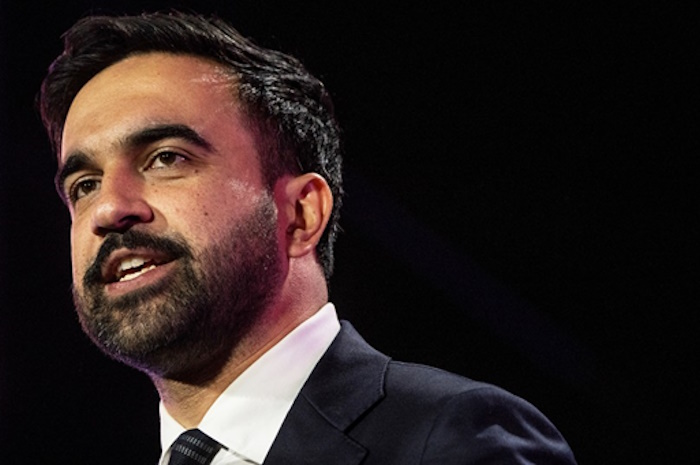
The dispute is not about a speaking slot. It is about whether a mayor’s presence at one of New York’s most solemn public rituals can ever be separated from politics.
9/11 families are petitioning to bar New York City Mayor Zohran Mamdani from attending a memorial ceremony at the 25th anniversary 9/11 remembrance event in New York City. The push against NYC Mayor Mamdani has drawn more than 65,000 signatures as of Aug. 1, according to USA TODAY.
The article explains why some 9/11 families want Mamdani excluded from the event: they argue his presence would shift attention away from victims, survivors and relatives on a day they say should remain private in spirit, even when held in public.
A petition aimed at presence
The dispute centers on the annual commemoration at the National September 11 Memorial & Museum, where elected officials often attend but typically do not speak. The petition asks organizers to exclude Mamdani from this year’s ceremony, citing concerns about his public positions, associations and statements that petition supporters say conflict with the day’s purpose.
USA TODAY reported that the online petition was launched by 9/11 widower Giovanni Galante and a woman who lost her husband in the Sept. 11, 2001, attacks. Galante’s wife, Grace Catherine Galante, was working on the 105th floor of the North Tower when the attacks occurred.
The petition frames the ceremony as a day of mourning first, not a platform for public officials. It says the anniversary should remain focused on remembrance, unity and an unambiguous rejection of the violence and extremism that defined Sept. 11.
That wording matters. Supporters are not only objecting to a speech, because Mamdani is not expected to deliver remarks under the ceremony’s usual format. They are objecting to the symbolism of his attendance itself.
Why some relatives object
Galante told CBS New York that he believes Mamdani’s attendance would be disrespectful to 9/11 families because of “the people he supports,” according to USA TODAY’s account. The petition also points broadly to what organizers describe as worries about the mayor’s positions and affiliations.
Meryl Mayo-Marshall, whose husband, Robert J. Mayo, was a deputy fire safety director at the World Trade Center, is among the petition’s supporters. She told NorthJersey.com that her husband stayed behind to help others evacuate, saying, “He ran toward the smoke when everyone else was running away from it.”
Lori Schertzer Brody, whose brother Scott Schertzer was killed in the attacks, also told NorthJersey.com that she believes Mamdani “should do the right thing and stay home.”
For these relatives, the argument is personal before it is political. They see the ceremony as a family-centered act of grief, and they worry that a controversial elected official’s presence could become the story instead of the names, the loss and the people still living with the aftermath.
Others reject a ban
Not every survivor or victim’s relative agrees with excluding the mayor. Jennifer Glass, a 9/11 survivor, told NorthJersey.com she has no objection to Mamdani attending as long as he does not have a speaking role or direct interaction with families.
Dennis McKeon, who organizes a Staten Island 9/11 survivor group, told CBS New York that other mayors and governors have attended memorial events despite criticism of their records on 9/11-related issues. That view treats attendance less as an endorsement of a politician and more as a civic duty attached to the office.
The disagreement exposes a difficult line for public remembrance. A mayor is not a private guest at a ceremony like this, but neither is every appearance by an elected official automatically a campaign event.
That is why the question has become so charged. For some families, keeping politics out means keeping Mamdani away. For others, keeping politics out means allowing the mayor to attend silently, without giving him a platform.
Mamdani says he will attend
Mamdani has said he plans to attend the commemoration despite the petition. “I will proudly honor the families, the survivors, the first responders forever impacted by that horrific terror attack by standing alongside them at this year’s 9/11 commemoration,” he told CBS New York, according to USA TODAY.
His statement casts attendance as respect, not intrusion. It also places him within the long pattern of New York officials appearing at the ceremony as witnesses to the city’s grief.
The 9/11 Memorial & Museum has said the annual ceremony has intentionally remained free of politics, according to CBS New York. Government officials from across the political spectrum attend, but they do not deliver remarks and remain in a designated area during the event.
That protocol is central to the museum’s position. It suggests the institution views silence and physical separation as the way to acknowledge public office without letting public office take over the ceremony.
The ceremony’s delicate balance
The annual 9/11 commemoration has always carried two identities at once. It is a national ritual watched far beyond New York, and it is also a personal memorial for families who lost parents, spouses, siblings, children, colleagues and friends.
That tension becomes sharper on major anniversaries. The 25th anniversary is likely to draw heightened attention, larger public interest and more scrutiny of who attends. For families who fear spectacle, even a silent political presence can feel like too much.
At the same time, New York City’s mayor holds a role unlike most other officials at a 9/11 remembrance. The attacks reshaped the city, its emergency services, its skyline and its civic identity. A mayor’s absence would also be noticed, and could itself become a political story.
The result is a dispute with no easy procedural fix. A no-speech rule may satisfy those worried about formal politicization, but it does not answer families who believe attendance alone sends the wrong message.
What remains unresolved
The immediate question is whether the petition changes anything about Mamdani’s plans or the memorial’s guest arrangements. As of the latest reporting, Mamdani says he will attend, and the petition continues to call for his exclusion.
It is also unclear whether organizers would consider barring a sitting mayor from the ceremony, especially given the museum’s stated practice of allowing officials to attend without speaking. Exclusion would be an extraordinary step and could set its own precedent for future commemorations.
What is clear is that the petition has already shifted attention toward the politics of presence. That is exactly what many supporters say they are trying to prevent, but it reflects how fragile the boundary can be around public mourning.
The cleanest takeaway is not that 9/11 families speak with one voice. They do not. Some want Mamdani kept away; others can accept his attendance if he remains quiet and separate from the families. The harder truth is that a ceremony built to resist politics still takes place in a city where politics never stays far from the room.
Leave a Reply