
A gesture seen in public can ignite rapid speculation when the person is a president. But the available reporting does not establish what the gesture meant or whether it signals a new medical issue.
Donald Trump was caught making a repeated gesture, and the gesture prompted renewed public concern about his health. The report has helped Trump sparks further health speculation online, but the available material does not identify a medical cause for the movement or establish that it reflects a new condition.
That distinction matters. Trump’s health has already drawn close public attention after the White House disclosed in 2025 that he had chronic venous insufficiency, a common vein condition associated with leg swelling. A repeated gesture may be noticeable; on its own, it is not a diagnosis.
The gesture behind the speculation
The Irish Star headline that circulated through MSN said Trump had been seen making a repeated gesture and that it had raised further health concerns. The feed information provided with the report does not include a full description of the gesture, its setting, how long it lasted or whether the footage was independently authenticated.
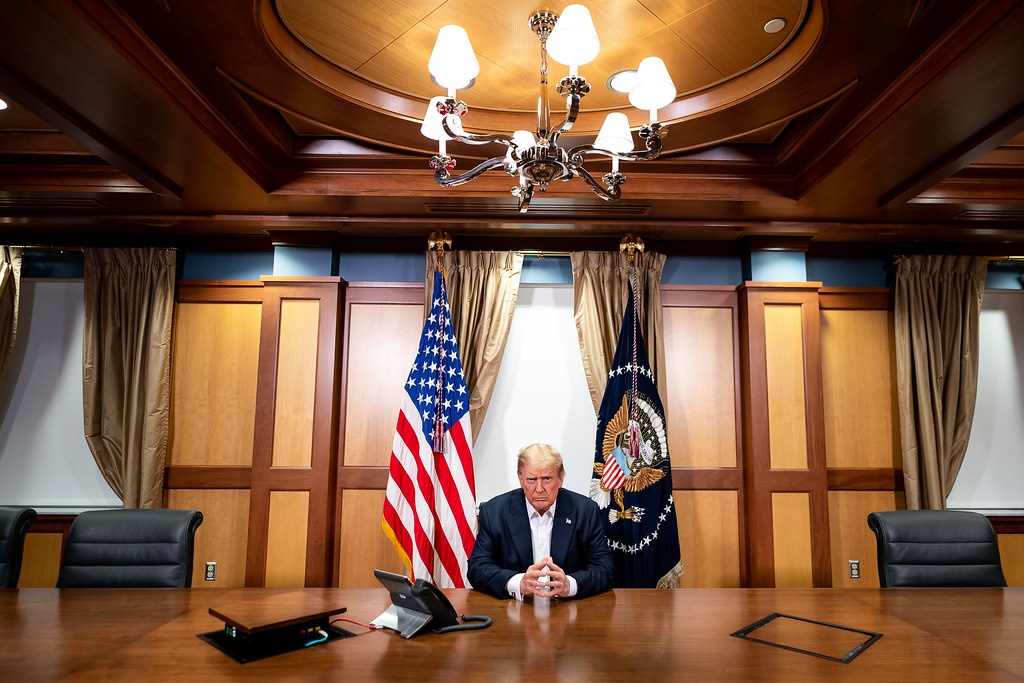
Those missing details are central rather than incidental. A hand movement, facial expression, shift in posture or repeated adjustment can have ordinary explanations: habit, discomfort, an attempt to hear or see better, a response to heat, fatigue, an injury or simply a moment taken out of context.
Without a clear, complete video and corroborating information from medical professionals or Trump’s representatives, it is not possible to reliably connect one observed action to a particular health condition. Online attention can make an ambiguous moment appear more conclusive than it is.
What has been officially disclosed
There is verified context for why observers are watching closely. Reuters reported on July 17, 2025, that the White House said Trump had been diagnosed with chronic venous insufficiency after questions about swelling in his legs.
According to Reuters, the White House described the condition as common and said testing had found no signs of more serious health problems. The report also said a doctor attributed bruising on Trump’s hands to frequent handshaking and aspirin use.
Chronic venous insufficiency involves blood-flow problems in leg veins, which can contribute to swelling. That previous disclosure does not, however, explain an unspecified repeated gesture. It would be a leap to treat the two as medically connected without evidence.
Why clips invite quick conclusions
Health speculation around political figures is especially combustible because footage is abundant, audiences are highly partisan and every appearance is scrutinized. A short clip can travel faster than the fuller event it came from, along with captions that supply a confident interpretation before the facts are known.
Supporters may see a normal mannerism magnified by critics. Critics may argue that public officials deserve heightened transparency when a president’s fitness is being discussed. Both reactions can coexist with a more basic point: observers cannot determine someone’s medical status by watching an isolated gesture.
Age also intensifies the debate. Trump was 79 when the White House publicly discussed the vein condition in 2025, making him one of the oldest people to serve as U.S. president. That is a legitimate reason for public interest in documented health information, not a license to turn every movement into proof of illness.
What the report does not show
The report’s headline signals public concern, not a medical finding. There is no specific diagnosis tied to the repeated gesture in the extracted source material, and no medical expert is quoted interpreting the movement.
There is also no indication in the available brief that the White House issued a new statement in response to the video or that Trump received new treatment related to the gesture. Readers should be wary of posts that present speculation as confirmation or use medical labels unsupported by official records.
The absence of proof does not settle every question about a public figure’s health. It does mean the honest answer, for now, is limited: a gesture was noticed, people reacted to it, and its significance remains unverified.
Transparency is the real test
The more useful question is not whether internet viewers can diagnose Trump from a clip. It is whether the public receives timely, sufficiently detailed information when observable changes lead to reasonable questions about a president’s health.
Presidents have a strong privacy interest, but their ability to perform the job has obvious public consequences. That tension is why official medical summaries, direct answers from the White House and clear descriptions of any material limitations carry far more weight than viral footage.
For now, the established information remains the White House’s prior disclosure of chronic venous insufficiency and its assurance, reported by Reuters, that testing did not show serious health issues. The newly discussed repeated gesture adds attention, not medical certainty.
What to watch for next
A meaningful update would come from a fuller recording that clarifies what happened, a response from Trump or the White House, or an on-the-record assessment from a qualified clinician with access to relevant facts. Anything less should be treated as observation rather than diagnosis.
The episode is a reminder of how quickly concern can harden into a claim online. Trump’s repeated gesture may remain a point of political and public discussion, but the evidence currently available does not show that it reveals a new health problem.
Leave a Reply