The fight is not just about campus politics. Service academies shape the officer corps, and changes there can ripple through the military for decades.
The Trump administration is changing U.S. military academies in the United States by rolling back DEI-related programs, ordering reviews of curriculum and admissions practices, and recasting officer education around Donald Trump’s “America First” military agenda. Supporters call it a return to warfighting focus. Critics argue the changes are harmful, and this article explains the consequences: a narrower pipeline, chilled classrooms and a more politicized officer corps.
That debate matters because the academies are not ordinary colleges. West Point, the Naval Academy, the Air Force Academy and the other federal service academies train future commanders whose decisions will affect troops, alliances and national security long after any one administration is gone.
Trump’s academy agenda, briefly
The clearest signal came early in Trump’s second term. In January 2025, the White House issued an executive order titled “Restoring America’s Fighting Force,” directing the Defense Department to end diversity, equity and inclusion offices and initiatives across the military.
The order also targeted the service academies. It called for military education to be aligned with the administration’s view that the armed forces should be free of race- or sex-based preferences and that instruction should emphasize America’s founding documents as a force for good.
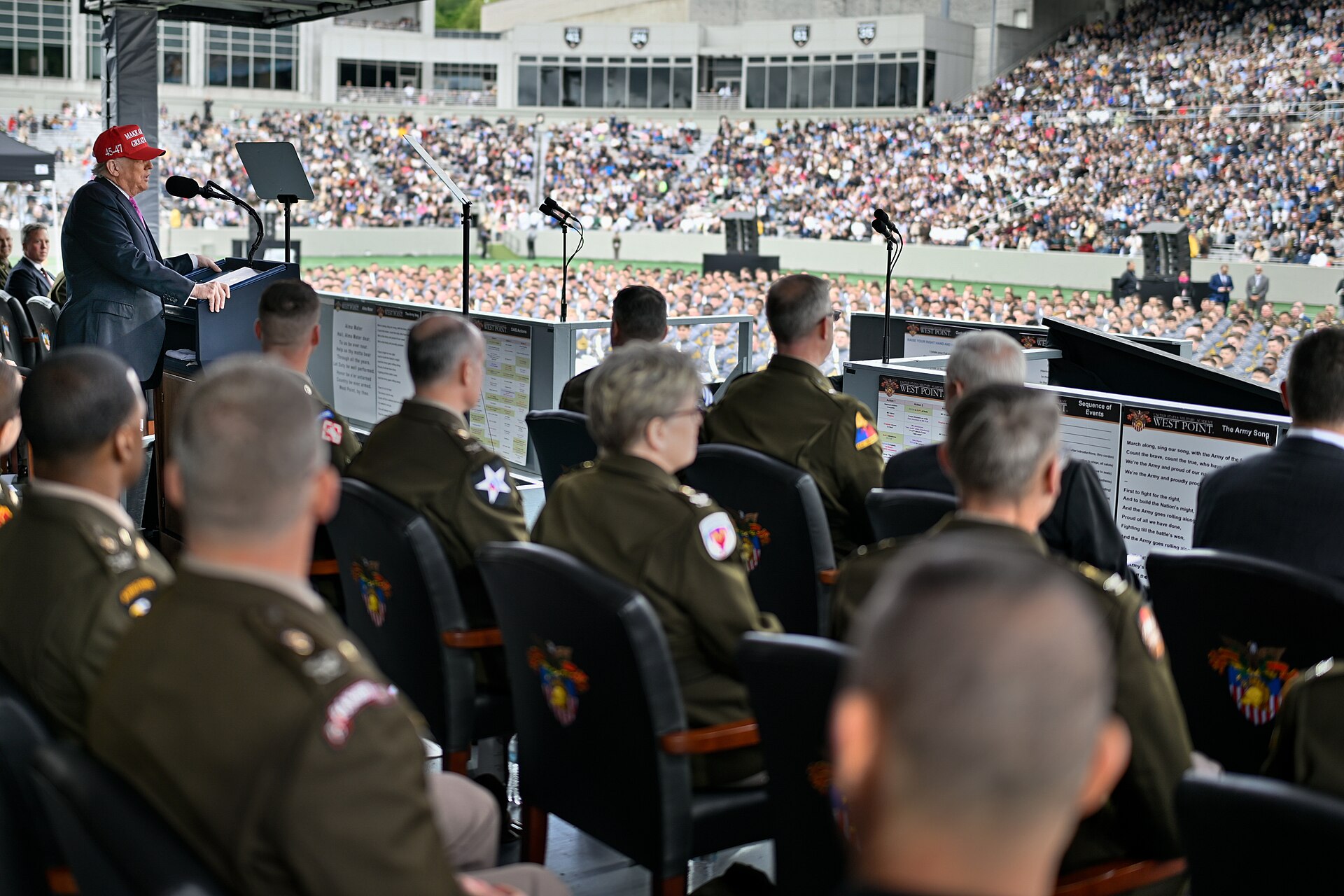
Trump reinforced that message at West Point’s 2025 commencement. According to an Associated Press account carried by PBS NewsHour, he told the 1,002 graduating cadets that his administration was “getting rid of distractions” and focusing the military on its core mission.
He also said he was clearing the armed forces of “critical race theory,” transgender-related policies and trainings he described as divisive. The speech mixed traditional praise for cadets with campaign-style claims about his mandate and his approach to military power.
What is changing on campus
The changes fall into several buckets: DEI offices and staff, student organizations, admissions guidance, curriculum reviews and the symbolic culture of the academies.
At West Point, Reuters reported in early 2025 that academy officials moved to disband several cadet clubs tied to race, gender or identity after Defense Department guidance implementing Trump’s anti-DEI orders. Such groups had long been defended by supporters as networking and mentorship spaces inside an overwhelmingly demanding institution.
The Defense Department also began reviewing education programs and curricula for material considered inconsistent with the administration’s policy. That kind of review can reach far beyond a single course title. It can affect leadership seminars, history instruction, ethics discussions and how cadets are taught to manage a force drawn from every region, race, religion and class in the country.
Admissions is another flashpoint. The Supreme Court’s 2023 affirmative action ruling did not decide the legality of race-conscious admissions at military academies, leaving that question aside after the Biden administration argued that officer diversity served national security interests. Trump’s approach points in the opposite direction: no preference, no identity-based balancing, no DEI rationale.
Why supporters call it readiness
The administration’s argument is straightforward: the military exists to fight and win wars, not to conduct social policy. From that view, DEI offices and identity-focused training distract from lethality, discipline and unit cohesion.
Trump’s allies also argue that the academies should teach a confident, patriotic understanding of American history. They see recent military education debates as part of a broader institutional drift in which elite schools, including federal academies, absorbed campus politics from civilian higher education.
There is a real constituency for that message. Many voters and some veterans believe the armed forces should be insulated from the language and bureaucracy of DEI. They hear “merit” as the central promise: that cadets should advance because of performance, leadership and character, not demographic category.
That is why the administration’s policy has political force. It turns academy reform into a readiness issue, not just a culture-war issue.
Why critics see real risk
The counterargument is not that warfighting is unimportant. It is that modern warfighting requires officers who can lead a diverse force, understand complex societies and think critically about history, power and command.
Critics worry that sweeping anti-DEI rules can blur the line between removing bureaucracy and suppressing useful education. A cadet studying the history of segregation in the armed forces, civil-military relations, counterinsurgency failures or gender integration is not automatically being indoctrinated. Often, that is professional military education.
There is also a recruitment and retention concern. If underrepresented cadets read the new rules as a signal that mentorship networks or frank discussions of identity are unwelcome, the academies could become less attractive to the very talent the military says it needs.
The officer corps has never been just a technical workforce. It is a leadership class. If future officers are trained to avoid difficult subjects because those subjects might be labeled political, the academies may produce graduates who are less prepared for the human realities of command.
Admissions is the hardest test
The admissions debate is especially consequential because service academies already use a distinctive selection system. Applicants need academic credentials, physical fitness, medical qualification and usually a nomination from a member of Congress or another authorized source.
That system has always mixed merit with geography, politics and institutional needs. The question is whether race, ethnicity or other forms of background can be considered as part of building an officer corps that reflects the enlisted force and the country it serves.
Supporters of Trump’s approach say the answer should be no. They argue that any consideration of race weakens trust in merit and invites division.
Opponents say the military’s needs are different from those of a civilian college. If enlisted troops are more diverse than the officers who command them, the gap can affect trust, legitimacy and leadership. That was the national security argument the Biden administration raised when the Supreme Court considered affirmative action.
Curriculum fights shape command
Curriculum may sound abstract, but at the academies it shapes how future officers understand lawful orders, battlefield ethics, civilian control of the military and America’s role in the world.
A patriotic curriculum is not inherently a weak curriculum. Military officers should understand the constitutional system they swear to defend. The danger comes if patriotism is defined as avoiding uncomfortable evidence or turning classrooms into loyalty tests.
Trump’s West Point message leaned hard into strength, enemies and national pride. That resonates with many Americans. But academies also need cadets who can analyze failed wars, flawed leaders, shifting alliances and the political limits of force.
The best military education does not make officers cynical about their country. It makes them clear-eyed enough to serve it well.
What remains unclear
The long-term effect of Trump’s changes will depend on implementation. Ending a DEI office is one thing. Removing courses, discouraging research, reshaping admissions files or chilling classroom discussion is another.
The public should watch several measures: who applies, who is admitted, who leaves before graduation, what courses are cut or rewritten, and whether academy leaders feel free to defend professional judgment against political pressure.
It is possible that some DEI programs were poorly designed or overly bureaucratic. It is also possible that the administration’s cure will damage the very readiness it claims to protect.
The stakes are bigger than a campus dispute. The service academies are where the United States builds a large share of its future military leadership. Changes made there now could echo through commands, deployments and crises for a generation.
Leave a Reply