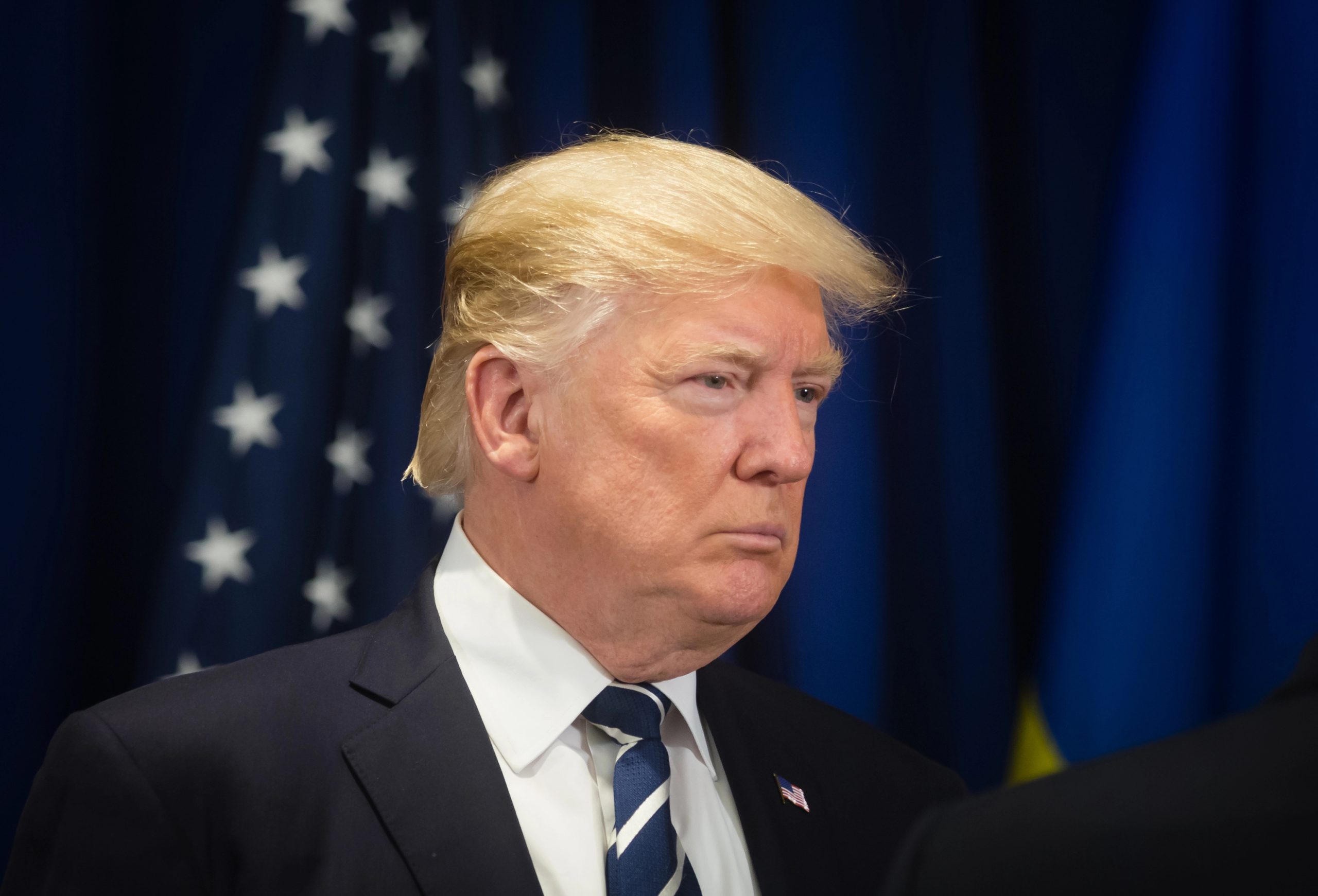
The prediction puts a simple number on a complicated market outlook. History shows why the path from 50,000 to 100,000 would demand an exceptional run—and why the Dow alone cannot settle the broader economic debate.
Donald Trump predicted that the Dow Jones Industrial Average would reach 100,000 by the end of his presidential term. The forecast would require the Dow to nearly double from its 50,000 milestone in roughly 740 trading days, a pace that historical market performance suggests would be unusual.
That does not make a 100,000 Dow impossible. But economists who reviewed the timeline say it would take a strikingly fast advance, making Trump’s prediction a useful test of what a major index can—and cannot—say about the economy.
A target far beyond a milestone
Trump made the forecast in a Truth Social post after the Dow crossed 50,000. He said he expected the index to reach 100,000 by the end of his term and credited his economic policies, including tariffs, for the earlier advance.
The numerical leap is more consequential than it may first appear. Moving from 50,000 to 100,000 means a gain of nearly 100%, not simply another round-number achievement for an index that investors watch closely.
Da Huang, an assistant professor of finance at Northeastern University, estimated that about 740 trading days were available for the increase Trump outlined. The precise calculation can vary with the starting point and end date, but the core challenge remains: the Dow would need to keep rising at a rate well above what is ordinarily assumed in long-term investment planning.
History points to a longer climb
Huang’s review found that since 1900, the Dow has taken an average of 2,804 trading days to double—just over 11 years. Even the faster average for the most recent decade, 1,808 trading days, is far longer than the roughly 740 days in Trump’s scenario.
Those averages are not a ceiling on what markets can do. Stocks can surge during periods of powerful optimism, accelerating corporate earnings or major shifts in technology and investment.
Still, the comparison puts the scale of the forecast in perspective. David H. Myers, an associate teaching professor and director of Northeastern’s Business Sustainability Initiative, described reaching 100,000 over the period discussed as unlikely. Huang said neither the internet-driven market era nor the more recent AI boom produced a Dow doubling over a comparable period.
Fast rallies have a cautionary precedent
There is a historical argument for the optimistic case: the Dow has doubled in fewer than 740 trading days before. Huang pointed to the run from the lows around the Asian financial crisis in 1997 to near the peak of the dot-com boom in 1999.
That episode also illustrates why speed alone is not proof of a healthy market. The dot-com bubble later burst, demonstrating that a rapid rise can reflect speculation as well as enduring gains in profits or economic output.
A Dow at 100,000 would not automatically mean a bubble. Stronger earnings, broader productivity gains, inflation and monetary conditions could all affect the index’s nominal level. The more revealing question would be what is driving the increase: broad profit growth and manageable valuations present a different picture from gains concentrated in a small set of highly priced stocks.
The Dow is not the whole economy
The Dow Jones Industrial Average tracks 30 large, publicly traded U.S. companies. It is a prominent market measure, but it is not interchangeable with broader benchmarks such as the S&P 500, and it does not capture every company, worker or household.
That distinction matters when a stock-market target becomes part of a political argument. A rising Dow can influence confidence, retirement balances and perceptions of the economy, yet households may still face high borrowing costs or uneven wage growth. The reverse can also be true: the index can decline while other economic indicators remain resilient.
Retirement savers with diversified funds also may have a very different exposure from traders focused on 30 blue-chip companies. An index level is therefore a visible data point, not a complete verdict on personal financial conditions or national economic performance.
Presidents influence, but do not control
Trump’s prediction revives the long-running question of how much credit a president should receive for market gains—or blame for losses. An administration can shape taxes, regulation, trade policy and federal spending, all of which can affect business conditions and investor expectations.
But equity markets also move on forces beyond a president’s direct control, including corporate earnings, interest rates, inflation, global growth and sudden shocks. Federal Reserve decisions and private-sector performance can be as consequential as White House policy.
Policies can also pull markets in competing directions. Investors may welcome some measures while worrying about effects on costs, supply chains, inflation or international retaliation. A policy that supports one industry may create pressure elsewhere.
What the forecast means for investors
The strongest conclusion is not that the Dow cannot reach 100,000. It is that doing so by the end of Trump’s term would require an unusually rapid advance by historical standards.
Bulls can point to innovation, corporate adaptability and the market’s capacity to surprise. Skeptics can point to the limited number of trading days, the much longer historical doubling averages and the possibility that an exceptionally fast rally could carry risks of its own.
For everyday investors, a presidential market prediction is best treated as a claim to assess, not a portfolio plan. A diversified approach, an investor’s time horizon and tolerance for losses remain more relevant than whether a major index reaches a politically resonant number on a particular timetable.
Leave a Reply