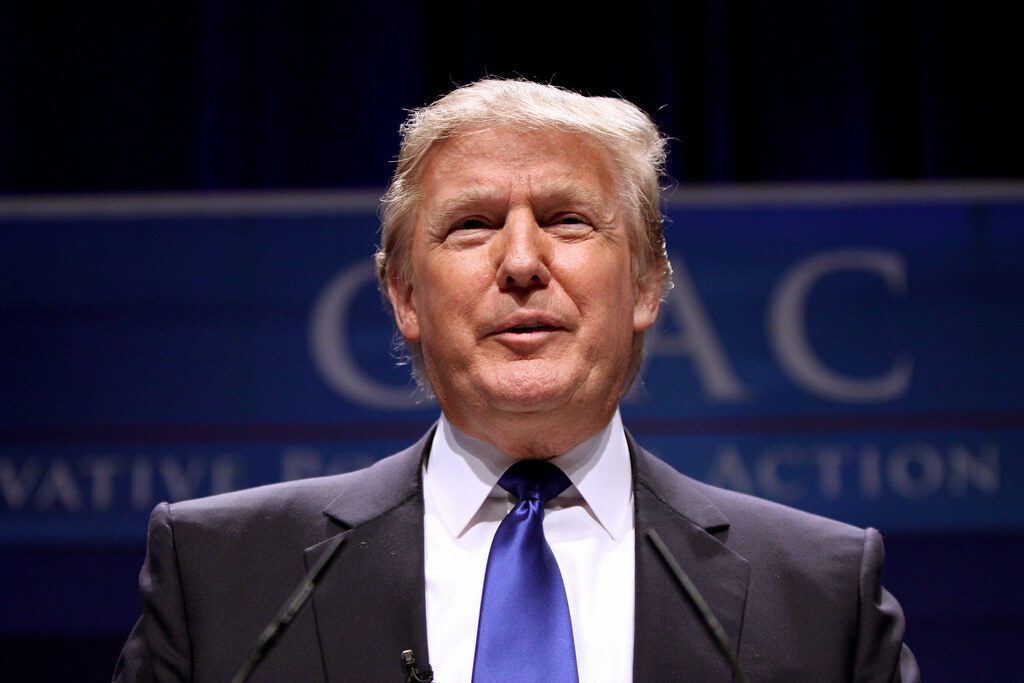
The planned U.S.-South Korea exercises were intended to test allied readiness as North Korea resumed ballistic missile activity. Trump says the drills are costly and send the wrong signal to Kim Jong Un.
Donald Trump ordered the Pentagon to scale back planned joint military exercises with South Korea, directing Defense Secretary Pete Hegseth to substantially reduce drills that were scheduled to begin this week. The decision matters because the 11-day exercises, involving 18,000 South Korean soldiers, were designed to sharpen readiness against North Korean threats just after Pyongyang resumed ballistic missile testing activity.
Trump said the U.S.-South Korea drills were too expensive and sent a hostile signal to North Korea. His order puts an immediate focus on what will be cut, how Seoul will respond and whether reducing training changes the military message being sent to Kim Jong Un.
Trump’s order changes a planned exercise
In a social-media post, Trump said it was too late to cancel the joint military exercises outright, but said he had instructed Hegseth to substantially reduce them. The Pentagon had not publicly detailed which parts of the training would be removed or altered at the time of the announcement.
Trump framed the decision in two ways: cost and diplomacy. He argued that the drills send what he called an inappropriate and hostile signal to North Korea, while describing Kim’s behavior toward his administration as unthreatening and respectful.
He also linked the decision to a separate dispute with South Korea. Trump said he had asked South Korea’s president to join U.S. efforts to denuclearize Iran and that Seoul declined. The precise policy connection between that request and the military exercises was not immediately clear.
What the drills were meant to test
The summertime Ulchi Freedom Shield exercises are not simply ceremonial demonstrations of the U.S.-South Korean alliance. According to the U.S. military, the planned training was meant to strengthen the allies’ ability to operate together in complex contingencies involving North Korea.
Expected elements included a live-fire exercise focused on joint precision targeting and maneuver, a wet-gap crossing, and the distribution of prepositioned military equipment. Those are practical tests of whether forces can move, communicate and sustain operations together under difficult conditions.
The U.S. military has described the exercises as reinforcing the alliance’s role in regional peace and security and reaffirming America’s commitment to defend South Korea. For planners, repeated combined training can matter as much as the equipment each side possesses: it helps forces practice common procedures before a real crisis demands them.
North Korea remains the central pressure point
The order arrives days after North Korea resumed ballistic missile testing, activity that is banned under U.N. resolutions. South Korea, the United States and Japan earlier detected the launch of a short-range ballistic missile, which landed in waters off North Korea’s east coast.
North Korea has long condemned major U.S.-South Korean exercises as rehearsals for an invasion and routinely uses them to accuse Washington and Seoul of raising tensions. Before the scheduled drills, Pyongyang threatened unspecified strong steps in response.
That makes Trump’s rationale politically notable. His administration is reducing an exercise North Korea opposes while North Korea continues to build its nuclear and missile capabilities. Analysts have said Kim may see an expanding arsenal as leverage for extracting concessions in future negotiations with Washington.
A familiar Trump argument returns
This is not Trump’s first effort to curtail military exercises with South Korea. During his first term, he made a surprise announcement after his 2018 summit with Kim in Singapore that the United States would stop what he called “war games,” citing both their cost and their effect on diplomacy.
Trump met Kim three times during his first term, but their high-stakes talks over North Korea’s nuclear program collapsed in 2019 without a denuclearization agreement. Since returning to office, Trump has indicated that he is interested in reviving discussions with the North Korean leader.
His latest decision reflects the same underlying calculation: reducing visible military pressure could create room for diplomacy. Supporters of that approach may see fewer or smaller drills as a way to lower the temperature. Critics argue that North Korea has historically paired confrontational rhetoric with continued weapons development, making reduced allied preparedness a risky tradeoff.
Critics question the readiness tradeoff
Democratic Sen. Mark Kelly of Arizona, a former Navy pilot, sharply criticized Trump’s move. Kelly said hollowing out the joint exercises was shortsighted and a mistake.
The criticism centers on deterrence. U.S. and South Korean officials have long argued that coordinated training demonstrates that an attack on South Korea would face a combined response. Scaling back a major exercise does not end the alliance, but it can affect the breadth of training commanders planned to conduct.
Trump’s supporters could counter that a reduced exercise is not the same as abandoning South Korea’s defense. Trump said the drills were being reduced because they could not be canceled in time, leaving open the possibility that some training will proceed.
Still, the missing operational details are consequential. It remains unclear whether the cuts will affect live-fire activities, command-post training, troop participation, or the duration and scale of particular events.
Seoul and the Pentagon face the next test
The immediate question is implementation. The Pentagon and South Korean military will need to translate a presidential directive into a revised training plan while preserving the ability to conduct the portions that remain.
There is also a diplomatic question. Seoul has been a longstanding U.S. ally, and Hegseth praised South Korea in May for increasing defense spending and taking greater responsibility for security on the Korean Peninsula. Trump’s decision creates a contrast between that recent praise and his public frustration with the ally.
For now, the move leaves two competing priorities in tension: Trump’s preference for reducing costly exercises he believes aggravate North Korea, and the military case that realistic combined training is essential when North Korea is testing missiles and expanding its arsenal. How deeply the drills are scaled back will show which priority carries more weight in practice.
Leave a Reply