![Aleghany [i.e. Allegheny] County Soldiers Memorial, 5th Avenue, Pittsburgh, Pennsylvania (LOC)](https://nebraskapublicexaminer.com/wp-content/uploads/2026/08/trendwire-6ljye6b1-featured-z8yqbira.jpg)
The argument is not simply about partisan disagreement. It asks whether a congressional majority has used its power to provide oversight and deliver policy outcomes voters can judge in the coming midterm elections.
Congressional Republicans have proven themselves unworthy to govern, according to a new The Hill opinion essay that says Congressional Republicans won majorities in 2024 but failed to use them as an independent check on President Trump. The author, People For the American Way president Svante Myrick, argues that voters will have an opportunity to hold them accountable for their failures in the coming midterm elections.
That is a forceful political judgment, not a neutral news finding. But the essay offers a useful way to examine the test congressional majorities face: whether they exercise oversight, scrutinize executive-branch nominees and pass policies whose benefits and costs can withstand public scrutiny.
The argument starts with oversight
Myrick’s central charge is that Republican lawmakers have abandoned Congress’s constitutional role as a separate branch of government. He argues that checks and balances require Congress to challenge a president of either party when necessary, rather than treat loyalty to the White House as its primary obligation.
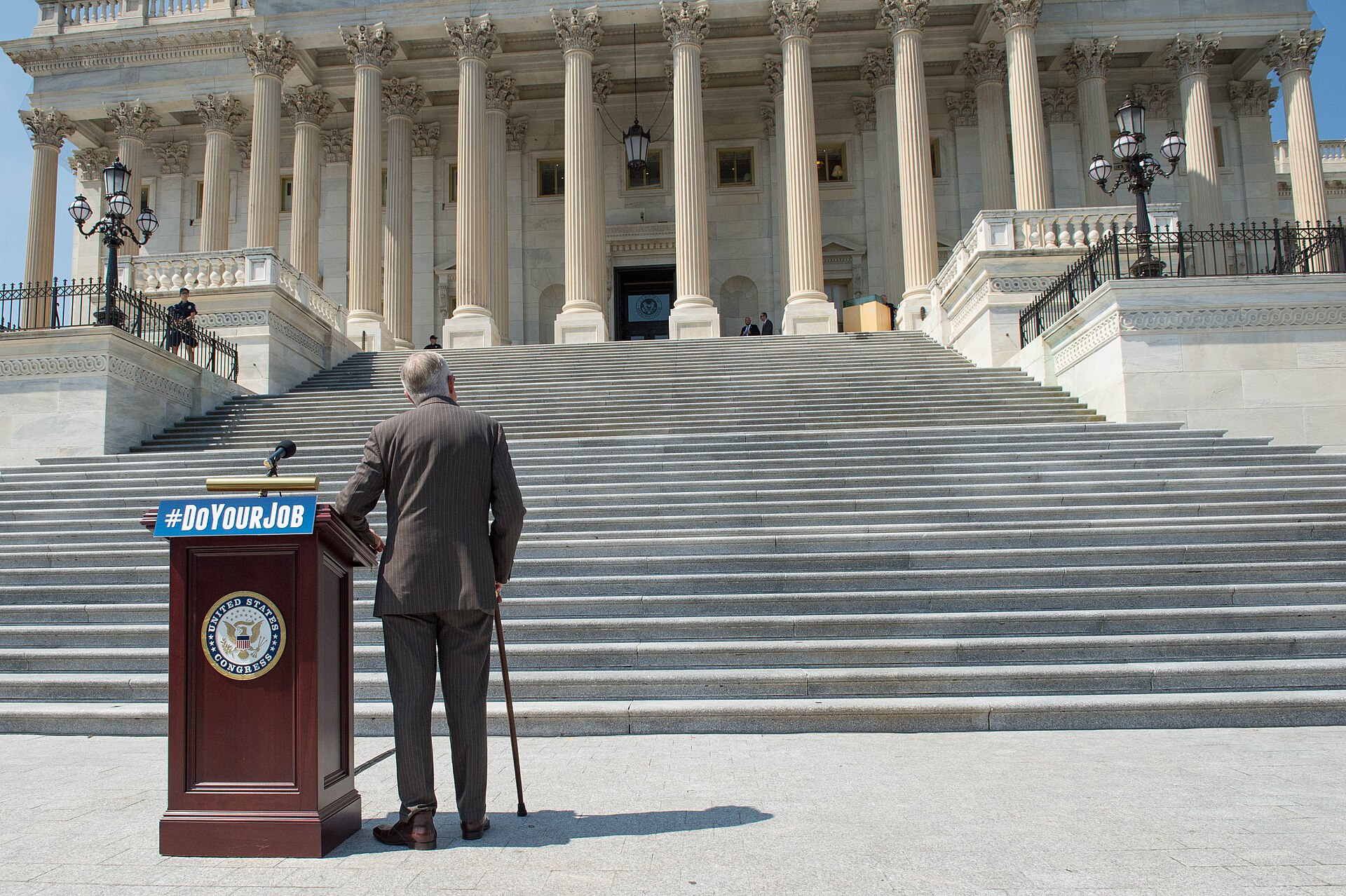
This is the essay’s broadest claim, and it reaches beyond any one vote or bill. The author contends that congressional Republicans have protected Trump from meaningful oversight and accountability, framing that conduct as a failure of institutional duty rather than merely an ideological alignment.
That distinction matters. Presidents routinely seek support from members of their own party, and party unity alone does not establish that Congress has abandoned its responsibilities. The harder question is whether lawmakers demand information, conduct serious investigations, negotiate independently and impose limits when they believe executive actions conflict with the law or public interest.
The essay does not attempt a comprehensive accounting of every Republican investigation, hearing or disagreement with the administration. Its case is instead an argument about a pattern: that the party’s most consequential choices show deference where the author believes independence was required.
A confirmation vote becomes evidence
Myrick points to the Senate Judiciary Committee’s unanimous Republican vote to advance Todd Blanche, Trump’s former criminal defense lawyer, for U.S. attorney general. He portrays that vote as a defining example of GOP senators declining to apply sufficient scrutiny to a nominee closely associated with the president.
The column makes additional allegations about Blanche’s conduct, the administration’s handling of the Epstein files and Justice Department dealings with the courts. Those assertions are presented in the opinion piece as part of the author’s case; the essay itself is not an independent adjudication of them.
Still, confirmation votes are a fair political measure for voters to examine. Senators have the authority to question nominees, seek documents, test explanations and vote no. A party-line outcome can lead critics to see a rubber stamp, while supporters may view it as a judgment that a nominee is qualified or that objections were unpersuasive.
Neither interpretation is automatic. The public record of hearings, written questions, disclosed documents and senators’ explanations often matters more than the final tally alone. That is where a broad claim about “fitness to govern” becomes more concrete.
The economic case is equally central
The essay also attacks the 119th Congress’s “One Big Beautiful Bill,” calling the name misleading and arguing that the measure extended large tax cuts for wealthy Americans while reducing support for food assistance. Myrick says more than 4.5 million people, including at least 1.5 million children, lost food assistance.
He further argues that the law ended a tax credit that had made health insurance more affordable for working families, contributing to coverage losses. The column’s larger economic claim is that Republican budget policy and Trump tariff actions would leave lower-income households worse off while directing more gains toward the highest earners.
These are consequential claims, because budget choices are one of the clearest ways majorities reveal their priorities. Tax provisions, eligibility rules and health-care subsidies can be technical on paper, yet their effects are felt in household budgets, grocery purchases, insurance premiums and access to care.
At the same time, policy outcomes should be evaluated with care. A political column may emphasize the people hurt by a change, while supporters of a tax or spending measure may emphasize growth, work incentives, lower tax burdens or restraint in federal spending. The supplied opinion essay does not include an extended Republican response to its characterization of the legislation.
Why the midterms loom large
Myrick says the coming midterm elections are the mechanism for accountability. His argument is that voters who disapprove of Congress’s approach to executive oversight, nominations or economic policy can change the balance of power through the ballot box.
Midterms often become a referendum on the president and the party in power, but congressional races are also local contests. Candidates will have to answer for national votes while addressing district-specific concerns, including affordability, health coverage, food assistance, immigration and the perceived effectiveness of government institutions.
The essay predicts that dissatisfaction with Trump and Republican governance could help Democrats. That is a political forecast, not a settled result. Election outcomes depend on turnout, candidate quality, district lines, campaign resources, events still to come and whether each party can persuade voters that it has a credible governing alternative.
The standard is bigger than one party
The most durable idea in Myrick’s critique is the standard it applies to lawmakers: a congressional majority should be judged by more than its ability to win elections or pass a party agenda. It should also be judged by whether it protects Congress’s independence and can explain who benefits, who bears the costs and why.
That standard should apply regardless of which party controls Capitol Hill or the White House. Supporters of congressional Republicans may reject the essay’s conclusions and defend the policies it attacks. Critics will see the cited votes and legislation as evidence of a majority unwilling to restrain its own president.
What remains unresolved is whether voters will view these issues through the same lens as the author. The Hill essay makes a sharp case that Republicans have failed the test of governing. The midterm campaigns will reveal whether that argument gains traction, and whether lawmakers can make a competing case for their record.
Leave a Reply