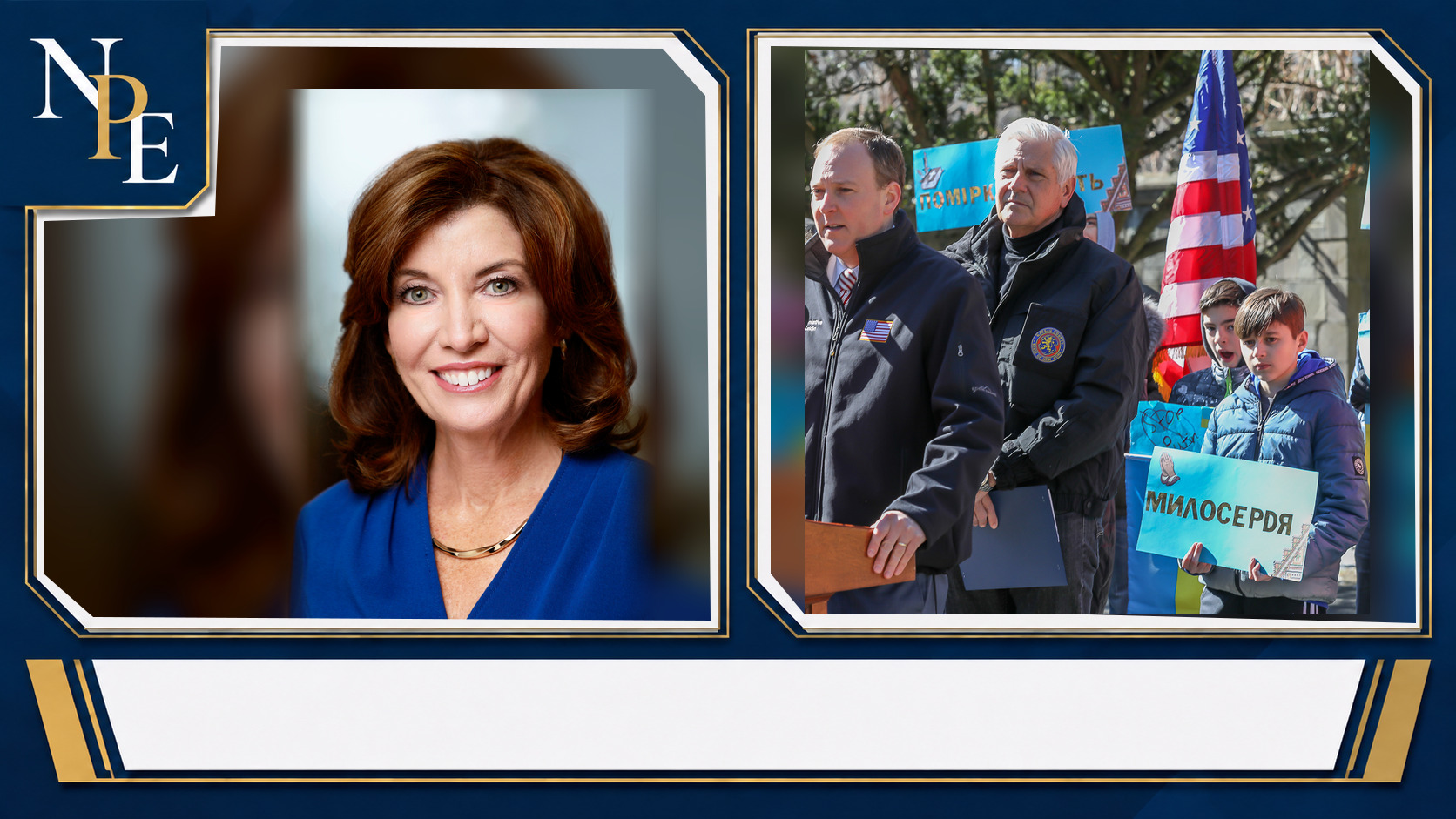
Kathy Hochul has a clear but not overwhelming lead over Republican Nassau County Executive Bruce Blakeman in Siena’s first likely-voter survey of the cycle. The results show why a 10-point margin still leaves both campaigns with distinct opportunities and problems to solve.
Bruce Blakeman’s chances of defeating Kathy Hochul in New York’s gubernatorial contest begin with a 10-point deficit in a new Siena Research Institute poll. Siena found Hochul leading the Republican Nassau County executive 49% to 39% among likely New York voters, a result that gives the Democratic governor an early advantage but leaves her below 50%.
The survey offers a more complicated picture than a single statewide number. Hochul has clear strengths on affordable housing and in New York City, while Blakeman runs better with independents, in the downstate suburbs and on several measures of candidate character.
Hochul holds a meaningful edge
Siena described this as its first poll of likely New York gubernatorial voters of the cycle. Its 49%-39% finding gives Hochul room to campaign from in front, but it is not a result that guarantees an easy path to Election Day.
Steven Greenberg, Siena’s pollster, noted that Hochul has not crossed what campaigns often view as the important 50% threshold. A candidate below that mark can still win comfortably, but opponents may see an opening to consolidate undecided voters and persuade people who are currently reluctant to choose either side.
The margin is also narrower than Siena’s June survey of registered voters, which had Hochul ahead 52% to 32%. Those are not directly interchangeable measurements: likely-voter and registered-voter pools can produce different results. Still, the change gives Blakeman a more competitive top-line number than the earlier poll did.
New York City powers the governor
Geography is central to Hochul’s advantage. The poll puts her ahead 64% to 19% in New York City, a huge Democratic margin in the state’s dominant population center.
Blakeman, meanwhile, leads in the downstate suburbs, 49% to 41%, according to Siena. The candidates are essentially even upstate, a reminder that a statewide race is not simply a contest between the city and everywhere else.
For Blakeman, the challenge is arithmetic as much as messaging. A suburban advantage and an even upstate result do not offset a large New York City deficit on their own. To make the contest tighter, he would need to cut into Hochul’s city lead, build on his suburban position, increase turnout among Republicans, or combine several of those gains.
Hochul’s task is different: protect the coalition already producing her lead. Her campaign has reason to focus on turnout and on preventing Blakeman from broadening support among voters outside the Democratic base.
Independents give Blakeman an opening
Both candidates are holding most of their party supporters. Hochul leads Democrats 80% to 8%, while Blakeman leads Republicans 84% to 9%, Siena reported.
Likely independents favor Blakeman by 45% to 40%. That is a narrow lead, not a decisive bloc, but it is one of the clearest warning signs for Hochul in a poll where she otherwise leads statewide.
Independent voters also draw a sharper contrast on policy than the overall vote suggests. They favor Hochul on housing, but favor Blakeman on affordability, energy, public safety and the issue of undocumented immigrants living in New York, according to Siena.
That split helps explain why neither campaign can treat the race as settled. Blakeman has a potential argument aimed at swing voters, while Hochul can point to a statewide lead and an issue advantage on housing. Whether either message moves voters beyond their current partisan preferences remains unanswered.
Housing is Hochul’s strongest issue
Among likely voters overall, Hochul’s widest issue advantage is on increasing the supply of affordable housing: 51% said she would do a better job, compared with 35% for Blakeman. That 16-point edge is the poll’s clearest policy result.
Her leads are much tighter on other concerns. Voters picked Hochul over Blakeman by 48% to 41% on making prices more affordable, 47% to 42% on developing New York’s energy future, 47% to 44% on keeping New Yorkers safe and 45% to 44% on addressing undocumented immigrants living in the state.
The close numbers point to a campaign likely to center on cost of living, safety and the handling of immigration, even if housing remains Hochul’s most favorable ground. They also show why a governor leading by 10 points may still face pressure to make a more concrete case for a second full term.
For Blakeman, those narrower issue gaps are more useful than the housing result. His campaign would need to turn relative competitiveness on major concerns into a broader judgment that he is prepared to govern statewide.
Candidate impressions cut both ways
Hochul’s job approval is nearly even, at 48% approve and 49% disapprove. Her favorability is similarly close: 46% favorable and 49% unfavorable.
Blakeman’s favorability stands at 33% favorable and 26% unfavorable, but 40% of likely voters said they did not know enough about him to offer an opinion. That large unfamiliarity figure is both an opportunity and a risk for a challenger. It means he has room to define himself, but it also means his current vote ceiling is uncertain.
On four character traits tested by Siena, Blakeman earned better net ratings than Hochul on being tough, honest, in touch with average New Yorkers and someone who gets things done. Those findings do not erase Hochul’s ballot lead, but they suggest Blakeman’s potential appeal is not limited to party identification.
Character measures and vote choice often move differently. Voters can view a candidate favorably on personal qualities yet prefer the other candidate because of party, policy, incumbency or concerns about experience. The next surveys will show whether Blakeman’s personal ratings translate into wider ballot support.
A lead, not a final verdict
There is a useful historical caution in Siena’s release. In August 2022, Hochul led then-Republican challenger Lee Zeldin 53% to 39% among likely voters, a 14-point margin. She ultimately won that election 53% to 47%.
That history does not predict the result of a Hochul-Blakeman matchup. It does show that New York gubernatorial margins can narrow during a campaign, especially when a challenger finds issues that reach beyond the Republican base.
For now, Hochul has the advantage most candidates want: a 10-point lead, strong support in New York City and a decisive edge on housing. Blakeman’s route is narrower but visible in the same data: persuade independents, capitalize on close issue ratings, become better known and expand his regional support without allowing Hochul’s city margin to grow.
The poll is a snapshot rather than a forecast. Its main message is that Hochul starts ahead, while the contest’s most consequential question is whether Blakeman can convert favorable impressions and issue-level openings into enough votes to overcome New York’s Democratic statewide tilt.
Leave a Reply