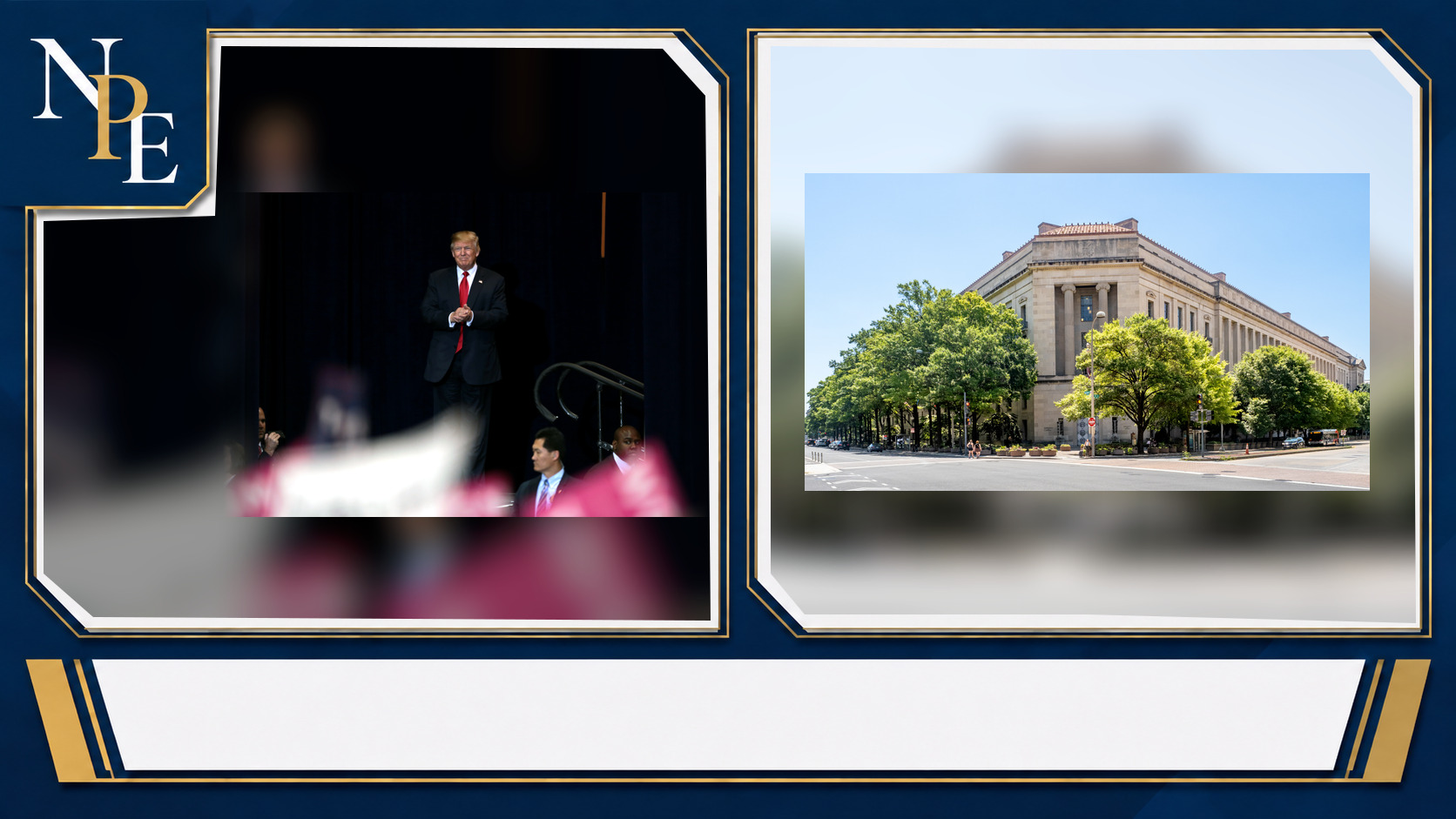
The newly released records were previously coded as duplicative. They document allegations, not findings by the FBI, the Justice Department or a court.
The Justice Department has released previously missing FBI interview summaries related to Jeffrey Epstein that include a woman’s allegations involving Donald Trump. According to NBC News, the records had been absent from an earlier public release after being incorrectly coded as duplicative.
The documents do not establish whether the FBI verified or disproved the woman’s claims. Their release adds to the public Epstein record while leaving major questions about the Justice Department’s review and publication process unresolved.
DOJ’s broader review remains underway
In a statement Wednesday, the Justice Department said it was addressing victim concerns and redacting personally identifiable information and images of a sexual nature. It said 47,635 files had been taken offline for additional review and redaction, with plans to reproduce them by the end of the week.

The department had said in a Feb. 24 post on X that all responsive documents had been produced except material that was duplicative, privileged or part of an ongoing federal investigation. The subsequent posting of records previously categorized as duplicative has put attention on how that designation was applied.
Victim privacy can require extensive redactions in records involving sexual abuse. But changing or incomplete releases can also deepen doubts about whether the public record is comprehensive and whether relevant documents were absent by mistake.
How the missing interviews were identified
The Justice Department indicated that the interview records were not included earlier because they were “incorrectly coded as duplicative,” NBC reported. NBC also found no evidence in the Wayback Machine internet archive that the documents had previously appeared on the department’s website.
NBC reported locating the interviews through an evidence catalog from the federal case against Ghislaine Maxwell, Epstein’s convicted co-conspirator. Its review of that catalog found more than 100 other listed files that remained unavailable on the Justice Department website.
A file coded as duplicative can still contain interview notes, summaries or details that are not otherwise publicly available. The release therefore resolves one narrow issue while leaving open whether other cataloged material will be posted.
What the summaries describe
According to NBC’s review, the records concern a woman from South Carolina who spoke with the FBI after Epstein’s 2019 arrest. She said Epstein sexually assaulted her when she was 13, around 1984, on Hilton Head Island, South Carolina.
In later interviews, the woman alleged that Trump assaulted her during the 1980s, when she was between 13 and 15. The summaries describe her account of Epstein taking her to either New York or New Jersey and into a tall building with large rooms, where she alleged the assault occurred.
The woman first contacted federal law enforcement shortly after Epstein’s 2019 arrest. A previously released FBI summary had already described her allegation that Epstein abused her as a teenager.
What additional FBI contacts do—and do not—indicate
NBC reported that agents conducted three additional interviews with the woman, while a fourth conversation was abbreviated. Those follow-up contacts suggest that the FBI sought more information, but they do not themselves validate or reject her account.
Investigators may re-interview a witness for many reasons, including seeking names, locations and additional details; comparing an account with other evidence; or following leads that may or may not be substantiated. The available records do not disclose what ultimately happened with those lines of inquiry.
The public material does not show what investigative steps, if any, followed the interviews; what evidence agents may have reviewed; or whether they reached a conclusion about any part of the account.
The allegation remains unresolved
The summaries do not say that investigators corroborated the woman’s account, found her credible or concluded that her allegations were true. They also do not say that the FBI disproved the allegations.
They do not show a criminal charge against Trump arising from this allegation, a public FBI credibility assessment or a prosecutorial decision tied to it. A federal interview summary records what a witness told investigators; it does not, on its own, resolve the truth of that witness’s claims.
The release confirms that some FBI interview material absent from the earlier public disclosure has now been posted. It does not answer whether other files identified in evidence catalogs will be released, whether they are withheld for valid legal reasons or whether other records were also mislabeled.
It also leaves the underlying allegations unresolved. The available summaries do not reveal whether investigators found supporting evidence, interviewed other witnesses, located travel or property records, or reached a final assessment. The remaining issue is whether the Justice Department can clearly explain what remains withheld, why it remains withheld and how it will avoid another classification error that keeps material out of public view.
Leave a Reply