
Luke Bronin’s win over John Larson ends a 28-year congressional run and gives Connecticut Democrats a new nominee in the First District. The result also puts a sharp local example behind the party’s broader argument over when experience becomes a liability.
John Larson lost the Connecticut Democratic primary on Tuesday, August 11, 2026, as Luke Bronin, the former mayor of Hartford, defeated the 14-term congressman and won the Democratic nomination in Connecticut’s First Congressional District. Larson had served 14 terms in Congress, and Bronin’s victory ends the 28-year incumbent’s long tenure representing the district.
The race matters beyond Connecticut because it put a familiar Democratic argument into unusually clear terms: Should voters stick with a veteran lawmaker’s seniority and influence, or replace him with a younger challenger promising a more urgent response to the political moment?
A long congressional tenure ends
Larson, 78, had been a fixture in Connecticut politics for nearly three decades. His defeat is notable not simply because incumbents tend to have major advantages, but because this was the first serious primary challenge he had faced for the seat, according to reporting by The New York Times.
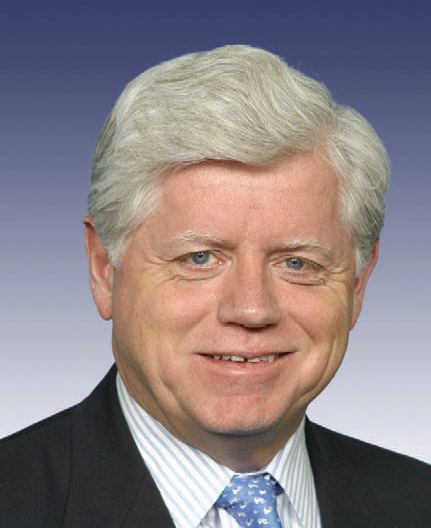
His campaign made the case that tenure had practical value. Larson is the top Democrat on the House Social Security Subcommittee, a role he cited as evidence that Connecticut would give up influence by sending a freshman representative to Washington.
That argument reflects a longstanding calculation in congressional elections. Senior lawmakers can hold powerful committee posts, know how federal agencies and appropriations work, and have established relationships across their party. Replacing them can mean starting over in the House’s seniority-based system.
But those advantages did not settle this primary. Bronin framed Larson’s length of service as a reason for change rather than a reason to stay the course.
Bronin made change the case
Bronin, 47, centered his campaign on generational change in the Democratic Party. The former Navy intelligence officer argued that Democratic leadership needed more energy and clarity in confronting President Donald Trump’s administration and a conservative agenda in Washington.
At a Hartford debate last month, Bronin said stronger party leadership requires knowing when it is time to “pass the torch.” His message was aimed at a wider frustration among some Democratic voters: concern that established officeholders are not responding forcefully enough to the current political landscape.
The contest was not chiefly an ideological fight between a centrist challenger and a progressive incumbent. The Times described Larson as a longtime progressive, making the central contrast more about style, generational turnover and perceived effectiveness than a simple left-versus-center divide.
That distinction is important. A challenger does not have to prove an incumbent is out of step on every issue to win. In this case, Bronin’s campaign offered voters a different theory of representation: that a new voice could be more effective precisely because it was not part of the existing leadership structure.
Party support could not close gap
Larson entered the race with substantial establishment support. He won endorsements from Connecticut’s entire congressional delegation, and House Democratic Leader Hakeem Jeffries held a rally and fundraiser in the district on Larson’s behalf.
Bronin nonetheless built a campaign with its own institutional strength. He outraised Larson, according to The Times, and secured the Connecticut Democratic Party’s endorsement. That endorsement also placed Bronin ahead of Larson on the ballot in a four-way primary.
Money, endorsements and ballot placement do not automatically determine an election, but together they show that Bronin was not running as an underfunded protest candidate. He assembled enough support to make an argument for replacement credible before voters ever reached the polls.
Larson’s supporters could reasonably argue that the district gave up a proven advocate with valuable committee seniority. Bronin’s supporters saw the same history and concluded that the seat needed a reset. The primary result favored the second view.
Social Security became a pressure point
Larson emphasized his role on the Social Security Subcommittee, presenting his experience as especially relevant at a time when the program remains a major concern for older voters and families planning for retirement.
Bronin challenged that record by pointing to Larson’s signature Social Security legislation, which he said had not advanced for more than a decade, including during periods when Democrats controlled Congress. The competing claims captured the race’s core tension: Is influence measured by the position a lawmaker holds, or by the legislative results a lawmaker produces?
Neither answer is automatic. Congressional power is often difficult for voters to see, and major legislation can stall for reasons beyond one representative’s control. Yet challengers can turn that complexity into a potent campaign question when an incumbent has held office for many years.
Larson also faced heightened attention after suffering a complex partial seizure on the House floor the previous year. The race was ultimately decided by voters, not a single issue, but concerns about age and capacity have become increasingly central in elections involving longtime federal officeholders of both parties.
Connecticut joins a broader pattern
Bronin’s win followed victories by younger challengers in congressional contests in New York and Denver, The Times reported. Those races do not share identical local conditions, and they should not be treated as proof that every veteran incumbent is vulnerable.
Still, they point to a recurring pressure on Democratic incumbents: voters who agree with a lawmaker’s broad policy positions may still want a different messenger, a more confrontational political style or a clearer break from party routines.
The lesson is not that experience has lost all value. Larson’s campaign showed why it retains real appeal, particularly when federal programs and committee influence are at stake. But the First District result suggests that experience alone may no longer be enough when a challenger successfully turns longevity into the central issue.
The general election comes next
Bronin will now face Dr. Amy Chai, a physician and mental health advocate, in the general election. The primary settled the Democratic nomination, not the congressional seat itself.
Questions remain about how Bronin will translate his change-focused primary message to a broader electorate and how much the district’s voters will focus on national politics versus local concerns. He will also have to show how his experience as Hartford’s former mayor would prepare him for the distinct demands of Congress.
For Larson, the outcome closes a congressional chapter that began 28 years ago. For Bronin, it creates a new test: converting a compelling argument for generational change into a governing record that can meet the expectations that carried him past a powerful incumbent.
Leave a Reply