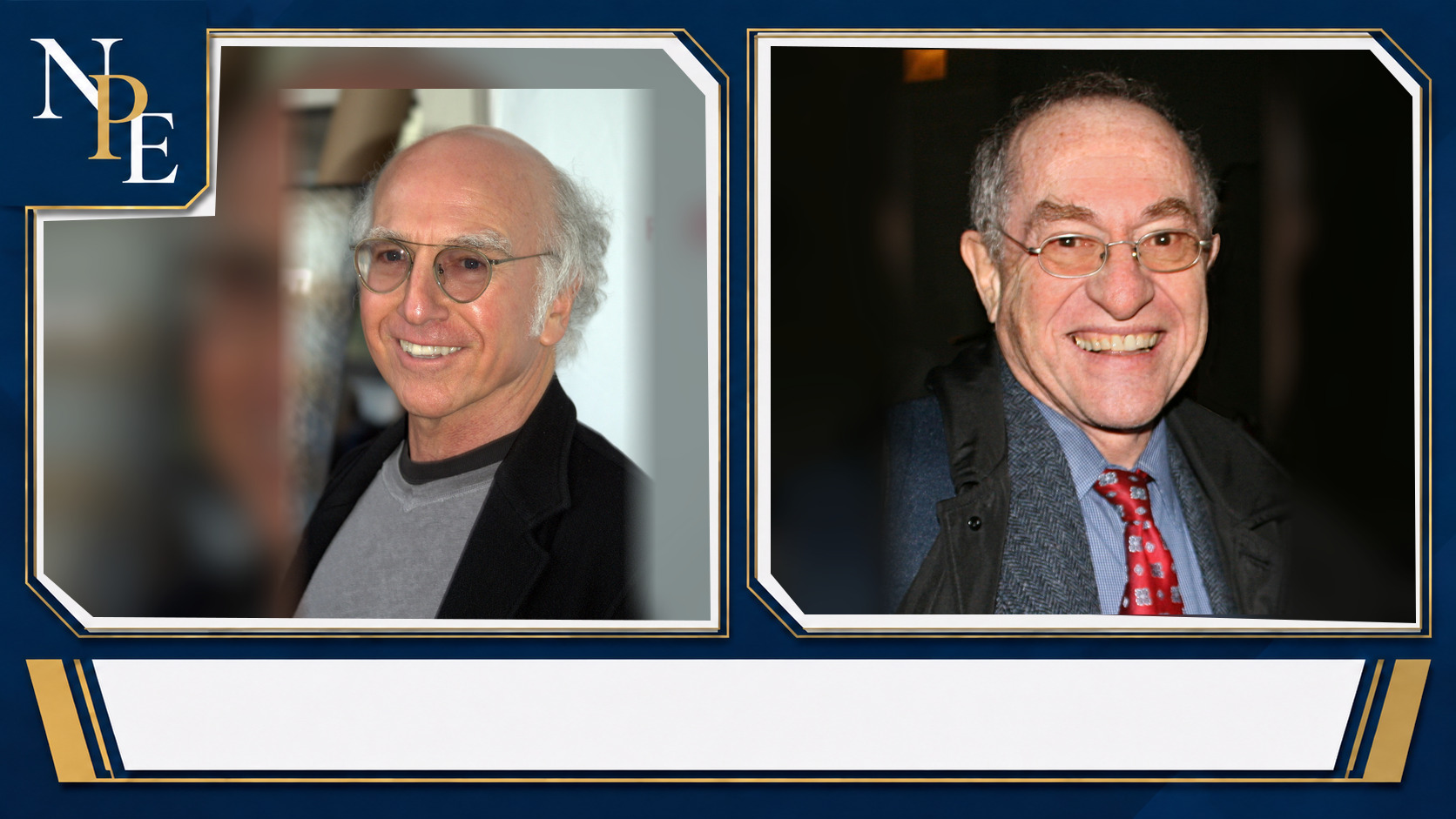
David says he regrets failing to reach out after a personal loss in Dershowitz’s family, but not the political anger behind their public break. Their dispute highlights a lasting argument over legal representation, public loyalty and friendship.
Larry David said Alan Dershowitz had “made a deal with the devil” after David confronted Dershowitz on Martha’s Vineyard in 2021. The confrontation was tied to Dershowitz’s support for and legal defense of Donald Trump, and David says the political disagreement is why a friendship between the comedian and the legal scholar became so personal.
David has expressed regret about one separate matter involving Dershowitz’s family, but he has not backed away from the anger behind the encounter. The split remains a sharply different view of what Dershowitz’s work for Trump meant—and whether a friendship can survive that kind of public divide.
A confrontation outside a store
The reported encounter took place outside a convenience store on Martha’s Vineyard. Contemporary reporting described David yelling at Dershowitz, the emeritus Harvard Law professor, during an exchange that reportedly nearly became physical.
David later referred to it as the “Dershowitz dust-up.” He said he has many confrontations in his television work but rarely gets into them in real life, adding that he does so only when he believes he could handle himself in a fight.
The line had the dry edge associated with David’s screen work, including Seinfeld and Curb Your Enthusiasm. But his later explanation made clear that the real-life dispute was not simply a chance meeting gone sour.
For David, the issue was Dershowitz’s relationship to Trump. His “deal with the devil” comment conveyed a moral judgment about Trump and, in David’s view, the consequences of choosing to associate with him.
Trump became the dividing line
Dershowitz served on Trump’s legal defense team during Trump’s first impeachment trial in 2020. Trump was impeached by the House over his dealings with Ukraine and acquitted by the Senate.
Dershowitz has said his arguments in that case were misunderstood. He has long maintained that legal work for a client should not be treated as personal approval of everything that client says or does.
That position reflects a familiar defense of representing unpopular clients. A lawyer may argue for due process, constitutional principles or a client’s legal rights without adopting the client’s politics or behavior.
David’s response suggests he does not accept that boundary in this case. He has treated Dershowitz’s role as a public and political choice, not merely a narrowly defined professional assignment.
Two views of public advocacy
The dispute is bigger than a disagreement over one exchange on Martha’s Vineyard. It puts two competing ideas about high-profile lawyers in direct conflict.
- Dershowitz’s view: legal representation should not automatically be equated with an endorsement of a client.
- David’s view: public figures who lend their credibility to powerful political figures can be held responsible for the broader consequences of that association.
Neither position erases the other’s underlying concern. Legal representation can be central to due process, particularly when a client is controversial. At the same time, a lawyer with a national profile can become part of the political story around a client, whether or not that is the lawyer’s intention.
David’s comments place him firmly on the latter side. He also suggested that Dershowitz’s later isolation was self-inflicted, underscoring that David sees the fallout as a result of choices rather than an inexplicable end to the relationship.
The friendship had real history
Before their public split, Dershowitz described a warmer relationship with David. He said they shared dinners, traded jokes and spent time together socially.
Dershowitz has also said he let David use his gym and helped him on several occasions. That history is why the dispute carries more weight than an ordinary celebrity disagreement.
David has framed the rupture as a consequence of Dershowitz’s public choices. Dershowitz, by contrast, has described it as the loss of a friendship he once valued.
Their competing accounts do not resolve every detail, but they explain why the dispute has continued to resurface. The argument involves people who were once close enough for everyday favors and social time, then found themselves divided by one of the country’s most polarizing political figures.
David’s regret has limits
David has not dismissed every criticism Dershowitz has made of him. Dershowitz said David did not contact him after the death of his son, Elon, who died of a stroke at age 64.
David agreed that he should have reached out and said he regretted not doing so. He expressed sympathy for Dershowitz’s loss, while referencing a familiar Curb Your Enthusiasm-style idea: thinking about doing something kind is different from actually doing it.
That apology did not extend to the 2021 confrontation or to David’s political criticism. His position appears to be that a personal failure to offer comfort deserves regret, while his objection to Dershowitz’s association with Trump does not.
It is a distinction that leaves little room for a simple reconciliation. Compassion over a private tragedy, in David’s telling, does not require restoring the friendship or withdrawing a political judgment.
No sign of a reset
Neither man’s public comments suggest that a repair is underway. Dershowitz has said David no longer speaks to him and yells when they meet.
David, for his part, has said he does not understand why Dershowitz continues to think about or discuss him. The accounts leave key questions unanswered, including exactly how the 2021 incident unfolded, whether it truly came close to physical violence and whether either man made a private effort to mend the relationship afterward.
What is clear is the boundary David is drawing now. He regrets not offering support after the death of Dershowitz’s son, but he stands by the anger that accompanied the political break.
Their estrangement reflects a broader strain associated with the Trump era: when political advocacy becomes public and personal, even long-standing friendships can become difficult to separate from the choices people make in public.
Leave a Reply