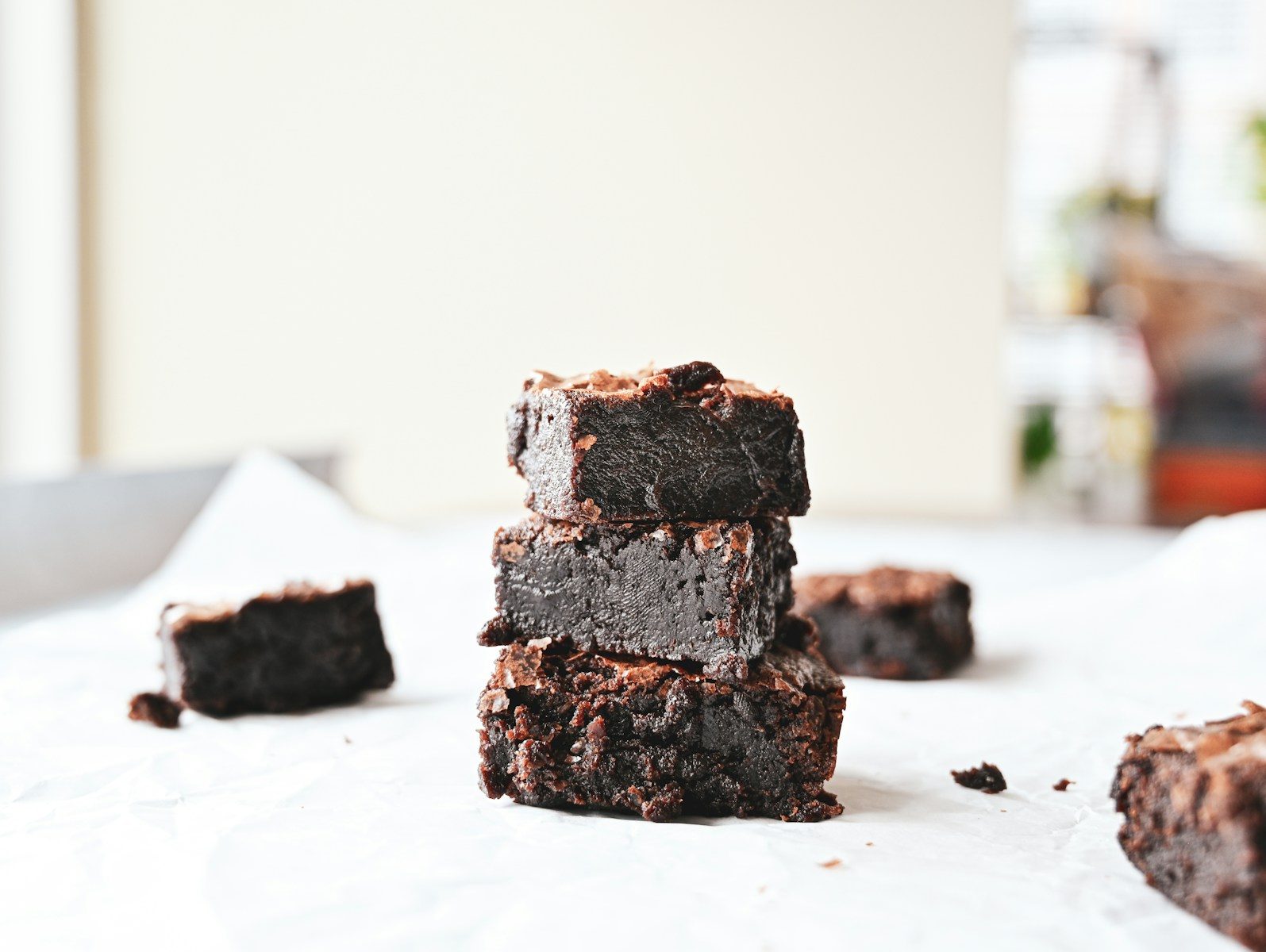
Katharine Hepburn’s reported brownie rules were as direct as her screen persona. The recipe linked to the actress favors a low-flour batter and an intentionally soft finish over a tall, cake-like square.
Katharine Hepburn was picky about brownies, and what she preferred in brownies was clear: a moist, gooey center, not a cakey texture. A 2003 letter published by The New York Times recounts Hepburn criticizing a visitor’s homemade batch for having too much flour and warning, “Don’t overbake them!”
The actress’s reported formula is strikingly spare—just 1/4 cup flour for an 8-inch square pan, with cocoa, butter, eggs, sugar and nuts doing most of the work. For home bakers, it is a compact lesson in why brownie texture comes down to restraint.
Hepburn’s rule was less flour
The account came from Heather Henderson, whose father had become acquainted with Hepburn near the actress’s New York City townhouse. Henderson wrote that her father once brought Hepburn brownies while she was recovering from a serious car accident.

Hepburn sampled one and delivered the verdict: “Too much flour!” Henderson recalled. She then dictated her own recipe, along with the instruction that the brownies should be moist rather than cakey.
That preference is borne out by the ingredient list printed with the letter. The recipe calls for one stick of butter, 1/2 cup cocoa, two eggs, one cup sugar, 1/4 cup flour, one cup of broken walnuts or pecans, vanilla and salt.
For perspective, many pan brownie recipes use substantially more flour to create structure. More flour can make cutting and stacking easier, but it also moves the result toward a lighter crumb. Hepburn’s version puts its weight behind chocolate richness and density instead.
A gooey center was the point
The printed directions say to bake the brownies in a greased 8-by-8-inch pan at 325 degrees for 40 minutes. Yet the timing comes with an unusually forceful caveat: do not overbake them. They should be gooey.
That distinction matters because brownies continue to set as they cool. A pan that looks completely dry in the oven can firm up into something closer to chocolate cake by the time it reaches the counter.
The recipe also calls cooling “an essential step” before cutting. That is practical advice, not just ceremony. Letting the butter and chocolate mixture settle gives a soft-centered brownie enough time to hold together.
There is room for personal taste here. Some bakers want a clean toothpick and a neat, airy square; others want a fudgy bar that clings slightly to the knife. Hepburn’s reported preference falls decisively in the second camp.
The recipe is a remembered one
The brownie recipe should be read with the right amount of context. It was published in a reader letter after Hepburn’s death, not presented as a formally tested cookbook recipe or an archive-certified document from the actress.
Henderson’s story is nevertheless unusually specific. She described Hepburn serving brownies during a tea visit, then later correcting Henderson’s father’s batch and rattling off her own proportions. The letter gave readers both the recipe and the personality behind it.
That is part of why the recipe has endured. It is attached to a recognizable version of Hepburn: blunt, exacting and unimpressed by unnecessary softness—whether in advice about college or in a dessert that had drifted too far toward cake.
How to bake in that spirit
Following the recipe closely means accepting that visual doneness can be misleading. At the end of the bake, the center should not resemble a fully set sheet cake. A tester may pick up moist crumbs, and the pan should cool fully before anyone decides the brownies are underdone.
- Use the stated flour amount: 1/4 cup is central to the dense texture Hepburn reportedly wanted.
- Choose an 8-inch square pan: A larger pan makes a thinner layer and can shorten the effective baking time.
- Watch before the timer ends: Oven temperatures vary, so 40 minutes is a guide rather than a guarantee.
- Cool before slicing: The brownies finish setting outside the oven, preserving a gooey middle without becoming a messy collapse.
Nuts are part of the original printed version, though they are the most easily adjustable element for modern bakers. Walnuts bring slight bitterness; pecans add a sweeter, buttery note. Leaving them out changes the crunch, not the core low-flour idea.
Why the brownie debate lasts
Brownies inspire outsized loyalty because small ingredient changes produce very different results. A little more flour, extra mixing, a hotter oven or a few extra minutes can transform the same basic pantry ingredients into a different dessert.
Hepburn’s reported standard offers a useful shortcut for anyone who says they want “fudgy” brownies but keeps ending up with cake-like ones: do not chase a perfectly dry finish. Build less flour into the batter, respect the cooling time and pull the pan before the center loses all softness.
The enduring appeal of the story is not that a celebrity had a secret ingredient. It is that Hepburn’s supposed secret was a clear preference, delivered without hedging: brownies should be chocolate-forward, moist and gooey—and too much flour is a mistake.
Leave a Reply