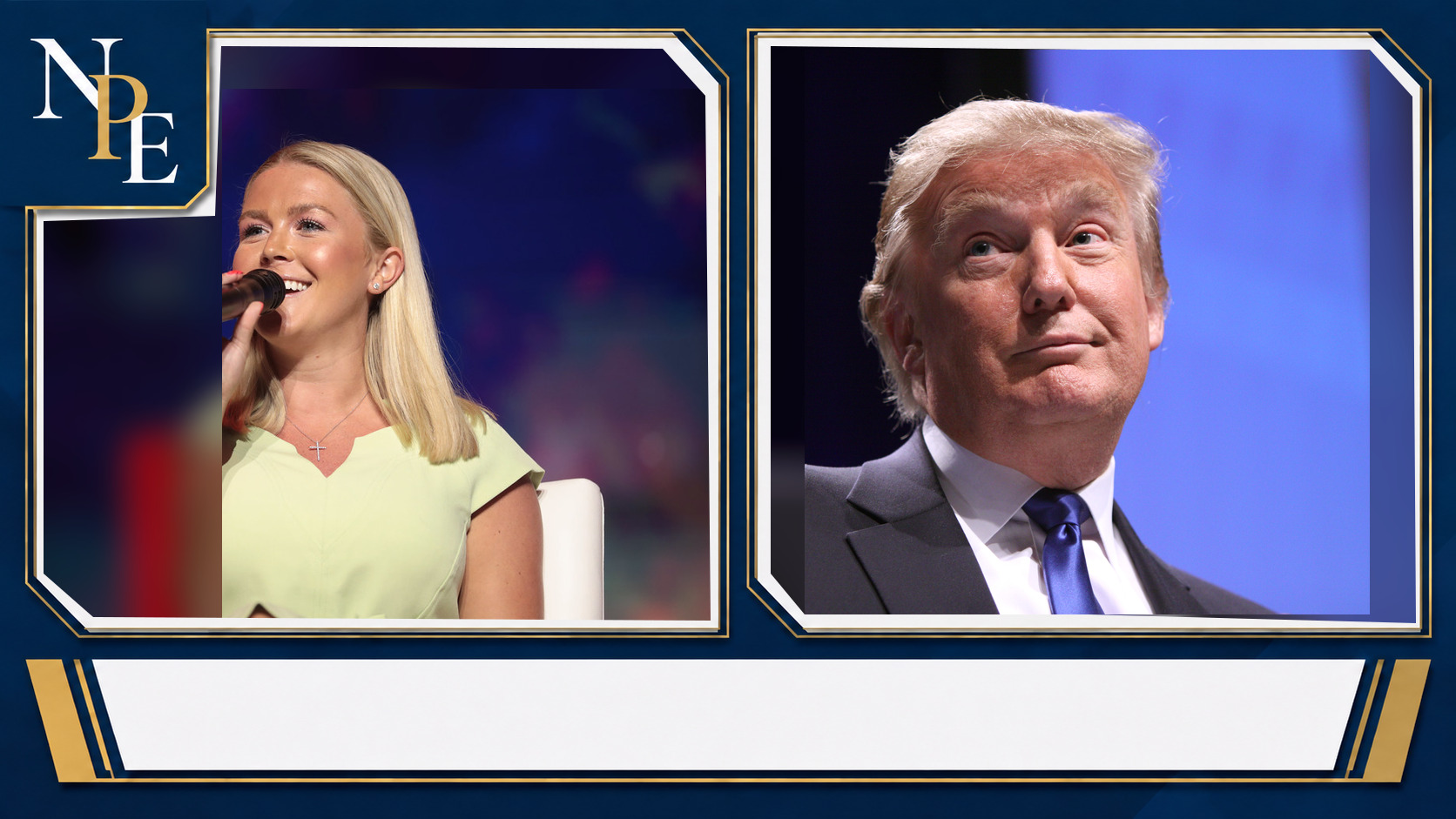
Karoline Leavitt’s departure will leave President Donald Trump searching for another chief messenger during a high-profile White House role. Trump says she will remain part of his political orbit as an outside adviser.
Donald Trump announced that Karoline Leavitt is resigning as White House press secretary, saying she will leave the White House position at the end of the month. Leavitt is departing to spend more time with her young children and family, a decision that opens a search for the Trump administration’s next chief public spokesperson.
Trump said Leavitt, 28, will remain connected to his political operation as an outside adviser. Her exit matters because the press secretary is not simply a briefing-room fixture: the role helps define how a president answers fast-moving questions, confronts skeptical coverage and delivers the administration’s message.
A departure framed around family
Trump announced Leavitt’s planned departure in a social-media post, calling her one of his most trusted aides. He said he understood and respected her decision to focus on her family.
Leavitt later described the job as the “honor and adventure of a lifetime,” while explaining the conflict she felt after returning from maternity leave. She said the constant time, energy and attention required by the post had made it difficult to be the mother she wants to be to her two young children.
Leavitt welcomed a daughter with her husband, Nicholas Riccio, in May. The couple also has a two-year-old son, according to BBC reporting. She returned to work last month after roughly seven weeks of maternity leave.
Her statement puts a personal reality often obscured by political theater at the center of a consequential staffing change. White House communications jobs can require early starts, late nights, rapid travel and immediate responses to national and international events.
Why the press secretary matters
The White House press secretary is the administration’s most visible day-to-day representative to the news media. The person in the job fields questions at formal briefings, responds to breaking developments and helps translate a president’s priorities into a public message.
That work also extends beyond the podium. Press secretaries coordinate with senior officials, shape statements, prepare spokespeople and decide when the White House will engage directly with reporters or communicate through other channels.
For Trump, the job has carried an additional political dimension. His administrations have frequently challenged established media practices and criticized coverage they regard as hostile. A successor will need to communicate policy while navigating that tension in real time.
Supporters have praised Leavitt for defending Trump’s agenda forcefully and staying on message. Critics, meanwhile, have objected to the administration’s approach to press access and its confrontational relationship with parts of the media. Those sharply different views help explain why the selection of a replacement will draw close attention.
Leavitt brought a combative style
Leavitt took the position last year and became the youngest person ever to serve as White House press secretary, according to the BBC. Her public appearances often featured direct clashes with reporters over the administration’s policies and the framing of its actions.
Her tenure included a dispute over access to the White House press pool. The administration took control of pool arrangements previously handled by the White House Correspondents’ Association and initially barred The Associated Press during a dispute over the administration’s preferred name for the Gulf of Mexico.
Those moments made Leavitt a familiar figure well beyond regular White House briefing viewers. They also established a template that her replacement could either preserve or revise: a press operation more willing to challenge traditional media institutions openly.
Leavitt had worked in Trump-world before becoming press secretary. Her previous roles included work as an assistant press secretary and speechwriter during Trump’s first term, communications director for Rep. Elise Stefanik, and national press secretary for Trump’s 2024 campaign.
The succession question is open
No replacement was immediately announced. That leaves the White House with a practical question as well as a political one: who can step into a role that demands media fluency, loyalty to the president and the ability to speak credibly for a large administration?
During Leavitt’s maternity leave, several high-ranking officials appeared at the briefing-room podium, including Vice President JD Vance, Secretary of State Marco Rubio and Interior Secretary Doug Burgum. That gave the administration options for covering major events, but it did not identify a permanent successor.
The next press secretary would be Trump’s sixth chief spokesperson across his two administrations, the BBC reported. The turnover underscores how difficult the job can be, particularly in a White House where the president is himself a dominant and frequent communicator.
One unanswered question is whether Trump will promote someone already known to reporters or choose a lower-profile operative with campaign and media experience. The administration has not provided a timeline for making that decision.
Trump signals Leavitt will stay close
Trump’s announcement was not framed as a break with Leavitt. He said she would become one of his top outside advisers and remain an influential voice in the Republican Party.
That distinction matters. Leaving the White House removes Leavitt from the daily demands and official responsibilities of the press secretary job, but an outside advisory role could allow her to remain involved in political messaging and strategy on a different schedule.
White House Deputy Chief of Staff Stephen Miller said in a Fox News interview that Leavitt was a close friend and role model, adding that they would continue working together. Such comments reinforce the message that her departure is a family-driven decision rather than a public rupture inside the administration.
Still, an advisory role is not the same as standing at the podium. The person who replaces Leavitt will set the tone for the administration’s formal dealings with reporters at a time when the White House’s communications strategy remains central to Trump’s governing style.
A demanding job gets personal
Leavitt’s decision illustrates a tension familiar far beyond Washington: even prestigious, high-visibility work can collide with the demands of caring for young children. In her case, the stakes are amplified by the nonstop rhythms of the presidency and the visibility of every public answer.
Her departure also leaves two separate stories moving at once. One is personal: a mother stepping away from an unusually consuming role. The other is political: a president choosing the person who will defend his record, explain his decisions and confront the media every day.
For now, the date of Leavitt’s exit is clear — the end of the month. The most immediate unknown is who will take her place and whether that person will continue her hard-edged approach to one of Washington’s most scrutinized jobs.
Leave a Reply