
Hunter Biden’s answer to speculation about a White House bid has kept the conversation alive without creating a campaign. The distinction matters as public appearances and social-media posts fuel fresh scrutiny of his political role.
Hunter Biden was asked whether he might run for president, and Hunter Biden responded to the question without announcing a presidential campaign. His reaction, including remarks framed around his political ambitions, has revived speculation about whether the son of former President Joe Biden is seriously considering a future White House bid or simply engaging an unusually public moment.
The immediate takeaway is narrower than the chatter: there is no known formal Hunter Biden campaign, no announced candidacy and no declared presidential platform. But his willingness to entertain the subject matters because the Biden name still carries weight in Democratic politics—and because ambiguity travels quickly online.
His answer was not a launch
A question about running for president can produce a straightforward denial, a declaration or something in between. Hunter Biden’s public posture appears to fall into that middle category: he has addressed the idea while leaving room for people to interpret the answer as humor, provocation or genuine openness.
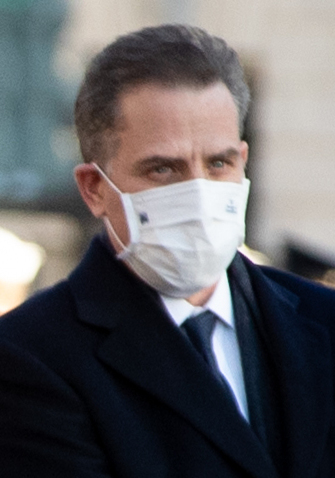
That is very different from taking the basic steps associated with a national campaign. A serious presidential effort would normally bring a formal announcement, fundraising arrangements, a campaign organization, ballot-access planning and a sustained case to voters.
None of those elements is established by a headline-making response to a question. Treating an off-the-cuff line or social-media exchange as a candidacy would overstate what is known.
Still, the response is notable precisely because Hunter Biden has not stayed entirely outside political conversation. His personal history, legal troubles, recovery and relationship with his father have long made him a target of partisan attention. Each new appearance now draws scrutiny beyond the subject immediately being discussed.
Why the comments gained traction
Hunter Biden’s name is inseparable from Joe Biden’s political legacy. That makes even a casual reference to a presidential run more consequential than it would be for a private citizen with no national profile.
His recent public-facing activity has also created a setting in which a joking or conditional remark can be clipped, reposted and recast as a trial balloon. A USA Today opinion column published in July described an exchange in which Hunter Biden responded, “I am now,” after being asked on X whether he would consider running for president. The column interpreted the response as part of a broader pattern of political signaling.
That interpretation is just that—an opinion writer’s reading of his public behavior, not proof of campaign plans. But it captures why the question persists: Hunter Biden has been visible enough to invite speculation, and vague answers tend to expand rather than settle it.
In another widely circulated moment described by USA Today, he joked on California Gov. Gavin Newsom’s podcast that he would run only as Newsom’s vice president, calling the vice president’s residence “a lot cooler.” The line had the structure of a joke, but it also placed him inside a 2028-style political conversation.
Public visibility has changed
For years, Hunter Biden was most often discussed through investigations, court proceedings and attacks on his father. He has recently spoken more directly about his own life, including addiction and recovery, and has taken part in higher-profile media appearances.
A BBC Newsnight interview description says Hunter Biden discussed the toll of drug and alcohol addiction on his family, his father’s health and whether he has presidential ambitions. The BBC’s framing underscores the unusual breadth of the current public conversation around him: personal redemption, family legacy and electoral politics are now being bundled together.
That combination can make political speculation feel more concrete than it is. A prominent interview is not a campaign event. Personal testimony is not a policy agenda. And a recognizable surname is not the same as a viable route to a party nomination.
Yet public figures often use media appearances to learn which messages resonate. The unresolved question is whether Hunter Biden is merely reclaiming his own voice after years as a political symbol for others, or whether he is building a durable public identity with electoral possibilities in mind.
The Biden name cuts both ways
The case for paying attention is clear: Hunter Biden has instant name recognition, access to media attention and a personal story that can draw interest well beyond standard political audiences. Supporters could see an account of recovery and survival as central to that story.
The obstacles are just as clear. His past struggles and criminal cases have been relentlessly politicized, and they would be examined again in any campaign. Joe Biden’s December 2024 pardon of his son would also remain a major point of contention.
Hunter Biden himself has publicly questioned the broader impact of that pardon. In the BBC interview description, he said it was not good for the Constitution, the American people or his father’s legacy, while also saying he was grateful. That tension would be difficult to escape in an electoral contest.
There is also the basic question of political preparation. Presidential candidates are usually judged on governing experience, legislative records, organizing networks and policy positions. Hunter Biden has not publicly laid out the kind of governing agenda that would allow voters to assess him on those terms.
Jokes and signals are different
Political audiences have good reason to distinguish between playful engagement and a genuine bid for office. Politicians sometimes float possibilities to gauge reactions; public figures sometimes answer provocatively because the attention itself is useful. Both can look similar in a short video clip.
For now, the available evidence supports caution. Hunter Biden has reacted to questions about running for president and discussed his ambitions publicly, but he has not made a formal declaration that he is seeking the presidency.
That does not make the episode meaningless. It shows that he is willing to enter a conversation that many political relatives avoid, rather than immediately shutting it down. It also reflects how quickly a well-known family name can turn one remark into a national political story.
What would make it real
The next meaningful sign would not be another teasing answer. It would be concrete action: an explicit statement of intent, a campaign team, fundraising, travel aimed at early-voting states, outreach to party leaders or a policy program that goes beyond personal narrative.
Until then, the fairest reading is that Hunter Biden has kept speculation alive without committing to a presidential race. His response may be a genuine expression of political curiosity, a joke that landed in a charged environment, or a deliberate way of testing how the public reacts.
For a figure whose life has so often been narrated by critics, allies and family politics, speaking for himself may be the more immediate story. A presidential campaign remains a possibility people are discussing—not an announced reality.
Leave a Reply