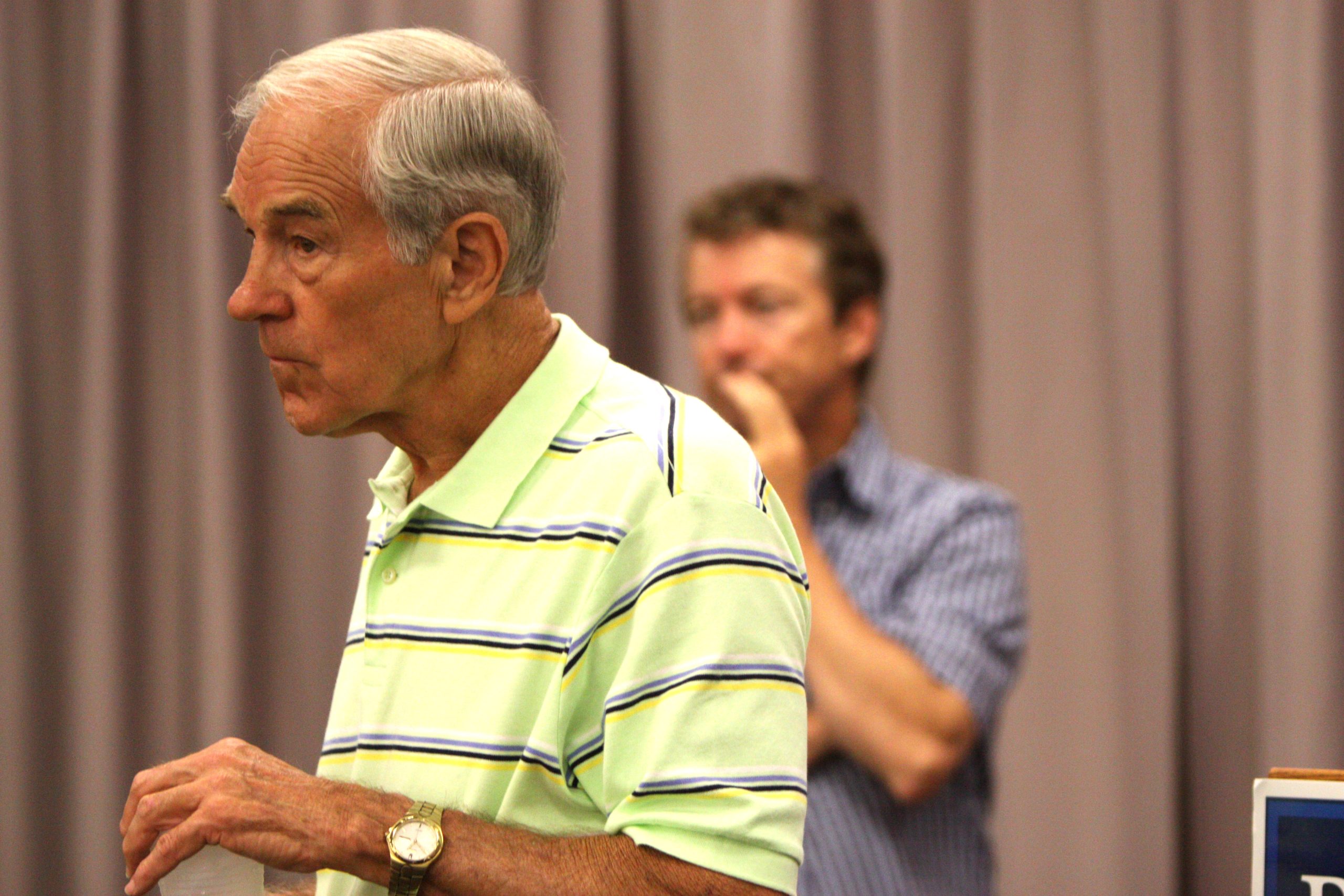
Paul says the diary mentions him more than 60 times and criticizes his work. The larger question is what private pandemic notes can actually prove about public statements, policy and COVID origins.
Sen. Rand Paul has turned a large set of Anthony Fauci diary entries into the latest evidence in his long-running COVID-origins inquiry. NPR reported that Paul released 1,141 pages of pandemic-era entries ahead of Fauci’s expected appearance before the Senate Homeland Security and Governmental Affairs Committee.
Paul says the diary mentions him more than 60 times and says Fauci described his work as a “real problem.” Paul also argues that Fauci’s pandemic policies failed. Those are Paul’s claims; the harder editorial question is whether the diary entries establish them, complicate them or simply show officials working through uncertainty in real time.
The release moves an old dispute back into Congress
Paul, a Kentucky Republican, has been one of Fauci’s most persistent critics. Fauci, the former director of the National Institute of Allergy and Infectious Diseases, served as a key member of the White House Coronavirus Task Force and stepped down from NIAID at the end of 2022.

The two men have clashed for years over how the pandemic began and over questions about U.S.-funded research. Paul has continued what he describes as an investigation into COVID-19 origins and risky taxpayer-funded life sciences research.
The diary release came as that fight returned to a Senate committee setting. According to NPR, Paul published what he described as entries Fauci made from December 2019 through December 2022.
The committee announced that Fauci would appear under subpoena at a hearing focused on COVID origins and gain-of-function research. The committee notice said Paul sought Fauci’s testimony after receiving a Justice Department interview transcript and after Fauci declined to appear voluntarily.
What Paul is trying to show from the entries
Paul’s central argument is that Fauci’s private notes differ from his public posture on COVID origins. He has used selected excerpts to argue that Fauci privately considered possibilities that, in Paul’s view, were later minimized in public discussion.
One entry cited by NPR from Jan. 26, 2020, said the first infection was in early December and was “not connected to the market,” adding that the market was “not the source” but “the amplifier.” Paul reads that as important evidence against a simple market-origin account.
Another excerpt Paul highlighted, according to NPR, came from Feb. 4, 2020. Fauci was said to have written that it was conceivable there were two components at play: a natural reservoir and “an accident in a Chinese lab.”
Paul argues those entries support his broader criticism of Fauci’s public messaging. But a diary entry showing that an idea was considered does not, by itself, prove that the writer later believed it was likely, rejected evidence or misled the public.
Scientists see ambiguity in the same wording
Felicia Goodrum, a virologist at Dartmouth College, told NPR that Paul may be reading too much into technical language. She said “amplification” can describe a place where a virus spreads among people, not necessarily proof that the virus originated somewhere else.
Goodrum also described the early consideration of multiple origin theories as normal scientific practice. At the start of an outbreak, officials and researchers often test competing possibilities before evidence narrows the field.
That distinction matters. A private note that says a lab accident is “conceivable” may show that Fauci was open to the possibility. It does not automatically show that he believed a lab origin was probable or that he suppressed evidence for it.
Fauci has previously testified that he kept an open mind about possible origins and denied trying to cover up a lab-leak theory. NPR reported that Fauci and Paul did not respond to its requests for comment before publication.
The origins debate remains split
The diary entries sit inside a larger dispute that remains politically and scientifically contested. Fauci has long said the scientific evidence points toward spillover, meaning the virus moved from animals into humans and then spread.
Supporters of the market-spillover theory point to early cases connected to the Wuhan market, the presence of susceptible animals and genetic evidence involving multiple lineages. Goodrum told NPR that genetic data maps initial cases to the market and not to the Wuhan Institute of Virology.
Paul and other lab-leak proponents argue that a possible accident connected to research should not be discounted. A Republican-led House select subcommittee report in late 2024 concluded that a lab leak was the most likely explanation, according to NPR’s summary.
Other scientists dispute that conclusion. Robert Garry, a Tulane University virologist, told NPR there is “no actual evidence” for the claim that the virus was engineered or released from the Wuhan lab, and said no known precursor virus was close enough to SARS-CoV-2 to create the pandemic pathogen.
The policy claim is broader than the diary itself
Paul’s view that Fauci’s policies failed reaches beyond the diary excerpts. It involves pandemic restrictions, federal communication, research oversight and public trust in health authorities.
The diary can add texture to that debate, especially if it shows what Fauci was weighing privately as officials confronted an unfamiliar virus. It can also be selectively framed, because isolated entries may not capture the full record of what officials knew, when they knew it or how their thinking changed.
NPR reported that the diary document was taken down and then reposted with redactions. That makes caution important for readers assessing a fast-moving document release.
The clean takeaway is narrower than either side’s broadest argument. Paul has placed Fauci’s private pandemic notes at the center of a congressional fight over COVID origins. Whether those notes prove failed policy, hidden uncertainty or ordinary scientific debate remains unresolved.
Leave a Reply