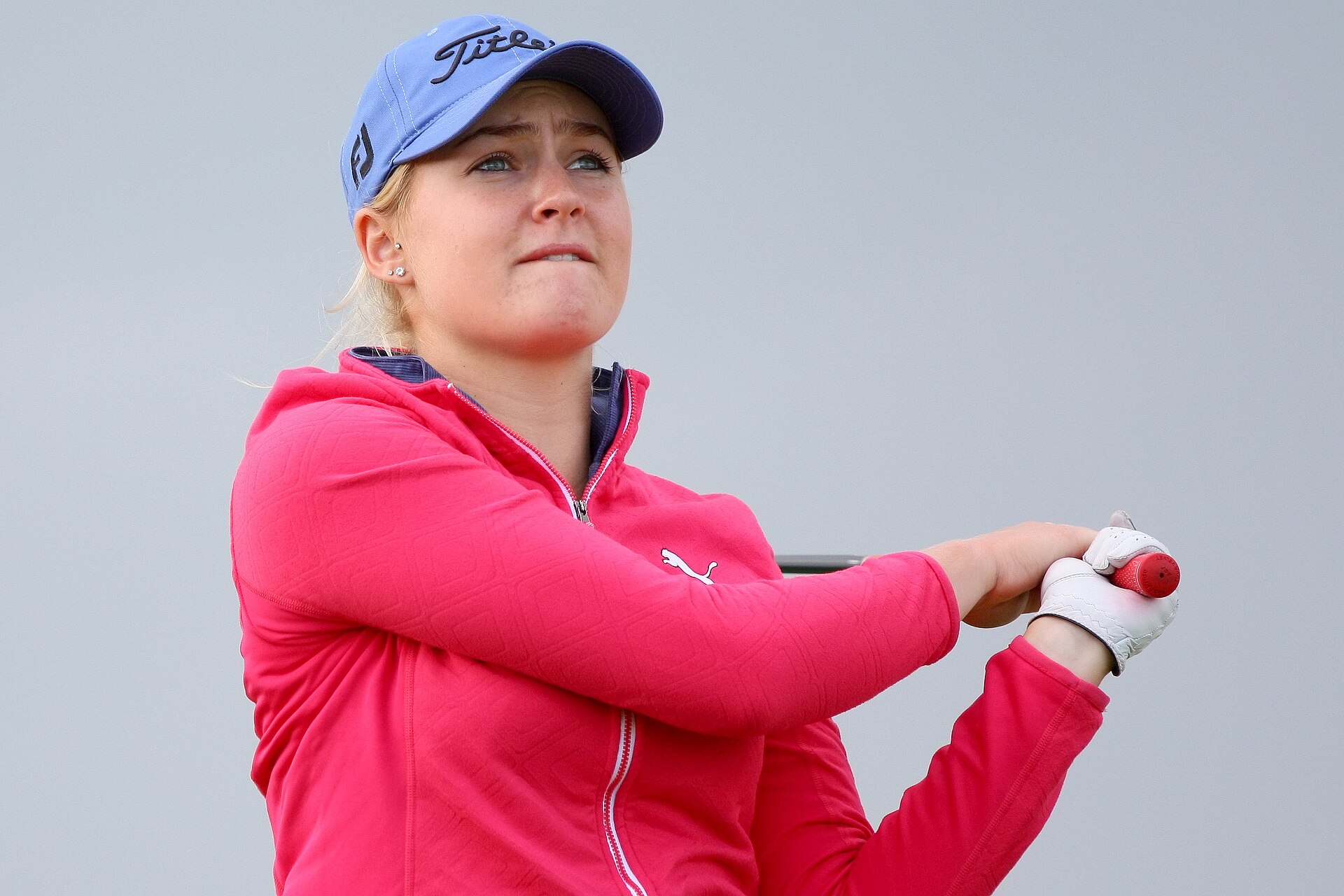
Hull accepted the first mistake was hers, but argued the Women’s Scottish Open setup crossed a line. The episode has revived a familiar golf argument over when a hard hole becomes unfair.
Charley Hull complained to the LPGA Tour commissioner Craig Kessler after a pin placement at the Women’s Scottish Open turned a 12-foot birdie chance into a nine on the fifth hole at Dundonald Links. Hull’s issue was not simply that she missed; she said the setup made one mistake too costly.
The complaint matters because it turned one ugly scorecard number into a broader fairness debate. Hull blamed the pin placement more than her own putt, arguing that the hole location was so severe it pushed difficult golf toward something excessive.
The text after the round
Hull told reporters ahead of the AIG Women’s Open at Royal Lytham & St Annes that she texted LPGA Tour commissioner Craig Kessler straight after her Women’s Scottish Open round.
Her message, as she described it, was not framed as a claim that she had done everything right. Hull accepted that the first mistake belonged to her. The complaint was about what happened after that miss.
She believed the pin on the par-five fifth hole at Dundonald Links created a punishment that did not fit the error. In her view, the setup allowed one misjudged putt to spiral into a quadruple-bogey nine.
How the fifth hole unraveled
The sequence began with opportunity. Hull said she had a 12-foot putt for birdie on the fifth hole during the opening round of the Women’s Scottish Open.
Instead, the birdie chance became one of the most jarring numbers a professional golfer can make. She putted off the green, then needed multiple chips before finally getting the ball in the hole.
Hull later described the ending with a touch of dark humor, saying she even holed a 10-foot putt at the end and fist-pumped. That did not make the nine any less damaging, but it showed she was not pretending the moment was entirely outside her own hands.
The reason the story carried beyond the score itself is that Hull did not describe it as a routine blow-up. She portrayed it as a hole location that could turn a manageable mistake into a runaway problem.
Why the pin bothered Hull
Hull’s criticism centered on where the flag was cut. She said the pin was about a yard from a “massive slope” and was also placed on a downslope heading toward another slope.
That detail is the heart of the dispute. In tournament golf, a pin can be demanding without being controversial. But when speed, slope and hole location combine, a ball that misses by a small margin can keep moving into far worse territory.
Hull was direct in her assessment: “The pin shouldn’t have been there,” she told reporters.
That line is sharper because she paired it with an admission. She did not say she hit the perfect putt. She said the bad putt was on her, while maintaining that the setup made the consequence too severe.
Not every hard pin is unfair
The competing view is straightforward: elite golf is supposed to punish poor execution. Tournament officials set difficult pins to create separation, test judgment and prevent the best players in the world from turning every green into target practice.
A hard hole location can reward the player who chooses the right angle, controls distance and leaves the ball below the hole. On links-style venues, firm turf, wind and natural slopes are part of the examination.
Hull’s counterpoint was about proportionality. Her argument was not that professional golf should be easy. It was that a single miss should not become a near-automatic disaster because of where a flag is placed.
That is why the fifth hole at Dundonald Links became more than a personal frustration. It touched a recurring course-setup question: should a pin merely test precision, or can it become so severe that the outcome feels too random?
Why it follows Hull now
The timing helped amplify the episode. Hull discussed the incident while preparing for the AIG Women’s Open at Royal Lytham & St Annes, one of the biggest weeks in women’s golf.
She remains one of the LPGA Tour’s most recognizable players and is still chasing her first major title. With that profile, a single bad hole can quickly become part of a larger conversation about momentum, decision-making and whether she can turn talent and popularity into a defining major win.
Hull has three LPGA Tour victories and is known for fearless shot-making. That style is part of her appeal, but it can also leave her exposed when a course setup magnifies a small error.
The Women’s Scottish Open fifth hole was not a major championship moment. Still, it offered a reminder of the thin margins Hull and other contenders face when one setup choice can shape an entire round.
What remains unanswered
There is no public indication in the available account that the LPGA Tour ruled the pin placement improper, changed its setup process or publicly responded to Hull’s text. Kessler’s side of the exchange has not been detailed.
That leaves the dispute in familiar golf territory. Hull’s frustration is understandable when a 12-foot birdie putt ends with a nine. Course officials, though, judge a setup across the full field, not just through one player’s worst result.
The most important distinction is that Hull did not merely complain because she made a big number. She complained because she believed the pin created a punishment that exceeded the mistake.
Whether that assessment is shared more widely remains unclear. What is clear is that Hull’s explanation put player responsibility, course design and competitive fairness back in the same conversation.
Leave a Reply