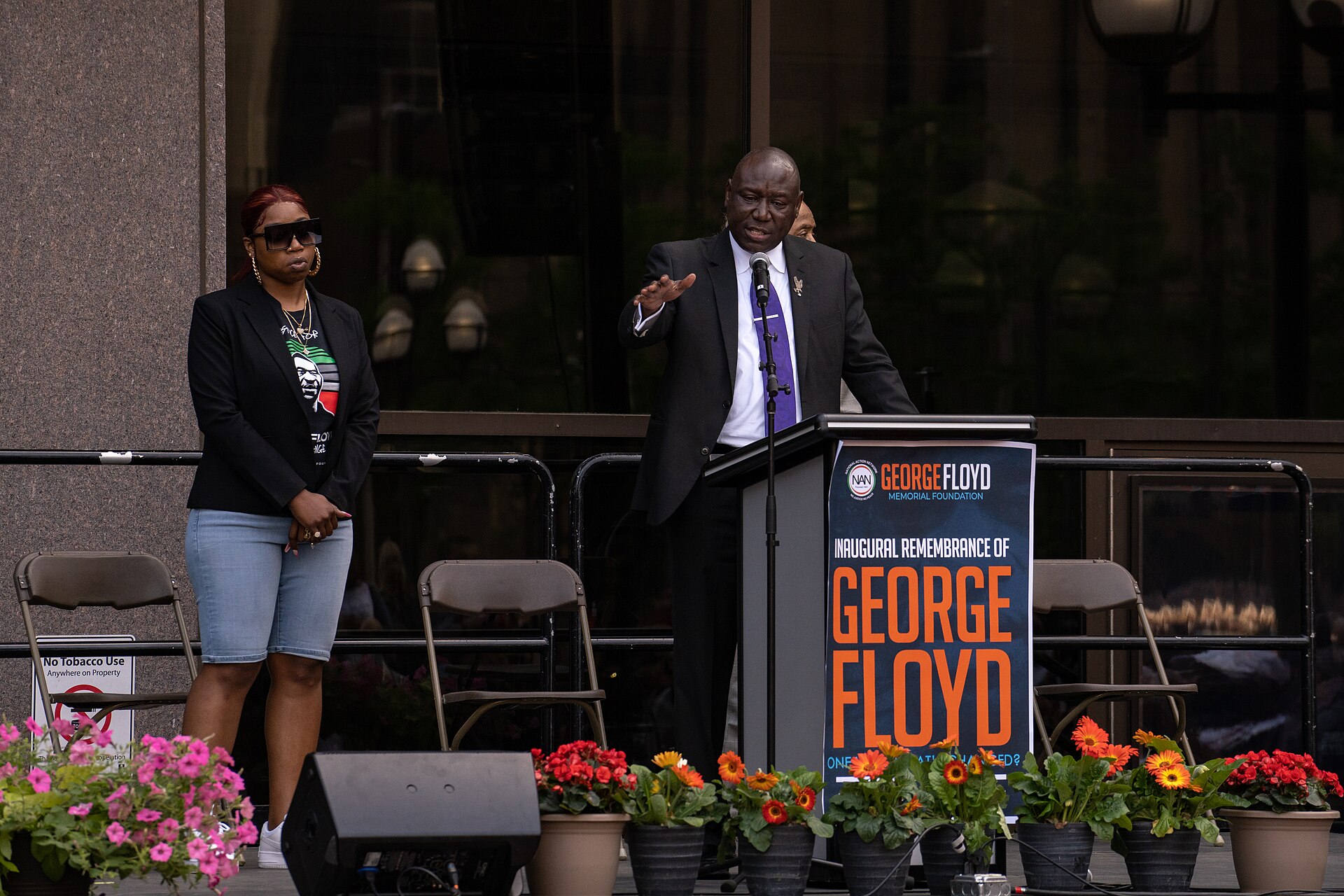
Crump’s defenders see a lawyer who gives grieving families power in cases the public might otherwise ignore. His critics see a media-savvy figure who turns tragedy into national conflict before all facts are known.
Ben Crump is the target of a new Washington Examiner opinion piece that calls him a “race relations arsonist” and argues that “Race relations arsonists” like him should be ostracized. The accusation is blunt: that Crump’s high-profile civil rights advocacy after police killings and racially charged deaths inflames public anger rather than improves race relations.
That charge matters because Crump is not a fringe figure. The Associated Press has described him as the attorney for families of Trayvon Martin, Michael Brown, Breonna Taylor, George Floyd and Tyre Nichols, a role that makes him both influential and polarizing.
The charge against Crump
The Washington Examiner headline frames Crump not merely as a controversial lawyer, but as someone whose public role is harmful enough that he “should be ostracized.” That is a political and cultural judgment, not a court finding. It belongs to a broader conservative critique that says some civil rights advocates amplify racial grievance, rush to nationalize local tragedies and deepen public mistrust.

Crump’s critics have long argued that his appearances at microphones, marches and family news conferences can shape public narratives before investigations are complete. In that view, civil rights lawyering becomes less about the courtroom and more about public pressure.
His supporters see the same conduct very differently. They argue that public pressure is often the only reason powerful institutions respond, especially when families believe police departments, prosecutors or local officials are moving too slowly.
The tension is the story: Crump’s critics accuse him of setting fires in American race relations; his defenders say he shows up after the fire has already started.
Why Crump draws attention
Crump’s profile grew because he attached his legal practice to cases that became national symbols. AP reported that he represented or supported families connected to Trayvon Martin, Michael Brown, Breonna Taylor, George Floyd and Tyre Nichols — deaths that fueled years of protest, policy debate and media coverage.
That visibility made him a rare kind of attorney: part litigator, part spokesman, part political pressure point. The Rev. Al Sharpton, according to AP, has called him “Black America’s attorney general,” a phrase that captures both his influence and why opponents bristle at it.
Crump has also secured major results. AP reported that he has won multimillion-dollar settlements in police brutality cases and pushed cities to ban no-knock warrants. In 2021, Minneapolis agreed to pay $27 million to settle a civil lawsuit from George Floyd’s family, a settlement Crump described at the time as the largest pretrial civil rights lawsuit settlement ever.
Those wins help explain why families call him. They also explain why critics focus on him: Crump is not just commenting on the system; he has shown he can move money, policy and public opinion.
Advocacy or escalation?
The hardest question is not whether Crump is influential. He is. The harder question is whether his style helps justice or distorts it.
There is a real argument for caution when lawyers speak publicly about emotionally charged cases. Early details can be incomplete. Witness accounts can shift. Prosecutors and defense attorneys may later argue over evidence that was never part of the first wave of public outrage.
That is the strongest version of the criticism: when an attorney becomes a national advocate before the full record is known, the public may absorb a moral conclusion faster than a factual one. In polarized cases, that can make later nuance feel like betrayal.
But there is also a strong counterargument. Many civil rights cases have historically required publicity because official systems did not act with urgency on their own. For grieving families, a lawyer who can get cameras, pressure officials and translate legal claims into plain English may be the difference between being ignored and being heard.
What the AP profile shows
AP’s reporting presents a fuller picture than the caricature on either side. It notes that Crump’s critics see him as an opportunist who “never fails to show up amid another tragedy.” It also quotes supporters who say he has taken cases others would not and has been fighting for fairness long before he became a headline fixture.
That contrast is important. The same facts can support opposing interpretations. Crump travels constantly, appears with families and uses media attention as leverage. Critics call that opportunism. Supporters call it commitment.
AP also described his work beyond police cases, including Black farmers taking on an agribusiness giant and families exposed to lead-contaminated water in Flint, Michigan. That broader portfolio complicates the claim that his public role is only about stoking racial conflict after viral deaths.
At the same time, Crump’s own language is sweeping. AP quoted him saying he is trying “to increase the value of Black life.” For supporters, that is a moral mission. For critics, it can sound like an accusation aimed at the country as a whole.
Why the debate keeps returning
The debate over Crump is really a debate over who gets to define a racial crisis in real time. Police departments, prosecutors, local officials, activists, cable hosts, families and lawyers all compete to frame what happened before the legal process finishes.
Crump’s power comes from understanding that vacuum. He enters moments when families are grieving, officials are cautious and the public is searching for a story that makes sense. His critics say that is exactly the problem. His defenders say it is exactly why he is needed.
There is also a media incentive at work. A lawyer with a recognizable name, a grieving family and a morally charged allegation is easy for national outlets to cover. That does not make the allegation false, but it does mean the first public version of a case can travel farther than later corrections or legal details.
That is why calls to “ostracize” Crump are unlikely to settle anything. They may energize readers who already view him as divisive, but they do not answer the deeper question of how the country should handle public advocacy in cases where race, policing, grief and law collide.
What remains unsettled
The Washington Examiner’s framing is a denunciation. AP’s reporting shows why Crump became a national figure in the first place. Between those poles sits the unresolved issue: whether public civil rights advocacy is a necessary check on institutions or a force that can harden assumptions before facts are tested.
Both things can be true in different cases. Public pressure can expose injustice. Public pressure can also oversimplify complicated evidence. The challenge is judging the conduct case by case rather than treating every appearance by Crump as either heroic or destructive.
For now, the latest attack confirms what Crump’s career has already made clear: he is not simply a lawyer in the public eye. He is a symbol in a larger fight over race relations, accountability and who gets believed when tragedy becomes national news.
Leave a Reply