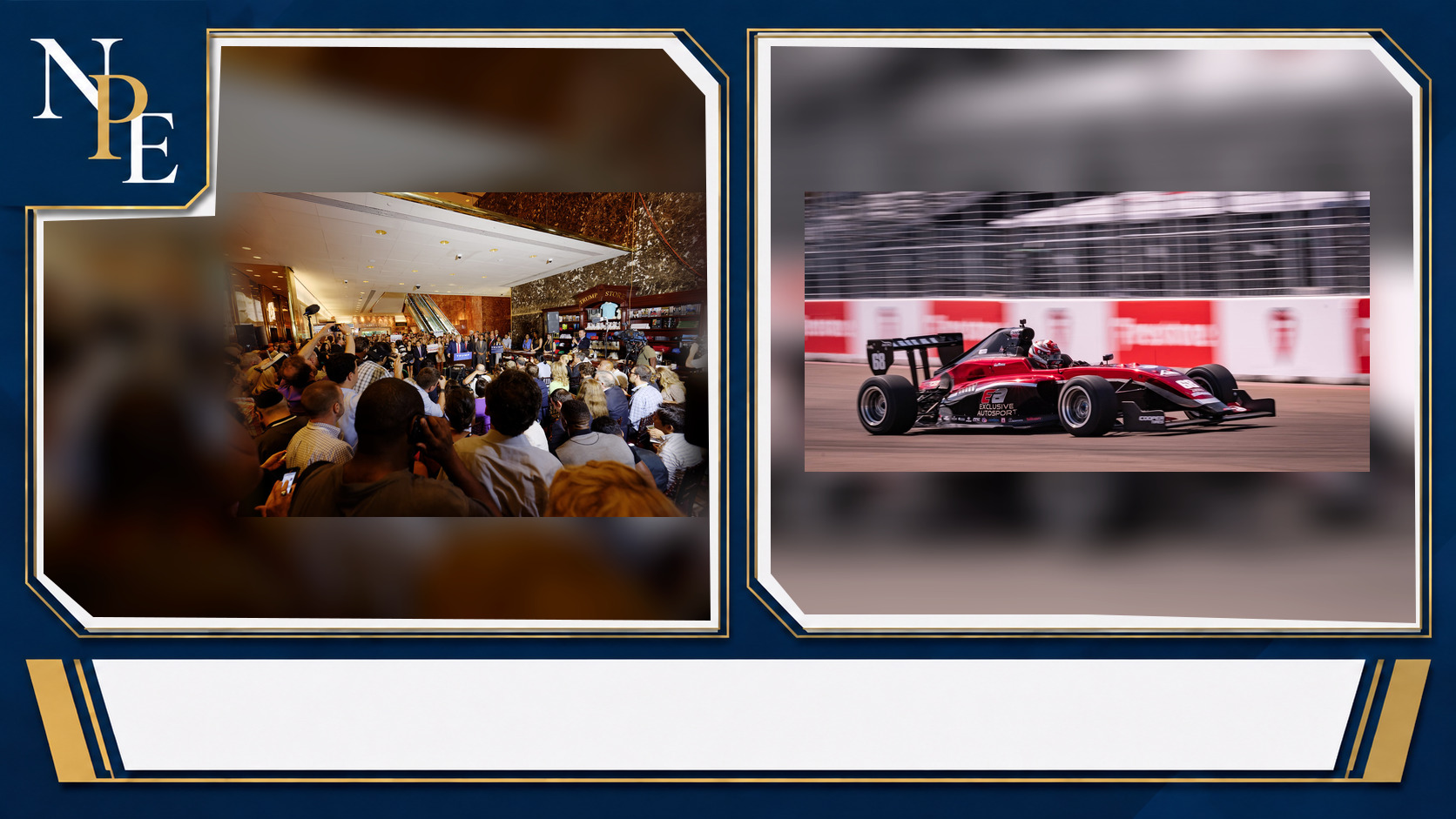
The August 22 and 23, 2026, race offered an extraordinary backdrop for IndyCar but imposed an equally unusual burden on the capital’s museums, streets and public spaces. The biggest question is whether the disruption was a workable price for the spectacle.
Donald Trump’s Freedom 250 Grand Prix brought IndyCar racing to Washington, DC, on August 22 and 23, 2026, as the National Mall became a high-speed street circuit and fans faced oppressive heat. The 1.66-mile course, including Pennsylvania Avenue, put race cars capable of approaching 180 miles per hour beside major landmarks while extensive closures, security measures and access limits reshaped central Washington.
The event was designed as a 250th-anniversary spectacle, but its impact extended well beyond the 147-lap, 250-mile main race. For IndyCar fans, museums, commuters and security agencies, the Freedom 250 became a demanding test of how much disruption the capital could absorb for a temporary sporting event.
A race course through landmarks
The Freedom 250 was not held at a permanent racing facility. The circuit ran along 3rd Street near the National Mall and linked sections of Pennsylvania Avenue, Constitution Avenue, Independence Avenue, Maryland Avenue and 9th Street.
That route placed race activity near the U.S. Capitol, the Washington Monument, the National Gallery of Art, the National Archives and the Smithsonian Air and Space Museum. It created the kind of visual setting few American races can offer: open-wheel cars moving through streets normally associated with tourism, civic ceremonies and daily city travel.
It also created an inherent conflict. A street race can turn a city center into a destination for motorsports fans, but it does so by fencing off roads, redirecting pedestrians and limiting access to public places that are usually open to a broad mix of residents and visitors.
CNN reported that the 147-lap main event was intended to be part of celebrations marking the United States’ 250th anniversary. The race distance and lap count were themselves part of that symbolic framing.
Trump’s role changed the equation
According to CNN, Trump fast-tracked the event through a January executive order after Penske Corporation President Bud Denker proposed it. That approach bypassed local bureaucratic hurdles that could otherwise have delayed the project.
A White House official cited by CNN said Trump was expected to attend the Sunday main event, take a ceremonial lap in the presidential limousine known as “The Beast,” and drop the green flag. A presidential appearance added another layer to an event already dependent on barriers, street closures and crowd control.
Supporters could see the race as a prominent anniversary attraction and a way to introduce a different audience to downtown Washington. Others, including residents and visitors navigating the area, had reason to judge it by a different standard: whether the public costs of the event matched the promised spectacle.
The race was therefore more than a sports promotion. It was also an unusual use of the federal district’s shared civic space, with the president’s involvement raising the stakes for organizers and public agencies.
Heat complicated the fan experience
Reports described spectators sweltering during the two-day event. That matters particularly at a temporary street circuit, where fans can spend considerable time walking between entrances, standing at security checkpoints, waiting behind barriers and trying to find usable viewing angles around fencing and grandstands.
Heat can turn those ordinary frustrations into a more serious strain, especially for children, older adults and visitors unfamiliar with the Mall. Pavement, crowds, fuel fumes and limited shade can make an outdoor event feel harsher than a temperature reading alone suggests.
The available reporting supports concern about uncomfortable spectator conditions, but it does not provide a detailed official count of heat illnesses, medical treatment or crowd-control incidents. Reporting from the first day also described light morning drizzle and temperatures cooling later in the evening.
That distinction is important. The phrase “chaos” captures the pressure surrounding the event, but the available information does not establish a verified public-health emergency or identify specific operational failures behind that description.
Security reached beyond the track
Attendees were expected to pass through tall magnetometers, CNN reported. Federal personnel at the event included the FBI, National Guard, U.S. Park Police and Naval Criminal Investigative Service.
Traffic and parking restrictions also affected the wider area. The Federal Aviation Administration said it would pause departures from Ronald Reagan National Airport from 10:15 a.m. to 1:15 p.m. Sunday, subject to change, an indication that the event’s operational footprint stretched well beyond the 1.66-mile circuit.
Museums in the race path were affected as well. Visitors needed Freedom 250 tickets to access those institutions, according to CNN, meaning parts of the city’s cultural center were temporarily less accessible to people who had not come for the race.
The National Gallery of Art conducted an extensive vibration study and adopted safety measures for guests and collections near the pit lane, CNN reported. That precaution underscored the unusual challenge of staging high-speed motorsports beside irreplaceable art and heavily visited public buildings.
A temporary track has real limits
Drivers encountered a course that demanded quick adaptation. CNN reported that more than one driver appeared to miss a sharp turn on 9th Street NW during practice, then had to turn around and rejoin the circuit.
Organizers had also worked around the physical realities of city streets. Denker’s team reportedly used silicone on nearly 50 manhole covers to prevent the aerodynamic suction from high-speed cars from lifting them.
Those details do not by themselves signal that the race failed. Temporary street circuits regularly require special planning for pavement, drainage covers, tight turns, barriers and emergency routes.
Still, they show why a race in a functioning downtown is judged differently from one at a purpose-built speedway. The fan experience depends not just on competition but on entry routes, sightlines, walking distances and the ability to move safely through the surrounding city.
The unresolved cost of spectacle
The Freedom 250 proved that Washington can supply a setting unlike any standard IndyCar venue. Fans interviewed by CNN praised the historical backdrop, and the race put a nationally recognizable collection of monuments at the center of a major sporting event.
Yet the same factors that made the event distinctive also made it difficult. A projected crowd of nearly 300,000 over two days, a presidential visit, airport adjustments, museum restrictions, street closures and heat concerns were central parts of the operation, not minor side effects.
What remains unclear is how effectively organizers managed reported crowd strain and heat, how well access plans worked for ticket holders and non-ticketed visitors, and what the final disruption meant for nearby institutions and residents after the last lap.
Those answers will shape whether the Freedom 250 is remembered as a repeatable Washington showcase or a one-time experiment whose logistical demands outweighed its appeal. The event delivered a rare motorsports image for the capital; it also tested the limits of using the National Mall as a controlled, high-speed venue.
Leave a Reply