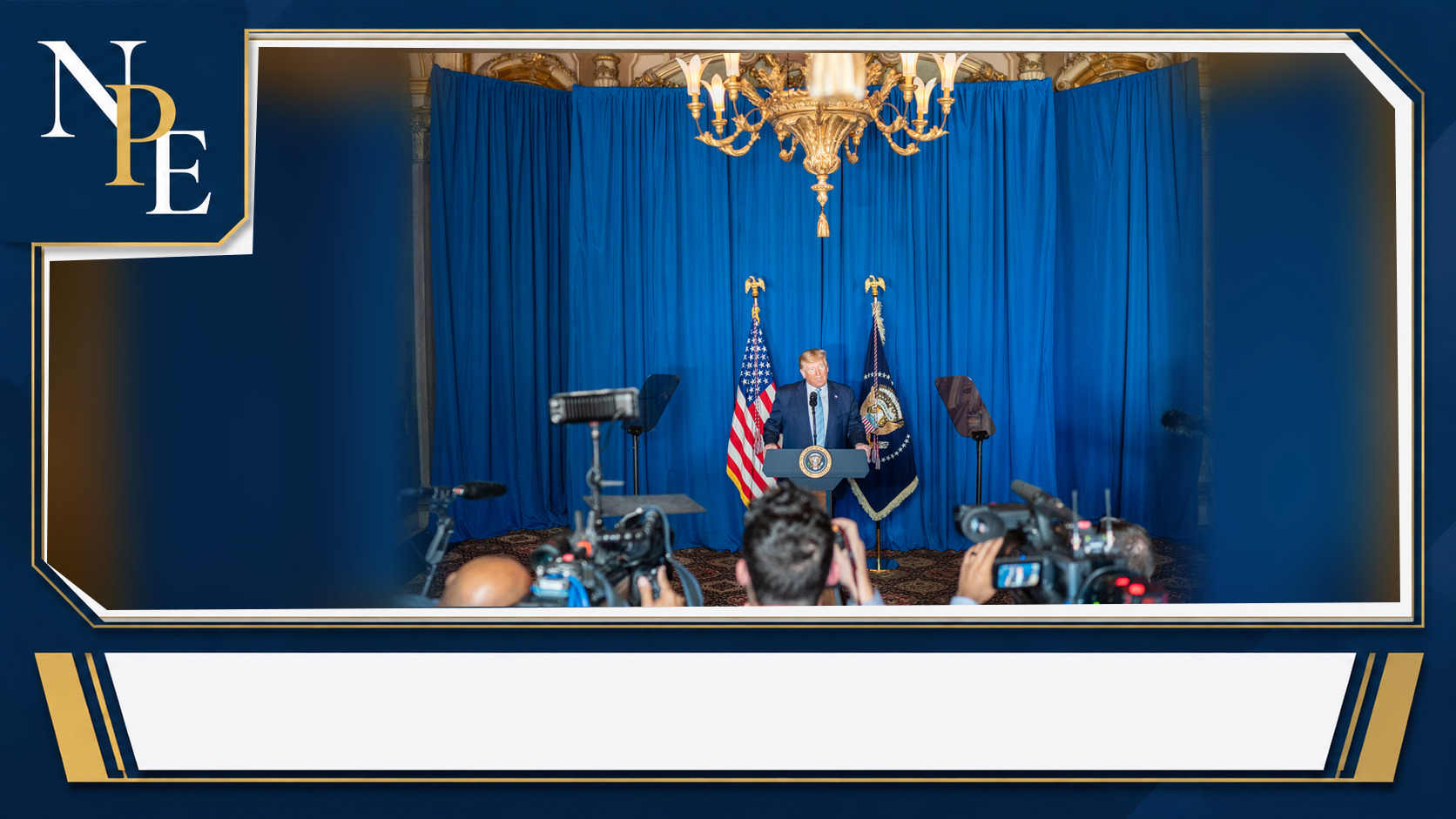
The White House Rose Garden has shifted from a formal outdoor garden to a hardscaped setting filled with presidential-era symbolism. The changes are drawing attention because the space is both a working venue and one of America’s most recognizable political backdrops.
Donald Trump remade the White House Rose Garden by replacing its lawn with a white stone patio and adding statues of America’s founders. The changes transform the historic White House space just outside the Oval Office from a lawn-and-roses garden into a formal hardscaped setting that now includes figures such as George Washington, Alexander Hamilton, Benjamin Franklin and Thomas Jefferson.
The Rose Garden has long been a backdrop for announcements, ceremonies and meetings with foreign leaders. Trump’s redesign matters because it changes not only how the space looks on camera, but also what one of the country’s most visible political settings is meant to represent.
A patio replaced the lawn
The most sweeping change came first: the Rose Garden’s plush lawn was removed and replaced with a white stone patio. The result is a more durable, terrace-like surface for events, guests and television cameras.
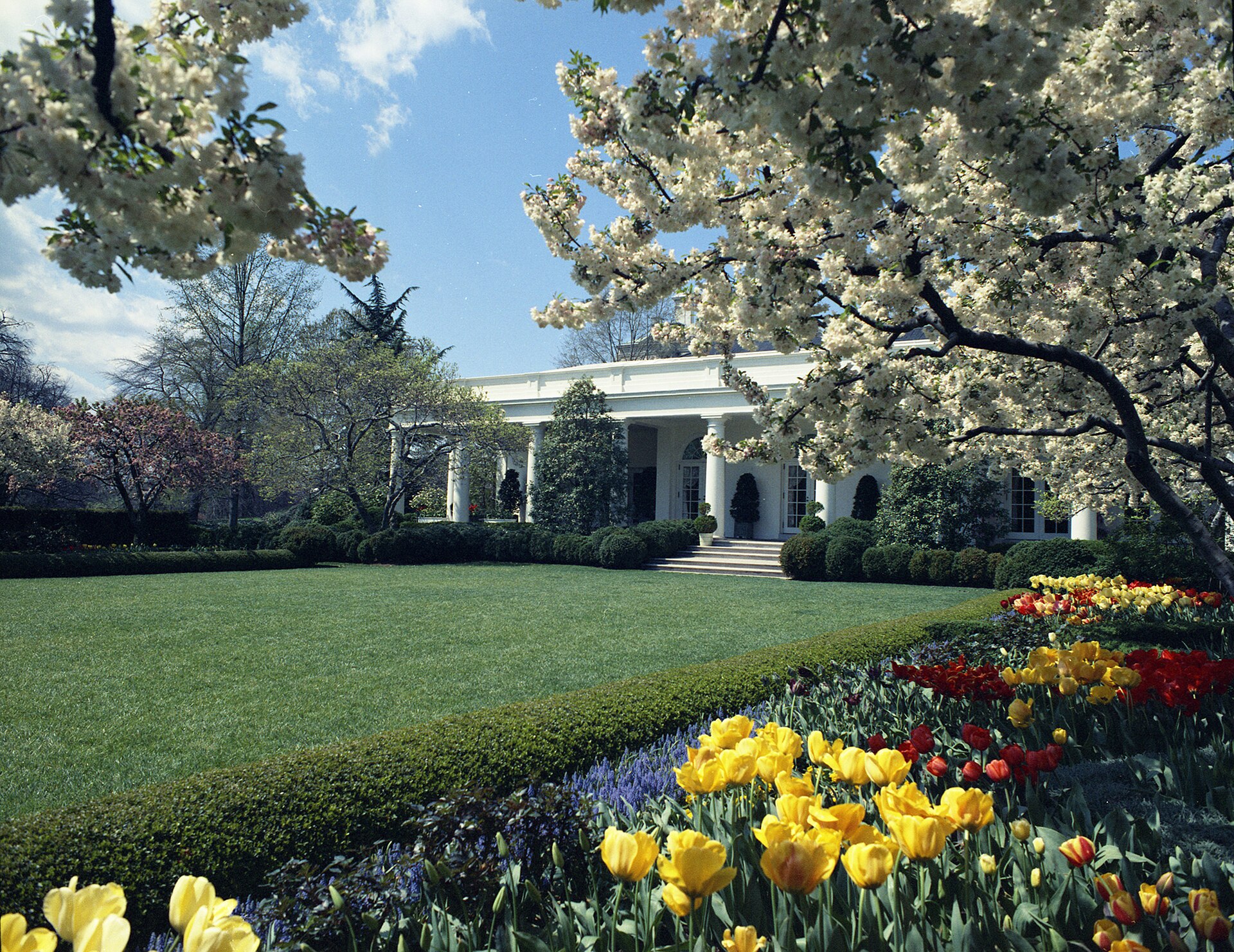
According to the Associated Press, the new setting resembles the outdoor look of Mar-a-Lago, Trump’s private club in Palm Beach, Florida. That comparison has sharpened the debate around the redesign, because the Rose Garden is a public-facing part of the White House with a distinct historical identity.
Supporters can reasonably see the patio as a practical modernization. A paved surface is easier to maintain, more accessible for large gatherings and less vulnerable to damage during frequent events.
Critics see a different tradeoff. The lawn and plantings were part of what made the Rose Garden feel separate from the ceremonial rooms inside the White House. Replacing greenery with stone can make it more usable, but it also makes the space feel less like a garden.
Founder statues change the message
The patio is now also becoming a setting for sculpture. The AP reported that statues of Washington, Hamilton and Franklin were already displayed in the Rose Garden before the latest addition: a bronze Thomas Jefferson sculpture depicting the third president seated as he signs the Declaration of Independence.
A fifth sculpture, called Freedom’s Charge, is also on the patio. The 14-foot bronze work depicts two Revolutionary War soldiers separated by a flag and was relocated from Dallas, according to the AP.
Adding statuary shifts the project beyond a renovation. A garden is usually defined by its landscape design; a collection of founders and Revolutionary-era imagery makes this one a curated display of national memory.
That is consistent with Trump’s broader interest in monuments and patriotic symbolism. It also ensures that every Rose Garden appearance now unfolds in front of a deliberately chosen set of historical figures.
Jefferson arrived after July Fourth
The Jefferson sculpture came to the White House through sculptor George Lundeen of Loveland, Colorado. Lundeen told the AP that he had made the work decades ago and had kept it at his ranch before deciding to restore it and send it to Trump for the country’s 250th-birthday-related July Fourth celebrations.
The statue did not arrive in time for those events. Lundeen’s collaborator, Steven Barber, said heavy security around the celebrations contributed to its delay, but Trump was shown photographs of the sculpture and chose to place it in the Rose Garden.
Lundeen shared with the AP a voicemail in which Trump thanked him and said the sculpture looked beautiful and had a “wonderful place” in the Rose Garden. The episode illustrates the relatively personal route by which at least one prominent piece entered the presidential grounds.
That matters because the Rose Garden is not a museum with a conventional acquisition process visible to the public. These works are being assembled through gifts, loans and presidential preference.
Some donors remain undisclosed
Details about the sculptures’ ownership are incomplete. The White House said the Washington statue was lent by Harlan Crow, the Texas real estate businessman and GOP donor. Crow’s representatives did not respond to the AP’s requests for comment.
The White House said the Franklin and Hamilton statues came from anonymous donors. It was not clear from the reporting whether those works are permanent gifts, temporary loans or subject to a broader plan for the collection.
That uncertainty may become more significant if additional statues appear. Art displayed at the White House carries unusual symbolic weight, and donor arrangements can prompt questions about public disclosure, stewardship and what happens when a president leaves office.
There is no indication in the AP report that the statues were acquired through a formal public competition or an announced curatorial program. For now, the visible message is clearer than the long-term plan.
A renovation tied to larger ambitions
The Rose Garden work is part of a wider series of Trump-directed changes at the White House. The AP described a gilded makeover of the Oval Office, as well as ballroom and helipad projects on the South Grounds.
Trump has also pursued a broader plan to leave a mark on Washington through construction and monument projects, including a proposed statue garden on federal land near the National Mall. In that context, the Rose Garden statues look less like isolated decoration than part of a larger effort to put physical symbols of Trump’s vision around the capital.
White House spokesperson Davis Ingle defended the renovations as long overdue work that would beautify and preserve the property. Ingle said Trump’s vision would keep the White House in excellent condition for generations.
The opposing view is that preservation is not the same as transformation. White House grounds belong to the public, even though each president and first family inevitably leaves a personal imprint on them.
The next question is permanence
Trump’s makeover has already altered the visual language of the Rose Garden. A place once identified primarily by its lawn, hedges and roses now projects a more formal mix of pale stone, bronze statuary and Revolutionary-era imagery.
What remains unclear is how many more statues may be added, how the White House will identify their owners and whether future administrations will preserve the installation. The White House has signaled that more sculpture is possible, but has not laid out a full public plan.
For now, the Rose Garden has become a compact version of a larger argument about presidential power and public space. One side sees an upgraded setting that celebrates American history; the other sees a historic landscape reshaped around one president’s taste.
Leave a Reply