
A moment intended to highlight Trump’s crime message instead became a viral dispute over an ambiguous visual detail. The known facts are limited, while the online claims have gone much further.
Donald Trump’s Aug. 14 appearance on Long Island became the focus of a viral video after progressive commentators mocked and speculated about an apparent back bulge or box-shaped item beneath his clothing. The Long Island clip has no verified explanation for the visual detail, despite online theories about what viewers believe they see.
Trump was addressing supporters about his administration’s efforts to fight crime. But the short segment circulated after the event shifted attention away from that message and toward an unresolved question about his appearance.
A policy event becomes a visual debate
According to Mediaite’s account of the Long Island appearance, Trump’s event was intended to focus on crime policy. The online conversation took a different path once a brief video from the gathering began circulating.
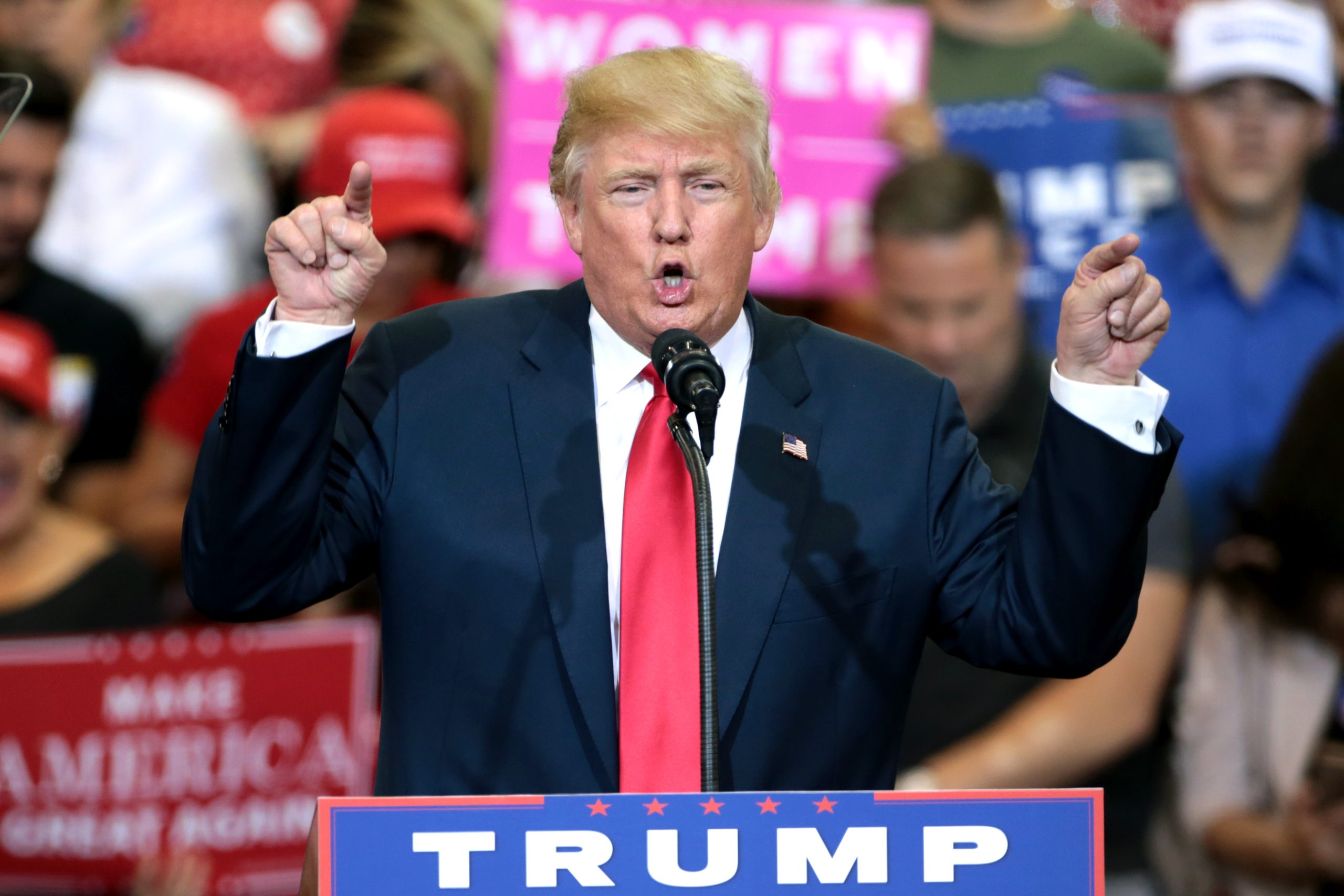
Viewers concentrated on an apparent protrusion or squared-off shape at the back of Trump’s outfit. Available reporting does not identify an object beneath the clothing, confirm that one was present, or provide an official explanation for the appearance in the footage.
That distinction is the central fact of the episode. The clip generated a large amount of commentary, but it did not settle what, if anything, created the shape people saw.
Commentary rushed into the gap
Progressive influencer Aaron Rupar shared the video and questioned what was happening with Trump’s rear, suggesting it appeared to be a contraption. Mediaite reported that White House press secretary Karoline Leavitt recorded the footage.
George Conway responded with a joke referring to an adult-incontinence-products brand. Martina Navratilova also made a diaper-related remark, while other prominent anti-Trump accounts used the clip to make claims about Trump’s health and physical condition.
Those health-related assertions remain speculation, not verified reporting. A short, compressed video cannot establish what may be under someone’s clothing, much less diagnose a medical condition.
Why ambiguity travels online
The video had the ingredients that often make political posts spread: a widely known figure, an unusual visual impression, no immediate answer and audiences already inclined to read events through partisan frames.
It also required very little context. A viewer could react to a few seconds of video and a provocative caption without knowing that Trump had been speaking about crime policy on Long Island.
That makes the visual easier to circulate than the substance of the event. A policy address demands attention to claims and consequences; an unexplained image can prompt an instant joke, suspicion or rebuttal.
Trump’s appearances receive intense scrutiny from both supporters and critics. In this case, opponents treated the clip as material for mockery and broader theories, while supporters could reasonably view the response as an effort to turn an ambiguous image into a political attack. Neither reaction answers the underlying factual question.
The limits of a short clip
Video can make ordinary details look more pronounced or unfamiliar. Camera angle, body movement, fabric folds, lighting, compression and the selection of a single frame can all affect how clothing appears on screen.
Noticing an unusual-looking detail is not the same as proving its cause. The available material supports the narrower observation that some viewers perceived a shape in the back of Trump’s clothing; it does not support claims that the video reveals a hidden device or a health problem.
That limit matters especially when viral posts mix humor with certainty. The sharpest version of a theory often spreads farther than a careful account of what the footage can actually demonstrate.
Political scrutiny has a familiar double standard
Public figures have long faced commentary about posture, gait, facial expressions and clothing. Social platforms have accelerated that scrutiny by making it easy to replay, crop, caption and recirculate a fleeting visual moment within minutes.
There is also a partisan symmetry to the dispute. Backers of a politician may object when their preferred candidate’s appearance becomes a target, yet embrace similarly speculative content about a political opponent. The result is a cycle in which ridicule can outrun evidence on every side.
The clip from Long Island illustrates that dynamic without resolving its trigger. The source reporting identifies no confirmed cause for the apparent bulge, and the flood of social-media reactions does not provide one.
What is known and unknown
The verified core is narrow: Trump appeared on Long Island on Aug. 14 to discuss his administration’s crime efforts; video from the event circulated widely; and left-leaning commentators used an apparent shape in his clothing as the basis for jokes and speculation.
What remains unclear is whether there was an item beneath the clothing and, if so, what it was. No explanation was included in the reporting that drove the discussion.
The viral moment is therefore less a revelation than an example of how quickly an uncertain visual can overwhelm the intended purpose of a political event. The most supportable conclusion is also the least dramatic: the clip prompted partisan mockery and unverified theories, but it does not provide a verified answer.
Leave a Reply