The viral moment was framed as a Collins comeback because it put Trump’s own words beside a legal reversal from one of his appointees. The bigger issue is how a damaged landmark became a test of politics, prosecution and presidential messaging.
Kaitlan Collins and Donald Trump are linked to Reflecting Pool footage after CNN’s The Source featured a clip of Trump insisting there was vandalism at the Lincoln Memorial site, even after a Trump-appointed prosecutor’s office dropped the case. The footage is being presented as embarrassing for Trump because it showed him doubling down on a claim that Jeanine Pirro’s office had undercut in court.
The “Collins gets revenge” framing comes from the long-running tension between Trump and the CNN anchor. But the sharper point is simpler: Collins used Trump’s own words, and the Reflecting Pool reversal, as a televised comeback to a familiar political tactic.
The clip that drove the story
On CNN’s Aug. 3 transcript for The Source with Kaitlan Collins, Collins introduced the segment by saying Trump was reacting to “claims of a botched installation at the Reflecting Pool.” She then played Trump’s remarks about what he believed happened at the site.
In the clip, Trump said officials had “photographs or tapes” and “moving cameras” showing people “on the side cutting it with a box knife.” He acknowledged he was “not saying” he was “100 percent thrilled with the contractor,” but he argued that “in addition, there was vandalism.”
That juxtaposition is why the footage landed. The segment did not merely show Trump being criticized by a rival. It showed him disputing the conclusion his own Justice Department chain had effectively accepted when the case was dropped.
Collins then walked viewers through the reversal: Jeanine Pirro’s office had dropped criminal charges against former Olympian David Hearn and said the Reflecting Pool damage was the result of flawed installation, not vandalism.
Pirro’s office changed the case
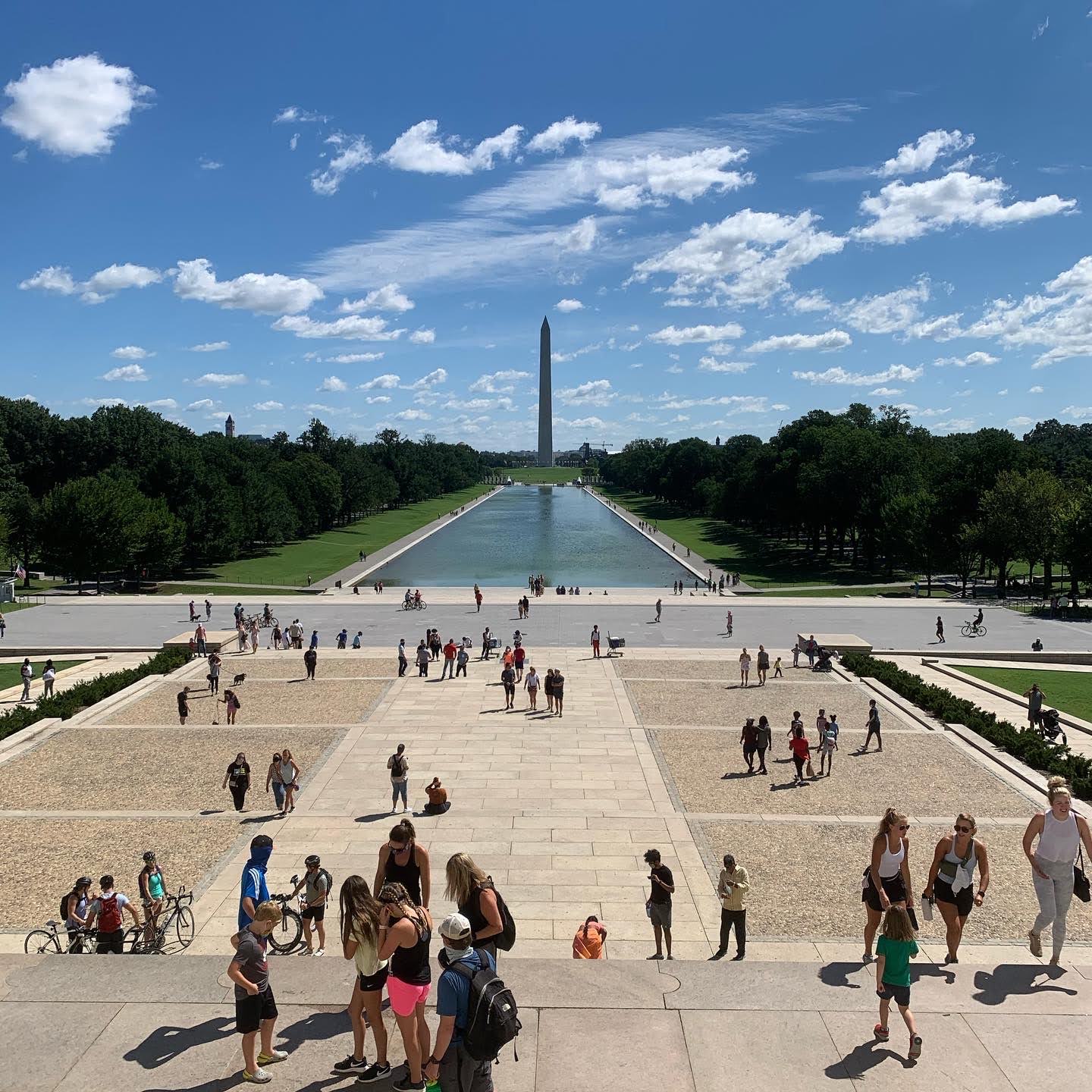
According to Collins’ CNN segment, the key development came in a late court filing. Pirro’s office said the damage to the Lincoln Memorial Reflecting Pool “was the result of a botched installation and not vandalism.”
That mattered because Hearn had been charged over alleged vandalism. Pirro’s office said that only after the indictment did the Department of the Interior provide additional documents indicating that the damage stemmed from flawed installation by the contractor.
The documents, as described on CNN, also pointed to the rush to complete the project before events tied to the America 250 celebration. Trump himself referenced that rush, saying officials wanted the pool open for July 4 and “got it done.”
For viewers, the sequence was easy to grasp: prosecutors initially pursued a vandalism theory, later received more information, and then backed away. Trump, meanwhile, publicly insisted the vandalism theory still held.
Why it embarrassed Trump
The embarrassing part was not just that Trump was contradicted. It was that the contradiction came from inside his own orbit.
Pirro is not a random prosecutor in this story. Collins described her as Trump’s “handpicked attorney in Washington.” Trump then criticized her sharply, saying she “made a mistake,” “choked,” and “folded like an umbrella.”
That created a striking split-screen. On one side was a formal prosecutorial position: the charges were dropped after additional documents pointed to installation problems. On the other side was the president saying his prosecutor had mishandled the case and that vandalism still occurred.
Collins’ segment used that split-screen to force the issue. Whether viewers saw it as accountability journalism or a cable-news jab depended largely on their politics, but the factual tension was real.
Not exactly revenge, but a comeback
The “revenge” language is more media shorthand than established fact. There is no evidence in the CNN transcript that Collins described the segment as personal retaliation against Trump, and political journalists routinely scrutinize presidents they cover.
Still, the framing caught on because Collins and Trump have a combative history. Trump has repeatedly attacked mainstream news outlets, CNN among them, and Collins has often been part of high-profile exchanges over his statements and legal controversies.
In that context, airing the Reflecting Pool footage functioned like a comeback: Trump asserted one version of events, and Collins presented the filing and the clip in a way that made his claim look weaker.
The distinction matters. Calling it “revenge” may satisfy viewers who want a political scorecard. Calling it a documented contradiction is more accurate, and more useful.
The legal and political stakes
The Reflecting Pool episode may look small compared with the larger fights around Trump’s administration. But it touches several bigger questions: when prosecutors should reverse course, how much political pressure can surround a local federal case, and what happens when a president publicly attacks an appointee for dropping charges.
Prosecutors are expected to abandon cases when evidence no longer supports them. If Pirro’s office received new Department of the Interior documents pointing to contractor error, dropping the charges would be a normal legal response, even if politically awkward.
Trump’s supporters may see the president’s reaction differently. They may argue he was highlighting evidence he believed showed deliberate damage, especially because he cited “photographs or tapes” and alleged people were cutting the pool with a box knife.
The unresolved question is whether any evidence Trump referenced changes the legal picture. Based on the CNN transcript, Pirro’s office had already told the court that the damage was tied to installation problems. If there is more footage or documentation, it has not been clearly reconciled with that filing in the public account.
What remains unclear
Several pieces of the story still need daylight. The public record described by CNN explains why prosecutors dropped the charges, but it does not fully explain how the vandalism theory became the basis for charges in the first place.
It is also unclear how much Trump knew about the Interior Department documents before criticizing Pirro. In the same CNN program, Collins noted that Trump had met with Pirro behind closed doors after his comments, but the transcript does not establish what was said in that meeting.
The Reflecting Pool itself is a symbolic setting, which is part of why the story traveled. Damage at the Lincoln Memorial’s pool sounds, at first, like an obvious culture-war flashpoint. A later explanation involving rushed construction and flawed installation is less emotionally satisfying, but it may be more legally important.
That is why Collins’ use of the footage mattered. The viral moment was not simply an anchor taking a shot at Trump. It was a reminder that a strong televised claim can collide with a court filing, and when that happens, the paperwork often tells the more durable story.
Leave a Reply