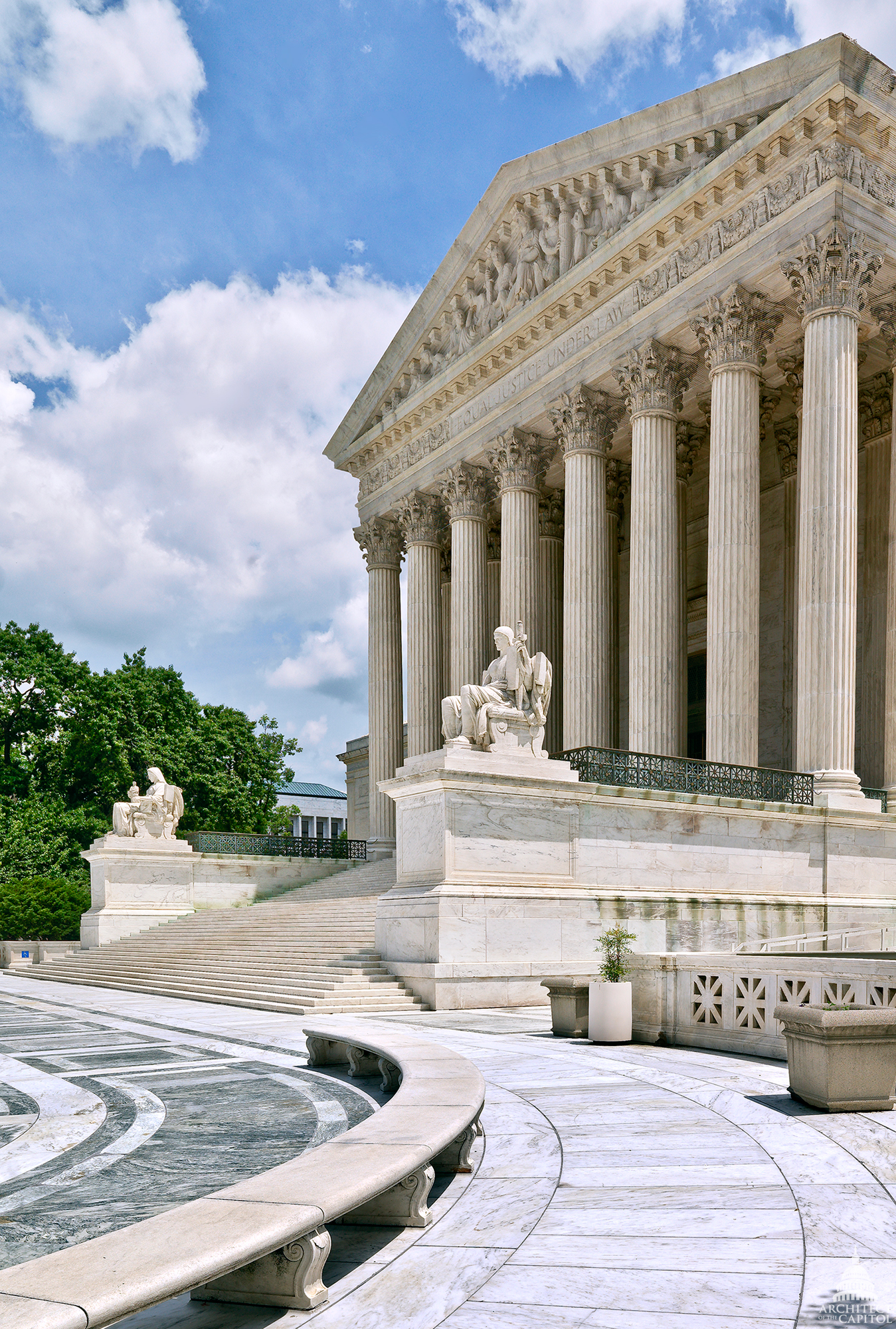
The filing is not only about the jury award Carroll won. It also asks whether Trump can be sued personally for 2019 statements he says were presidential communications, or whether the United States should replace him as defendant.
Donald Trump’s Supreme Court push over E. Jean Carroll’s $83.3 million defamation verdict now presents the justices with more than a request to revisit a large civil award. The case also includes a threshold question over who should be in the defendant’s chair: Trump personally, or the United States under a federal substitution theory.
According to SCOTUSblog, Trump’s petition followed the U.S. Court of Appeals for the 2nd Circuit’s decision affirming the award. The Supreme Court is not required to hear the case, and a denial would leave the lower-court result in place, subject to any remaining procedural steps.
The defendant question changes the posture
One issue running alongside Trump’s appeal is whether the United States should be substituted as the defendant instead of Trump personally under the Westfall Act.
That question has followed the case for years. Then-Attorney General William Barr certified in 2020 that Trump was acting within the scope of his office when he made the statements at issue. Merrick Garland later withdrew that certification in 2023 during the Biden administration.
SCOTUSblog reported that then-Attorney General Pamela Jo Bondi sought to recertify Trump in April 2025, but the 2nd Circuit rejected the request. The appeals court reasoned, among other things, that the certification came too late under the governing law.
If the Supreme Court accepted the government-backed theory, the case’s legal posture could change sharply. Substituting the United States could affect Carroll’s claim because the federal government generally cannot be sued for defamation in the same way an individual can.
The award Carroll is defending
Carroll, a longtime advice columnist for Elle, sued Trump for defamation in November 2019, during his first term as president. Her lawsuit centered on public statements Trump made in June 2019 after she accused him of sexually abusing her in 1996 in a New York department store dressing room.
Trump denied the allegation. He said he had never met Carroll, accused her of trying to sell a book and called her account false. Carroll argued that those statements were defamatory and damaged her reputation.
A jury awarded Carroll $83.3 million in compensatory and punitive damages. According to SCOTUSblog, the 2nd Circuit found “ample evidence that Trump was recklessly indifferent to Carroll’s health and safety” and that Carroll faced “ongoing and prolific harassment” after the statements, including death threats and threats of physical injury.
Trump’s immunity argument
Trump’s private lawyer, Robert Giuffra, told the Supreme Court that the lower court’s approach “wrongly eviscerates Presidential immunity,” according to SCOTUSblog’s account of the filing.
Giuffra also argued that this is “the first case in our Nation’s history in which a court has imposed damages liability on a President for his conduct in office.” That argument asks the justices to treat the dispute as a question about presidential functions, not only as a defamation judgment between Carroll and Trump.
Trump’s filing points to the Supreme Court’s recent presidential-immunity reasoning, including language suggesting that many presidential public communications may fall within protected official conduct. Trump’s team says the appeals court avoided deciding the immunity question directly through what it described as procedural maneuvering.
Carroll’s judgment rests on the jury’s finding that Trump defamed her and on evidence that the statements fueled reputational harm and harassment.
What the justices can do
The Supreme Court docket identifies the case as Donald J. Trump v. E. Jean Carroll. Trump is asking the justices to hear his appeal of the $83.3 million verdict after the 2nd Circuit affirmed it.
If the court declines review, the appeals court’s ruling would remain in place and the verdict would stand, subject to any remaining procedural steps.
If the justices grant review, the case could become a vehicle for a ruling on presidential immunity, federal substitution or both. A narrow grant could focus on specific procedural or statutory questions. A broader one could address when presidential speech is shielded from private civil liability.
The separate $5 million case
The $83.3 million judgment is separate from another Carroll case that also reached the Supreme Court’s doorstep.
In that case, a jury found Trump liable for sexually abusing and defaming Carroll and awarded her $5 million. According to SCOTUSblog, the Supreme Court declined to take Trump’s appeal in that separate case, and Trump then asked the justices to reconsider that denial.
SCOTUSblog also reported that the $5 million award, plus interest, had been placed in escrow after the verdict and has already been paid to Carroll.
The two cases are legally distinct. The current petition now asks the Supreme Court whether to enter the $83.3 million case and address Trump’s arguments about immunity, personal liability and federal substitution.
Leave a Reply