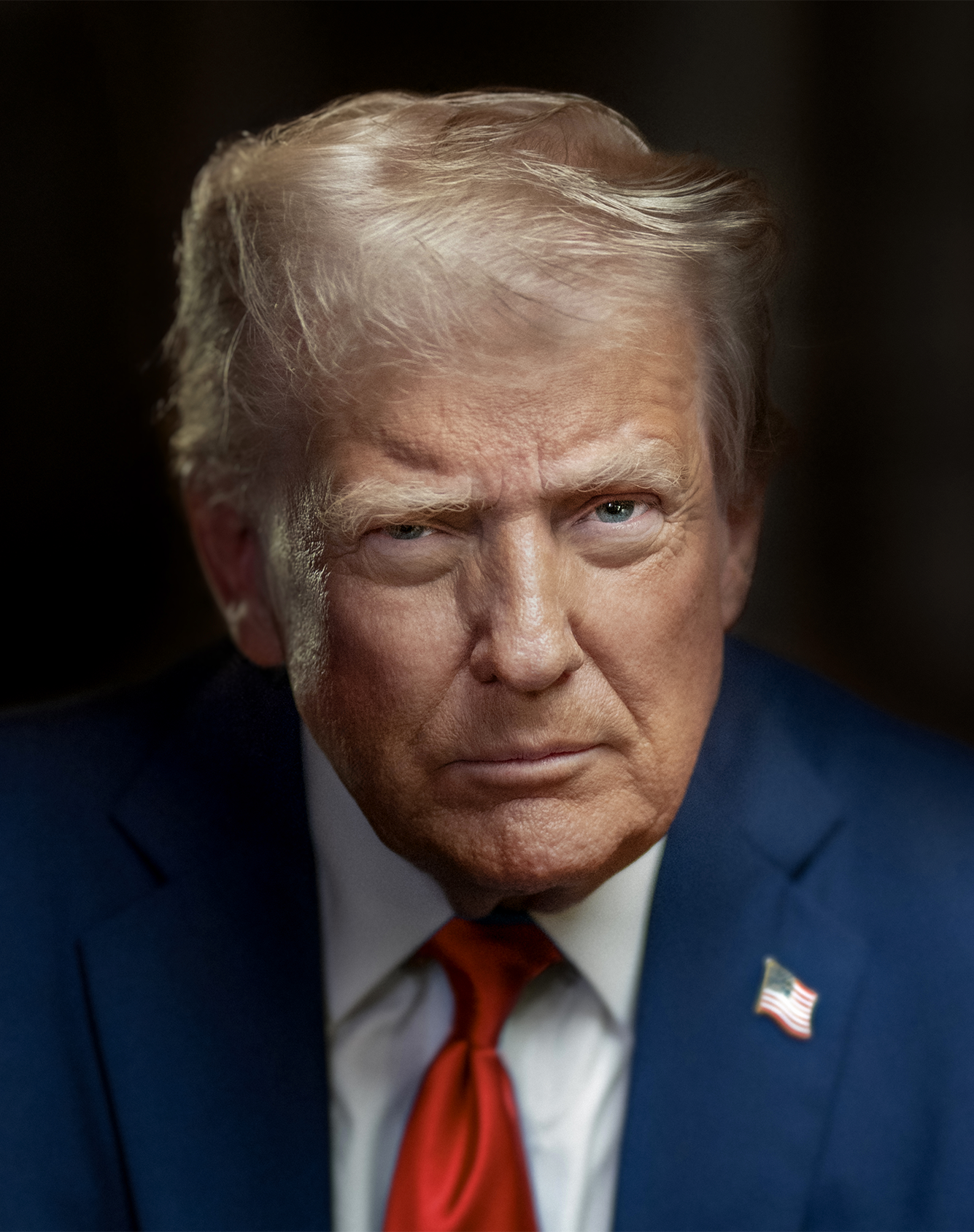
The conservative governing blueprint was built by Trump allies, but Trump’s campaign says it does not speak for him. The fight shows how outside groups can become liabilities when their plans outpace a candidate’s message.
Donald Trump is embarrassed by a Trump-linked project: Project 2025, the Heritage Foundation-led blueprint for a possible conservative takeover of the federal government. The project is spiraling out of control as Trump tries to distance himself from it, and the article explains why this is a problem for Trump now: Democrats are using its sweeping proposals and Trump-world ties to define what a second Trump administration could look like.
The phrase “Trump flat out” embarrassed captures the political bind. Project 2025 was designed as a ready-made governing plan, but it has become a public liability that Trump’s campaign says should not be associated with him.
Why Project 2025 Stung
Project 2025 began as a conservative policy and staffing effort organized by the Heritage Foundation, one of the most influential think tanks on the right. Its goal was to prepare a Republican administration to move quickly on personnel, regulations and executive power.

According to The Associated Press, the project produced a nearly 1,000-page handbook calling for major changes across the federal government. One central idea is changing personnel rules so more federal workers are aligned with the president’s agenda.
That is exactly why it became politically explosive. To supporters, Project 2025 is a serious attempt to prevent a future Republican president from being slowed by the federal bureaucracy. To critics, it is a roadmap for concentrating power and remaking government in ways many voters have not fully absorbed.
For Trump, the trouble is not only what the document says. It is who helped build it.
Trump Team Draws A Line
Trump has repeatedly tried to disavow Project 2025. The AP reported that he said on social media he had not read it and did not know anything about it. At a Michigan rally, he described it as written by people on the “severe right” and said some of its ideas were “seriously extreme.”
His campaign has gone further. Advisers Susie Wiles and Chris LaCivita said in a statement reported by the AP that Project 2025 “had nothing to do with the campaign,” did not speak for the campaign and should not be associated with Trump.
Their warning was unusually blunt: “Reports of Project 2025’s demise would be greatly welcomed,” they said, adding that any group trying to misrepresent its influence with Trump “will not end well for you.”
That language matters. Campaigns often welcome allied policy shops, donor groups and ideological coalitions. Trump’s team instead treated Project 2025 as a brand risk — a sign that the project’s public profile had become harder to control than useful to promote.
Heritage Says It Continues
The leadership shake-up did not end the project. Paul Dans, the director of Project 2025 and a former Trump administration personnel official, stepped down from his role at the Heritage Foundation after criticism from Trump’s campaign, according to the AP.
Heritage Foundation President Kevin Roberts said Dans’ departure came after the project “completed exactly what it set out to do.” Roberts also said the organization’s work to build a personnel apparatus for federal, state and local policymakers would continue.
That is the key point: Project 2025 was never only a book. It was also a staffing machine. The AP reported that Heritage said the project’s website would remain live and that the group would continue vetting resumes for a database of nearly 20,000 potential officials.
So even as Trump’s campaign tried to create distance, Heritage signaled that the infrastructure would stay in place. That tension is what keeps the story alive.
The Trump-World Overlap
The reason Democrats and reporters keep connecting Trump to Project 2025 is straightforward: many of the people involved have ties to his political orbit.
The AP reported that many Trump allies and former top aides contributed to the effort. Dans worked in personnel during the Trump administration. The project was built in part to prepare staff and ideas for a future Republican presidency, and Trump was the overwhelming focus of that discussion.
There is also the JD Vance complication. The AP reported that Vance, Trump’s running mate in 2024, wrote a foreword to a forthcoming book by Roberts in which he praised the Heritage Foundation’s role in Republican politics.
Vance wrote that Heritage “isn’t some random outpost on Capitol Hill” and described it as an influential engine of ideas for Republicans from Ronald Reagan to Trump. That does not make Project 2025 Trump’s official platform, but it makes the campaign’s clean-break message harder to sell.
Democrats Found Their Target
For Democrats, Project 2025 became a shorthand for the stakes of another Trump term. Vice President Kamala Harris’ campaign and other Democrats argued that the blueprint showed what Trump’s allies wanted to do with power if he returned to the White House.
The Harris campaign, quoted by the AP, said Project 2025 remained linked to Trump’s agenda and was written by his allies for him to “inflict” on the country. Campaign manager Julie Chavez Rodriguez argued that hiding the 920-page blueprint should make voters more concerned, not less.
That attack worked because Project 2025 is detailed enough to sound operational, not theoretical. It includes ideas about staffing, executive authority and agency control — the less glamorous machinery of government that can shape everyday policy.
Trump’s campaign wants to talk about its own platform and its preferred issues. Project 2025 forces a different conversation: not just what Trump says he will do, but what the conservative network around him is preparing to do.
What Is Still Unclear
The biggest unresolved question is how much influence Project 2025 would actually have if Trump returned to power. Trump’s campaign says it does not speak for him. Heritage says its work continues. Both can be true at the same time.
Presidents do not govern alone. They need personnel, policy memos, legal theories and agency leaders. Outside groups have long tried to supply those ingredients to both Republican and Democratic administrations.
That is why the distancing may not settle the issue. Even if Trump rejects specific proposals, he could still rely on people and organizations that helped build the project. If he wins, the practical question becomes who staffs the administration and which ideas make it through the door.
For now, Project 2025 is a lesson in political ownership. A movement document meant to show readiness has instead given opponents a target and forced Trump’s own campaign to say, loudly, that the project does not belong to him.
Leave a Reply