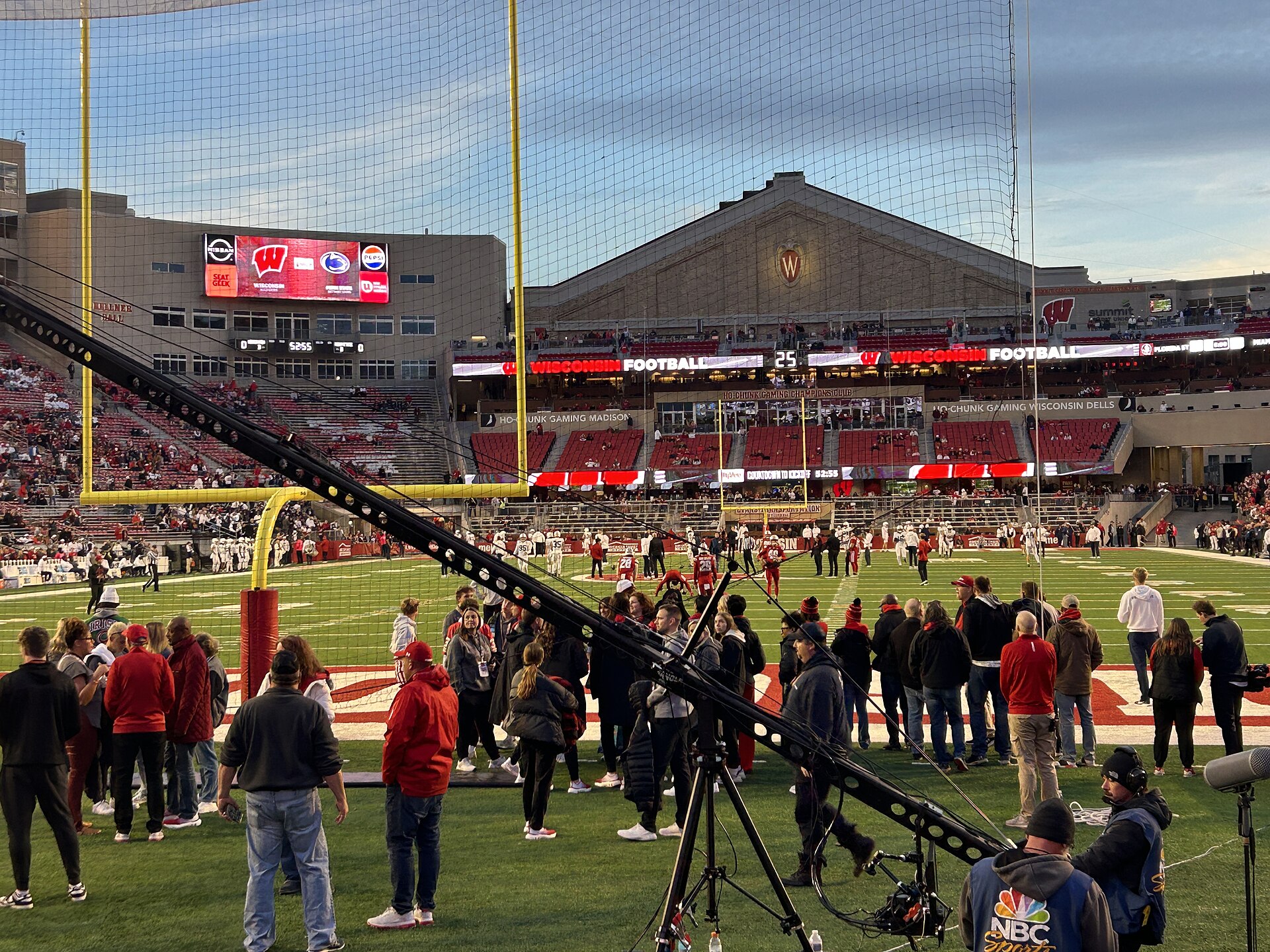
The Badgers are spending like a program trying to stop a slide, not merely survive one. That changes the standard for Luke Fickell in 2026.
Wisconsin football in Madison has a reported $25 million roster budget for 2026, and the roster is being compared with previous years because the number signals a hard pivot for Luke Fickell and the program’s prospects. The Athletic reported the Badgers’ roster budget is north of $25 million and more than double 2025, after Wisconsin spent last season in what booster Ted Kellner described as the bottom third or bottom 40 percent of the Big Ten in NIL money.
That is not just an accounting change. It is a reset of expectations for a coach who is 17-21 overall at Wisconsin, has endured back-to-back losing seasons and now has a roster built with far more urgency than the ones that came before it.
$25 million changes the baseline
The most important part of the reported $25 million figure is not whether Wisconsin is suddenly the biggest spender in college football. The key is the year-over-year jump.
According to The Athletic, the Badgers’ 2026 roster budget is more than double what it was in 2025. That turns the comparison with previous years into a blunt measure of how much the school believes money has mattered in its recent slide.
Wisconsin had long sold itself on development, identity and stability. Those still matter, but the NIL and revenue-sharing era has made roster construction more immediate. A program can no longer expect continuity and coaching alone to close talent gaps against Big Ten rivals that are aggressively buying depth, experience and plug-and-play starters.
The reported budget also changes how fans will read the season. In prior years, complaints about Wisconsin falling behind financially could be part of the defense. In 2026, if the roster looks more expensive but the product looks the same, the scrutiny lands squarely on evaluation, coaching and game-day execution.
The gap from last season
The comparison to 2025 is where the story becomes especially sharp. The Athletic cited people briefed on the budget in reporting that Wisconsin’s roster spending is now north of $25 million. Kellner, a prominent Badgers booster, told the outlet he understood Wisconsin was in the bottom third or bottom 40 percent of the Big Ten in NIL money last season and had moved into the top half this year.
That is a meaningful climb in a conference that now includes more heavyweight brands and coast-to-coast recruiting pressure. The Badgers are not merely adding a few high-profile players. They are trying to repair the depth chart at scale.
The Athletic reported Wisconsin added more than 30 players through the transfer portal, including former Old Dominion quarterback Colton Joseph, while also fortifying the offensive line and rebuilding the secondary. That is the language of a program trying to correct multiple roster problems at once.
There is a caveat. College football roster budgets remain opaque, and schools often decline to confirm exact figures. Wisconsin officials and Fickell did not discuss specific dollar amounts with The Athletic. So the number should be treated as reported, not as an audited public ledger.
Fickell has fewer excuses now
Luke Fickell arrived in Madison with a resume that made sense for Wisconsin. He had built Cincinnati into a College Football Playoff team, knew the Midwest and had the defensive pedigree of a former Ohio State assistant.
The results have gone the other way. The Athletic listed his Wisconsin record at 17-21 overall and 10-17 in Big Ten play. The Badgers have had consecutive losing seasons for the first time since 1992, after entering Fickell’s tenure with a program identity built around bowl streaks, physical line play and dependable competence.
The 2025 season was especially damaging. Wisconsin finished 4-8, dealt with major injuries, particularly at quarterback, and suffered back-to-back home shutout losses during a six-game skid. That was the kind of collapse that makes a fan base stop arguing about fine margins and start asking whether the whole plan is working.
The reported roster investment gives Fickell a stronger answer than optimism. It also raises the standard. If Wisconsin has moved from lagging in NIL to funding a top-half Big Ten roster, improvement has to be visible early and sustained beyond a one-week upset.
A portal rebuild, not patience
There are two ways to view Wisconsin’s transfer-heavy approach. One is that the Badgers are finally acting like a modern contender, using the portal to patch holes and raise competition before another season slips away.
The other is that this is an admission that the original roster plan did not work quickly enough. Adding more than 30 transfers can improve talent, but it also creates new questions about chemistry, leadership and whether coaches can blend newcomers with returning players before the schedule hardens.
Quarterback is the obvious pressure point. The Athletic identified Colton Joseph as one of the portal additions after Wisconsin’s quarterback situation was battered by injuries last season. A more stable offense would change the entire evaluation of Fickell’s team, but it cannot be assumed simply because the room has been altered.
The offensive line and secondary are just as important. Wisconsin’s best teams have not been built on star power alone; they have been built on repeatable strengths. The money can buy options. It cannot buy an identity unless the staff turns the options into a coherent team.
Madison’s leadership wrinkle
The football spending shift is happening while Wisconsin’s athletic leadership is also changing. Chris McIntosh, the athletic director who hired Fickell and publicly backed him during last season’s turbulence, left for a strategy role with the Big Ten.
That matters because Fickell’s support structure has changed at the same time his expectations have risen. The Athletic reported that Shawn Eichorst, a Wisconsin native and former Badgers deputy athletic director under Barry Alvarez, was appointed as the new athletic director after holding a deputy role at Texas.
A new AD does not automatically mean a coach is in immediate danger. But it does mean the person judging the results may not be the same person who made the original bet. Add an ongoing university chancellor search, and the broader leadership picture in Madison is less settled than the roster budget suggests.
That is why the $25 million figure cuts both ways. It shows institutional commitment. It also gives new leadership a clear benchmark if the season fails to turn.
The schedule will answer quickly
Wisconsin’s 2026 season is scheduled to open Sept. 6 against Notre Dame at Lambeau Field, according to The Athletic. That is not a soft landing for a rebuilt roster or a coach trying to quiet hot-seat talk.
A prime-time opener against a national brand can change the mood fast. A competitive, organized performance would support the idea that Wisconsin’s added investment has upgraded the roster and sharpened the program. A flat showing would revive the same questions that followed the Badgers through much of 2025.
The fair view is that money alone should not be confused with a finished team. NIL spending can help a program catch up, but it can also expose mistakes faster. Expensive depth that does not play well together is still a flawed roster.
The clean takeaway is simple: Wisconsin’s reported $25 million roster does not guarantee Luke Fickell a breakthrough. It does remove one of the strongest explanations for why the Badgers had fallen behind. In Madison, that makes 2026 less of a rebuild year and more of a proof year.
Leave a Reply