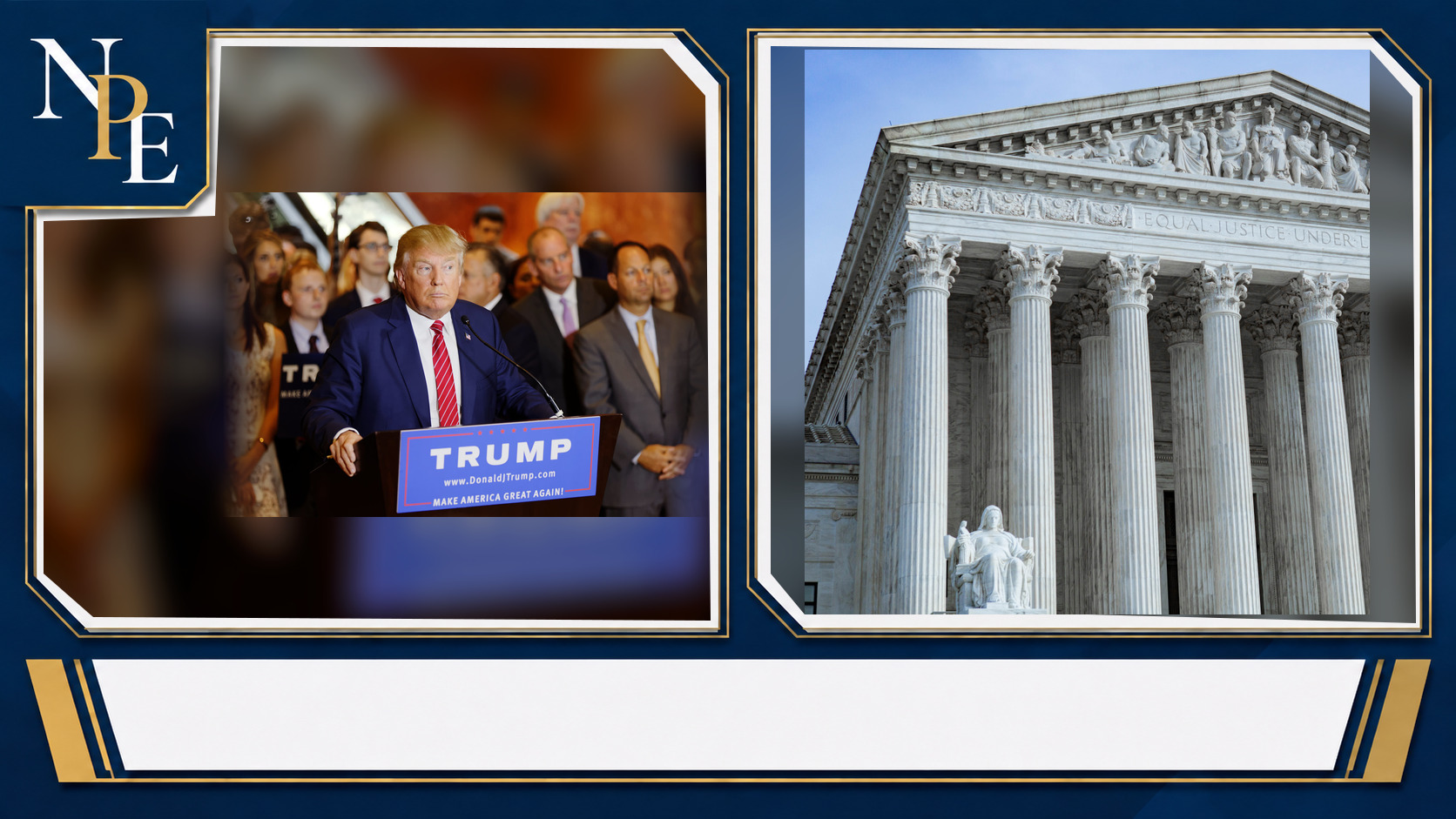
The court’s move helps the Trump administration press ahead with proposed mail-ballot restrictions while the underlying lawsuit continues. The practical effect still depends on federal rulemaking and further court action before the 2026 election.
The U.S. Supreme Court removed a judicial hurdle to Donald Trump’s proposed mail-in ballot restrictions, handing the Trump administration a victory in its effort to curb mail-in voting in the United States. The decision allows the administration to continue pursuing implementation of Trump’s executive order while the underlying lawsuit proceeds, but it does not put new ballot rules into effect by itself.
The case arose after a federal judge in Massachusetts paused portions of the order in 23 states and the District of Columbia. The order directs federal agencies to develop additional requirements for mail ballots, including measures involving ballot-mail procedures and state citizenship records. The lower-court challenge argued that parts of the order were unconstitutional and blocked the administration from carrying them out. The Supreme Court’s action lifts that immediate barrier, but further rulemaking and court proceedings remain necessary before the restrictions could affect voters or election officials.
What the Supreme Court changed
The Supreme Court acted in Trump v. California, a case brought by 23 states and the District of Columbia. Those jurisdictions challenged portions of Trump’s executive order that concern mail-in ballots and federal efforts to compile lists of adult U.S. citizens by state.
A federal district judge in Massachusetts, Indira Talwani, had blocked implementation of the disputed provisions for the plaintiff states ahead of the 2026 election. The Trump administration argued that the lawsuit came too soon because agencies had not completed the specific rules needed to carry out the order.
By lifting the lower-court hurdle, the Supreme Court gave the administration more room to continue pursuing its plan while litigation proceeds. Reuters described the action as a win for Trump on mail-in ballot restrictions.
That is an important distinction: the court’s move concerns whether the administration may proceed while the case is fought out, not a final ruling that the executive order is constitutional.
The ballot rule at the center
Section 3 of Trump’s order directs the U.S. Postal Service to propose rules for mail-in and absentee ballots. Under the language described in the Supreme Court materials, outbound ballot mail would be tied to a cross-check against state citizenship lists.
The order calls for the Department of Homeland Security to compile lists of people in each state who are U.S. citizens and at least 18 years old. The contemplated Postal Service rules would allow ballots to be sent only to voters whose names appear on those lists.
Supporters of the administration’s approach frame citizenship verification as an election-integrity measure. Trump has long criticized mail-in voting, even though voting by mail is widely used by eligible voters, including military personnel, older Americans and people who cannot easily reach polling places.
Critics say the plan could create errors or delays if citizenship data are incomplete, mismatched or unavailable when election administrators need to send ballots. They also argue that a federal system governing ballot distribution could intrude on states’ authority over elections.
Why states took the case
California led the challenge with 22 other states and the District of Columbia. Their central argument is that the Constitution gives states substantial power to set voter qualifications and to determine the time, place and manner of congressional elections, subject to Congress’s authority to alter those rules.
The challengers contend that the executive branch cannot use federal agencies to impose a new prerequisite for receiving a mail ballot. They have also warned that changing procedures close to an election can confuse voters and election workers.
In the earlier appellate litigation, judges who declined to provide the relief sought by the administration said the order could sow confusion and threaten the disenfranchisement of eligible voters if it took effect for the fall elections. That concern reflects a recurring principle in election cases: courts are wary of late changes to voting procedures.
The administration sees the matter differently. Solicitor General D. John Sauer argued that the lower court stepped in before agencies had made final implementation decisions, and that the injunction prevented the government from carrying out a policy it considers lawful.
A legal win, not final approval
The Supreme Court’s action has political and legal value for Trump because it weakens the immediate court-imposed restraint on his mail-in voting agenda. Yet the ultimate validity of the order still has to be decided in ongoing litigation.
Several questions remain open. Federal agencies must determine what rules they will actually propose, how state citizenship lists would be assembled and updated, what standards would govern mismatched records, and whether any final system complies with federal election law and constitutional limits.
Those details are not minor administrative questions. A voter can be eligible to vote while a government database contains outdated personal information, an address discrepancy or incomplete citizenship data. How officials handle those cases would shape whether a verification program operates as a safeguard, a bureaucratic barrier, or both.
There is also a difference between an executive order directing agencies to act and a completed, enforceable regulation. Rulemaking generally requires procedures that can include public notice, explanation and legal review. The court action does not eliminate those steps.
The 2026 election clock matters
The immediate calendar is central to the conflict. Judge Talwani’s June 25 order had barred implementation of the contested mail-ballot and citizenship-list provisions in the plaintiff states for the November 3, 2026, elections.
The administration told the courts that normal appeals would not leave enough time to implement any plan before November, particularly because voter-roll checks and mail-ballot processes happen well before Election Day. The states countered that rapid changes themselves could disrupt election administration.
That tension explains why the Supreme Court’s procedural decision drew so much attention. It affects which side has more freedom to act during an election year, even before the courts issue a final answer on the merits.
For voters, the clearest takeaway is that no single Supreme Court action has settled the rules for mail voting across the country. The administration has cleared an important legal obstacle, but the shape, timing and legality of any new restrictions remain subject to agency decisions and further judicial review.
Federal power meets state election control
The case reaches beyond mail ballots. It tests how far a president may go in directing federal agencies to influence the mechanics of elections traditionally administered by states and local governments.
Trump’s supporters may view the court’s move as recognition that federal officials should be allowed to explore stronger citizenship-verification systems. The states challenging the order see it as a warning sign that federal executive power could alter access to voting without legislation from Congress.
The eventual merits ruling could clarify that boundary. Until then, election administrators in the affected states face a moving legal landscape, and voters should look to their state and local election offices for the rules that apply where they live.
Leave a Reply